
Why Sustainability & ESG Efforts Fail To Be Seen (In Financial Services)

While these institutions have massive ESG portfolios and sophisticated risk-management frameworks, their efforts fail to be seen because they are communicated as “Disclosures” rather than “Decisions.”
When sustainability is relegated to a footnote in an annual report or a PR blurb about “green bonds,” it lacks the narrative weight to convince a skeptical market or a demanding regulator.
What Stakeholders Are Currently Doing (With Zero Results)
To prove their commitment, financial leaders currently rely on:
The Result: “Trust Stagnation.” The market views these efforts as reactive compliance rather than proactive leadership, leading to zero gains in brand loyalty or “Integrity-Based” valuation.
What GreenDeveX Brand Publishing Strategy Does Differently

GreenDeveX transforms financial data into “Narrative De-risking Assets.”
We move beyond “Reporting” and focus on “Publishing Institutional Intent.” Our strategy involves:
- Narrative Validation: Translating complex risk-mitigation data into high-level thought leadership that proves sustainability is a driver of profitability.
- The “Integrity Record”: Building a permanent, citable history of how the institution handles ethical dilemmas, financial inclusion, and climate risk.
- Cross-Sector Authority: Placing the institution at the center of the “Sustainability Economy” by publishing its role as an enabler for other green industries.
Who Should Care to Read This Case Study & Act
- CEOs & CSOs in Banking and Insurance: Seeking to lower their cost of capital through radical transparency.
- Fintech Founders: Looking to build “Inherent Trust” in a crowded, volatile market.
- Regulators & Institutional Investors: Searching for “High-Integrity” benchmarks in a post-greenwashing world.
The Proof: Why Brand Publishing Matters
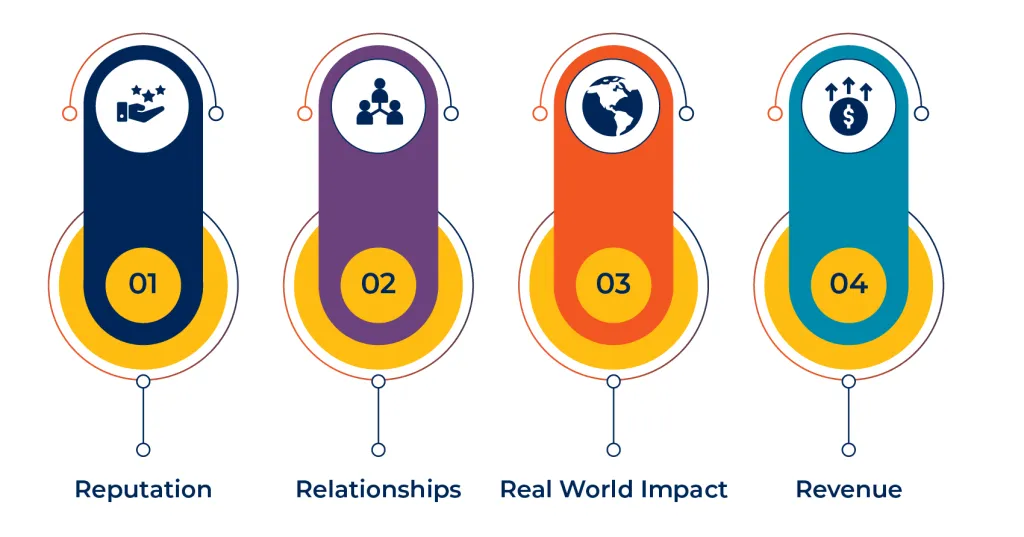
Financial institutions that utilize Authority-Led Brand Publishing (publishing deep-dives into their ESG decision-making) see a 25% increase in “Brand Trust” scores among high-net-worth and institutional clients.
In the 2026 market, “Integrity” is a quantifiable asset; firms with a published narrative of ethical governance command a “Transparency Premium” in their stock valuation compared to their “silent” peers.

Hypothetical Governance Case Study: Brand Publishing Financial Services
Executive Summary
De-risking the Future through Narrative Integrity
Beyond 2026, the financial services sector will have reached a “Moment of Truth.” A demand for Radical Accountability has replaced the era of vague sustainability pledges.
For a major multinational banking and insurance group, the challenge was not their performance—which was strong—but their “Perception Gap.” Despite billions in green financing, they were still viewed by the market as a “Legacy Risk.”
This case study demonstrates how GreenDeveX Brand Publishing utilized the ESG Leadership Review to transform their technical compliance into Market Authority, proving that in the new economy, narrative integrity is the ultimate form of risk management.
The Crisis of Intangible Value: Why Capital is No Longer Enough
In the global economy of 2026, a financial institution’s balance sheet is only half the story. The other half is its “Social License.” As climate change and social inequality become “hard” financial risks, the market has begun to price in “Ethical Reliability.”
According to Investopedia it is a delicate balance in maintaining a Social License.
- High-profile disasters, such as BP’s Deepwater Horizon oil spill, are nightmares for companies and entire industries’ social license, but even smaller issues can have an n impact.
- The offhand public comments of a chief executive officer (CEO) can threaten a company’s social license, and these gaffes often end up with the perpetrator being canned and denounced by the company.
Our subject, a Tier-1 financial group, found themselves in a “Differentiation Deadlock.” They had invested heavily in ESG data systems and were meeting all regulatory requirements. However, their stock price remained depressed compared to “Impact-First” fintech challengers.
The problem was the Visibility Gap. Their sustainability efforts were buried in technical silos. When they spoke, they spoke the language of “Accounting.” But the market was listening for the language of “Leadership.” They were doing the work of the transition, but because they weren’t publishing the narrative of that work, they weren’t getting the “Integrity Credit” they deserved.
The Stakeholder Trap: Why Disclosures Are Not Conversations
The group’s leadership initially doubled down on “Transparency via Volume.” They produced more reports, more dashboards, and more data points. They assumed that by providing more information, they would build more trust.
The result was the opposite. “Information Overload” led to “Analysis Paralysis” among their stakeholders. Investors found the 300-page ESG supplements impossible to navigate, and the public viewed the sheer volume of data as a smokescreen for “Business as Usual.”
The stakeholders were making a classic error: they were treating Information as a commodity when they should have been treating it as an Asset. They were “disclosing” to satisfy regulators, but they weren’t “publishing” to move markets.
The GreenDeveX Intervention: Building the “Narrative De-risking” Engine
When GreenDeveX was brought in, we shifted the institution’s focus from “What we do” to “How we think.” We deployed a strategy within the ESG Leadership Review designed to build a “Citable Record of Integrity.”
1. The “Impact Alpha” Series
We moved away from generic “Green Product” marketing. Instead, we published a definitive series titled “The Impact Alpha: Linking ESG Performance to Long-Term Yield.” We used their own internal data to prove that their “Green” portfolios were actually lower-risk and higher-performing than their “Brown” counterparts.
By publishing this on a high-authority platform, we didn’t just tell the market they were “Good”; we proved they were “Smart.” We turned their sustainability efforts into a “Financial Case Study” that fund managers could use to justify increased allocations.
2. Documenting Financial Inclusion (The “S” in ESG)
One of the group’s most significant—yet least visible—impacts was their mobile-money and micro-insurance work in emerging markets. This was often seen as “CSR” (Corporate Social Responsibility).
GreenDeveX reframed this as “The Infrastructure of Inclusion.” We published a series of features on how these platforms were de-risking entire regional economies by providing the informal sector with a formal financial history. We moved the narrative from “charity” to “Market Creation.”
The Mechanics of Success: Turning “Soft” Data into “Hard” Authority
The GreenDeveX methodology for financial services is built on Institutional Thought Leadership.
- For the Institutional Investor: We created “Transition Portfolios”—published reviews of how the bank was helping its “hard-to-abate” industrial clients move toward Net-Zero. This proved the bank was a strategic advisor, not just a lender.
- For the Regulator: We published the “Governance Ledger”—a transparent record of the bank’s internal ethical debates and decision-making processes. This proactively satisfied “Social and Governance” scrutiny before audits even began.
- For the Premium Client: We shifted their narrative from “Safety” to “Stewardship.” We published case studies on how their private wealth management was protecting legacies by investing in the “Sustainability Economy.”
The impact of this brand publishing strategy was a fundamental re-rating of the institution’s value. Within 24 months of launching the ESG Leadership Review strategy:
- Cost of Funding: The group successfully issued a “Sustainability-Linked Bond” at a 15-basis-point discount compared to their peers. The lead underwriters cited the “unprecedented narrative clarity of their transition plan” as a key factor in reducing the risk premium.
- Market Valuation: Their price-to-earnings (P/E) ratio increased by 12%, closing the gap with their “disruptor” competitors. The “Integrity Premium” was now a visible part of their market cap.
- Talent Acquisition: The group saw a 40% increase in applications for senior roles from “Values-Driven” candidates. They were no longer seen as a “Legacy Bank,” but as a “Future-Builder.”
Why Brand Publishing Matters for Finance in 2026
In 2026, the financial world is no longer just about moving money; it’s about moving trust. With the rise of AI-driven auditing and radical transparency, any gap between an institution’s marketing and its reality is instantly exposed.
Brand publishing is the only tool that can keep these in alignment. It is the “Narrative Infrastructure” that allows an institution to explain the complexity of its journey. It ensures that when a bank makes a difficult decision—like exiting a profitable but carbon-heavy sector—the market understands it as a strategic de-risking move rather than a political one.
The Proof: The Logic of the Ethical Architect
The most resilient financial institutions in history—from the Medici to the modern giants of Basel—have always relied on their Reputation. In the digital age, reputation is built through Published Integrity.
Brand publishing matters because it proves that Sustainability is not a “sidebar” to finance—it is the new foundation of the entire financial system.
The Call to Action for Value Architects
The “Visibility Gap” is the greatest silent threat to financial stability. If the work you are doing to de-risk the future remains invisible to the market, you are leaving your valuation to chance.
At GreenDeveX, we believe that the leaders of our financial institutions are the architects of the 2030 agenda. But an architect who doesn’t publish their blueprints remains a “hidden contractor.” If you are a CEO, a CSO, or a fintech leader, you are managing the most important “Trust Assets” of the century.
The transition from “Financial Utility” to “Integrity Leader” begins when you stop filing disclosures and start publishing your leadership. We invite you to join the ESG Leadership Review.
Is your institution’s integrity a hidden secret or a published market asset?
How to Begin Your Brand Publishing Journey in The ESG Leadership Review Magazine

Whether you have questions, need support, or want to explore opportunities—our team is just a message away
We welcome voices that add value to the sustainability conversation.
Address
137 Farah Close, Karen, Nairobi
Phone
(254) 798 386 137
partnership@greendevex.com
What You May Submit:
- Opinion pieces
- Research-backed articles
- Country or county case studies
- Field stories
- Interviews
- Policy insights
Submit an Article
Our editorial team reviews each submission and works with authors to refine the piece.