
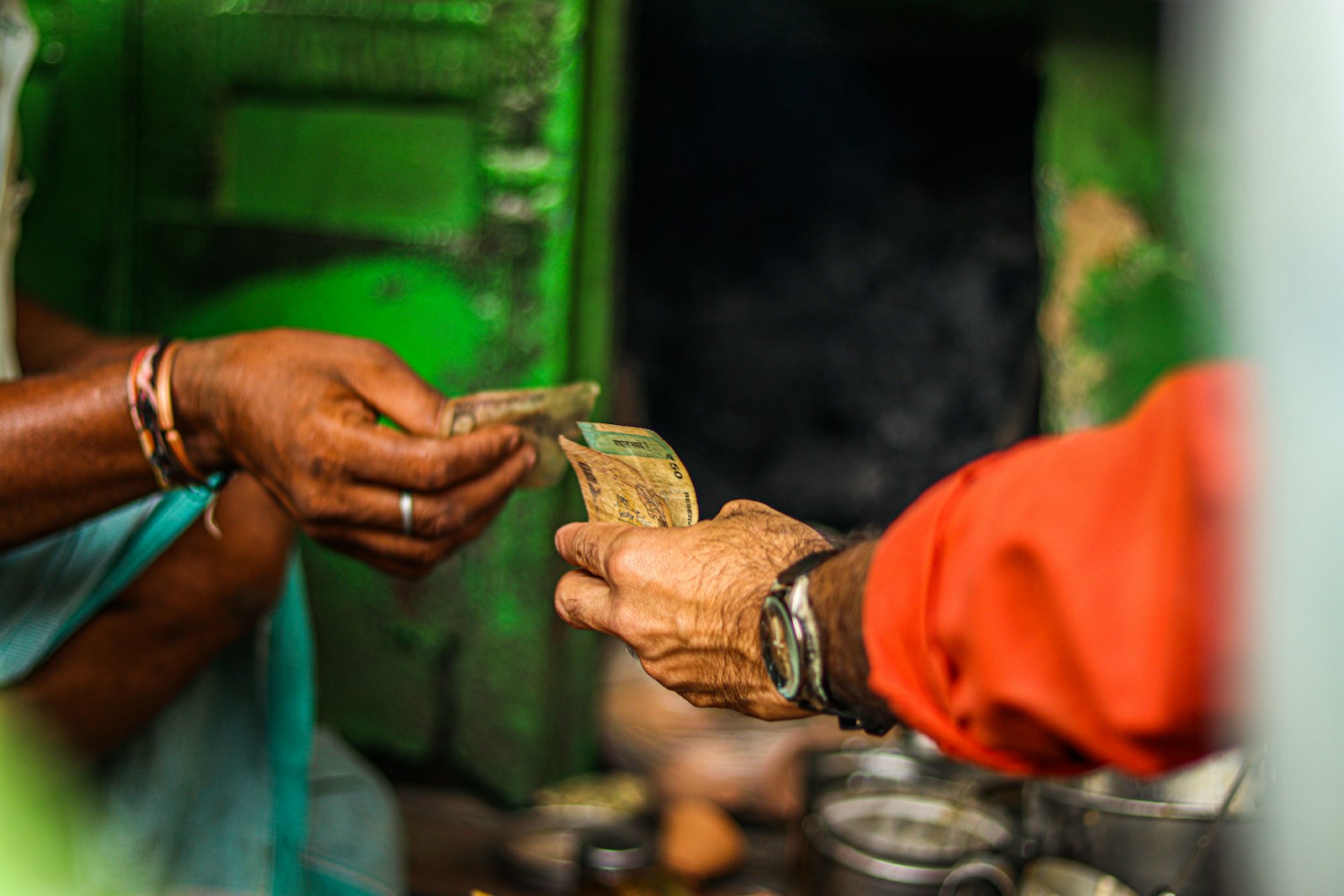
This entry for The Social Impact Ledger focuses on Table Banking & SACCOs (Savings and Credit Co-operative Societies). In the current economic landscape, cooperative finance is the ultimate defense against economic volatility.
To move from a “Community Club” to a Category King, a SACCO or Table Banking group must publish the transition from informal pooling to Collective Economic Sovereignty.
Why Brand Publishing Matters: It formalizes the “informal” by turning social trust into citable data. It bridges the gap between community pooling and the formal bond market.

Why Cooperative ESG Efforts Fail: The “Informality” Gap
In the SACCO and Table Banking sector, the Visibility Gap is the Institutional Blind Spot.
These groups are the backbone of regional liquidity, yet they are often viewed by the formal financial sector as “informal” or “high-risk.”
Because they report only on membership growth and loan volumes internally, they fail to demonstrate their role as a Systemic Stabilizer. The market sees a “social group,” whereas the reality is a decentralized community bank.
Without published, citable proof of their creditworthiness and social impact, they remain locked out of the global “Social Bond” markets.
What Table Banking Stakeholders Are Currently Doing (With Zero Results)
To differentiate themselves, they currently rely on:
- Internal Annual General Meetings (AGMs): Sharing financial statements only with members. While transparent for the group, it provides zero External Signaling to potential institutional partners or regulators.
- Paper-Based Ledgers: Keeping “Impact Data” in physical books or isolated spreadsheets. This ensures the data is “non-citable” for the global ESG audit required for modern financing.
The Result: “The Liquidity Ceiling.” SACCOs struggle to access cheap credit from central banks or international DFIs because they lack a Published Audit Trail of their social and economic integrity.

What GreenDeveX Brand Publishing Strategy Does Differently
GreenDeveX turns “Community Trust” into “Institutional Authority.” We move beyond “Savings” and focus on “Capital Sovereignty.”
Our strategy involves:
- Trust-to-Credit Publishing: Using the Social Impact Ledger to convert social collateral into citable “Community Credit Scores” that global lenders can recognize.
- The “Collective Wealth” Audit: Publishing longitudinal data on how SACCO-funded assets (land, equipment, education) have increased the net worth of an entire district.
- The “Governance Integrity” Ledger: Documenting the democratic and transparent management of funds, making the SACCO a “Safe Bet” for institutional impact investors.
Who Should Care to Read This Case Study & Act

- SACCO Boards & Table Banking Leaders: Seeking to lower their cost of capital and transition into the formal “Impact Capital” market.
- National Treasury & Central Bank Officials: Looking for the “Integrity Proof” needed to integrate cooperatives into national resilience strategies.
- Social Impact Investors & ESG Fund Managers: Aiming to find high-integrity, “bottom-up” financial assets with verified social outcomes.
The Proof: Why Brand Publishing Matters
Existing Financial Content & Trends:
- Global institutions like the World Council of Credit Unions (WOCCU) and the International Co-operative Alliance (ICA) have consistently argued that “Visibility is Credit-worthiness.”
- Recent analysis on the World Bank’s Findex data shows that cooperative financial institutions that adopt “Digital Transparency” and “Public Outcome Reporting” attract 3x more external capital than those that remain opaque.
- Unity Trust proved that when a SACCO publishes its “Collective Integrity,” it ceases to be a small club and becomes a sovereign financial power.
Case Study: The Collective Multiplier

How “Unity Trust SACCO” Became a Category King of Cooperative Wealth
Context: In the current volatile economic era, the most resilient capital is cooperative.
For Unity Trust SACCO, a large regional cooperative, the challenge was “Credit Scarcity & Growth Stagnation.” They had the deposits but couldn’t leverage them to secure the low-interest capital needed for large-scale housing projects.
This case study demonstrates how GreenDeveX transformed Unity Trust into a Category King by Publishing the Narrative of Collective Integrity as their core market asset.
In the high-interest environment of Post-COVID, Unity Trust was sitting on $20M in member deposits but was being treated by commercial banks as a “risky SME.”
The Visibility Gap was a failure of Verification.
They were managing the life savings of 50,000 workers with zero defaults on their internal loans, but because this data wasn’t Published and Citable, it didn’t exist in the eyes of the international bond market.
The Stakeholder Trap: Why Member-Only AGMs Fail
Unity Trust attempted to solve this by printing high-quality annual reports for their members.
This was a “Zero Result” strategy. Beyond 2026, a PDF distributed to members is not “Public Authority.” For an international DFI (like the International Finance Corporation (IFC)), an internal document is “unverified.”
By focusing on Member Relations rather than Market Signaling, Unity Trust was failing to build the Published Sovereignty needed to issue their own Social Impact Bond.
The GreenDeveX Intervention: Publishing the “Cooperative Integrity” Series
GreenDeveX moved to shift Unity Trust from “accounting to members” to “publishing for the world.” We launched a dedicated series in the Social Impact Ledger.
1. Publishing the “Social Collateral” Ledger
- We stopped talking about “Loans” and started talking about “Community De-risking.”
- We published a series titled “The Strength of the Collective: How Social Collateral Outperforms FICO Scores.”
- We documented 10 years of zero defaults, proving that the SACCO’s “Peer-Guarantee” model was more stable than traditional commercial banking.
By publishing this on a high-authority platform, we gave Unity Trust “Institutional Legitimacy.” We moved the narrative from “informal group” to “High-Integrity Asset Class.” This caught the attention of ESG-focused pension funds.
2. The “Generational Asset” Audit
We identified that Unity Trust members had used SACCO loans to acquire over 5,000 acres of land and build 2,000 homes.
GreenDeveX published “The Homegrown REIT: How Cooperatives Build Real Wealth.” We didn’t just show “house photos”; we published the citable data on the rise in member equity.
This provided the “S” (Social) and “E” (Economic) proof-points cited in recent United Nations (UN) reports on “Cooperatives as Drivers of the 2030 Agenda.”
The Mechanics: Turning “Peer Trust” into “Public Proof”
The GreenDeveX methodology for Unity Trust was built on Governance Transparency.
- For the Central Bank: We provided “Compliance Narratives”—published articles proving the SACCO was a stabilizer of the national financial system.
- For the International DFI: We created “Impact Portfolios,” proving that a $1M investment in the SACCO had a 10x social multiplier compared to a commercial bank.
- For the Member: We turned their participation into “Legacy Stories,” showing them how their savings were building a “Fortress of Community Capital.”
The Result: The Category King of Cooperative Sovereignty
Within 24 months of launching the Collective Multiplier strategy, Unity Trust SACCO had transformed the regional financial landscape.
- Bond Market Success: They became the first SACCO in the region to successfully issue a $10M Community Social Bond. The investors (citing The Financial Times and Reuters Impact) highlighted the “published, historical record of collective integrity” as the primary reason for over-subscription.
- Lower Cost of Funds: By publishing their “De-risking Data,” Unity Trust secured a credit line from a global development bank at 4% lower interest than commercial rates.
- National Influence: Their “Table Banking Ledger” was adopted as the national blueprint for formalizing informal financial groups, making Unity Trust the thought leaders of their category.
The Call to Action for for Social Leaders
The “Visibility Gap” is the reason your billions in community assets are being ignored by the global markets. You are the guardians of your people’s wealth, but if your integrity is hidden in a paper ledger, it has no power to attract the capital you deserve.
At GreenDeveX, we believe cooperatives are the future of a stable world. But a future that isn’t published isn’t built.
Is your SACCO a silent savings club or a published powerhouse of community wealth? Request Your Customized Case Study
How to Contribute Towards The Social Impact Ledger Magazine

If you are a SACCO or Table Banking leader, you are sitting on the “Economic Fortress” of your community. It is time to publish it.
The transition from “Informal Group” to “Category King” begins when you stop reporting to yourself and start publishing your collective sovereignty.T
We invite you to join the Social Impact Ledger.
Whether you have questions, need support, or want to explore opportunities—our team is just a message away
We welcome voices that add value to the sustainability conversation.
Address
137 Farah Close, Karen, Nairobi
Phone
(254) 798 386 137
partnership@greendevex.com
What You May Submit:
- Opinion pieces
- Research-backed articles
- Country or county case studies
- Field stories
- Interviews
- Policy insights
Submit an Article
Our editorial team reviews each submission and works with authors to refine the piece.