Frequently Asked Question: How to build business models that is actually scalable?
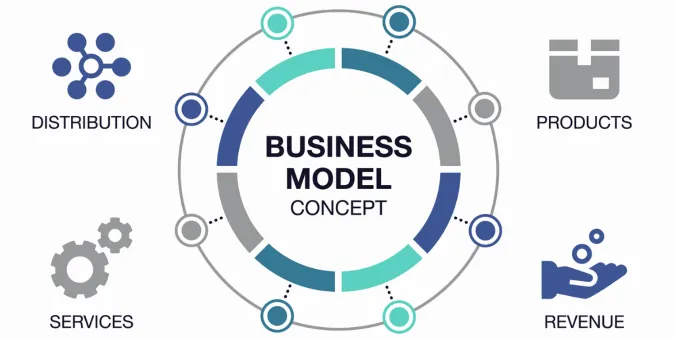
Surviving Is Not a Business Model
A professional services firm had operated for eleven years. Profitable in years when contracts were won, loss-making in years when they were not.
The model was a pipeline: win contract, deliver, collect, repeat. Every year was effectively year one in terms of revenue predictability. The founders were exhausted. The model wasn’t broken — it was simply not designed for scale. It was designed for survival.
Survival-mode businesses are fragile. They rely on perpetual acquisition cycles, are vulnerable to pipeline volatility, and are structurally incapable of generating compound returns. The lesson is clear: survival is not a strategy, and it is certainly not a business model
The Ecosystem Shift: From Pipeline to Architecture
We restructured around three revenue layers:
Within two years, the predictable revenue floor covered 70% of fixed costs before a single project was sold. The team stopped surviving and started building. The business model had been redesigned from a pipeline into an ecosystem.
Core Insight: The Three Revenue Layers Every Scalable Model Requires
A scalable business model operates across three simultaneous layers:
Most businesses operate only in the Growth Layer. Survival-mode businesses live entirely here. Scalable businesses design all three layers and ensure each one feeds the others:
The Three-Step Diagnostic
Silo-Tax Reflection: If your top three revenue-generating relationships ended tomorrow, how long would your business survive? That survival window reveals the architecture of your current model.
Victor’s Ecosystem-thinking Architectural Field Notes
The Three-Layer Model Changed Everything — Including My Own Business
I did not design this framework in theory. I built it by living the consequences of not having it.
Across WiseUP Excellence Programs, GreenDeveX.com, and Wealth Mastery Consortia, I have architected exactly this structure across my own portfolio:
In over 27 years and 33 industries, I have helped organizations reduce acquisition and retention costs by up to 80% through systems-based Go-To-Market Canvas design. The consistent finding: organizations with all three revenue layers grow faster, survive longer, and require less marketing spend than those dependent entirely on the Growth Layer alone.
AI & The End of Vertical Thinking
AI Builds the Authority Layer at Speed and Scale
The most common reason organizations fail to build the Authority Layer is that converting expertise into publishable intelligence is slow, expensive, and inconsistent when done manually.
AI eliminates all three barriers simultaneously:
Organizations using AI-powered intelligence publishing report 3–5x inbound pipeline growth at 60–80% lower cost per qualified lead. Over 30% of the Fortune 1000 now maintain formal authority intelligence programs as a core commercial asset.
GreenDeveX.com’s ICE framework is the infrastructure designed to build your Authority Layer. Across 60 sectors and 600 sub-niches, ICE structures organizational expertise into published intelligence that positions you as the sector standard. This is not content marketing. It is authority architecture.
Brand Intelligence: Evidence in the Market
Ecosystem-Thinking Vs. Vertical-Thinking.

✦ Ecosystem Win:
Spotify built three revenue layers simultaneously:
a free Foundation Layer (user base), a Premium Growth Layer (margin), and an Authority Layer (podcasts, playlists, artist data).
The Authority Layer positioned Spotify as the music industry intelligence standard. Its market cap has grown 10x since launching authority architecture.
✕ Vertical Stall:
Blockbuster operated a single-layer transactional model.
No Foundation Layer, no Authority Layer, no compounding mechanism.
When Netflix introduced subscription and original content, Blockbuster had no structural response. $6B in revenue collapsed to zero in five years.
Your Survival Window Is Your Architecture Diagnostic.
The Silo-Tax reflection — “If your top three revenue-generating relationships ended tomorrow, how long would your business survive?” — is not hypothetical. It is the exact diagnosis that reveals whether your business model is built for survival or scale.
GreenDeveX.com’s ICE framework closes the architectural gap by building the Authority Layer that makes your business model self-sustaining rather than relationship-dependent.
Pioneers of Ecosystem-thinking Growth Model
Our team comprises passionate professionals dedicated to making a positive impact beyond their respective verticals.
Victor I’Syamba – Business Model Builder

Victor Isyamba has redesigned business models from single-layer pipelines into three-layer ecosystems across professional services, food distribution, fintech, and institutional advisory. The architecture is proven. The question is whether you are ready to build it for your organization.
That is how he founded the think-tank behind GreenDevex Narrative Infrastructure, that provides brands & leaders with the right environment worthy of their work.
GreenDeveX.com is committed to help those ideas reach the tables where decisions are made.
Advisory / Thought Partners

GreenDeveX works with experts who shape thinking across key economic clusters, including the public sector, business, finance, culture, social services, and natural resources.
Being part of the advisory group at GreenDeveX.com positions your expertise and experience where it matters.