
How It Works
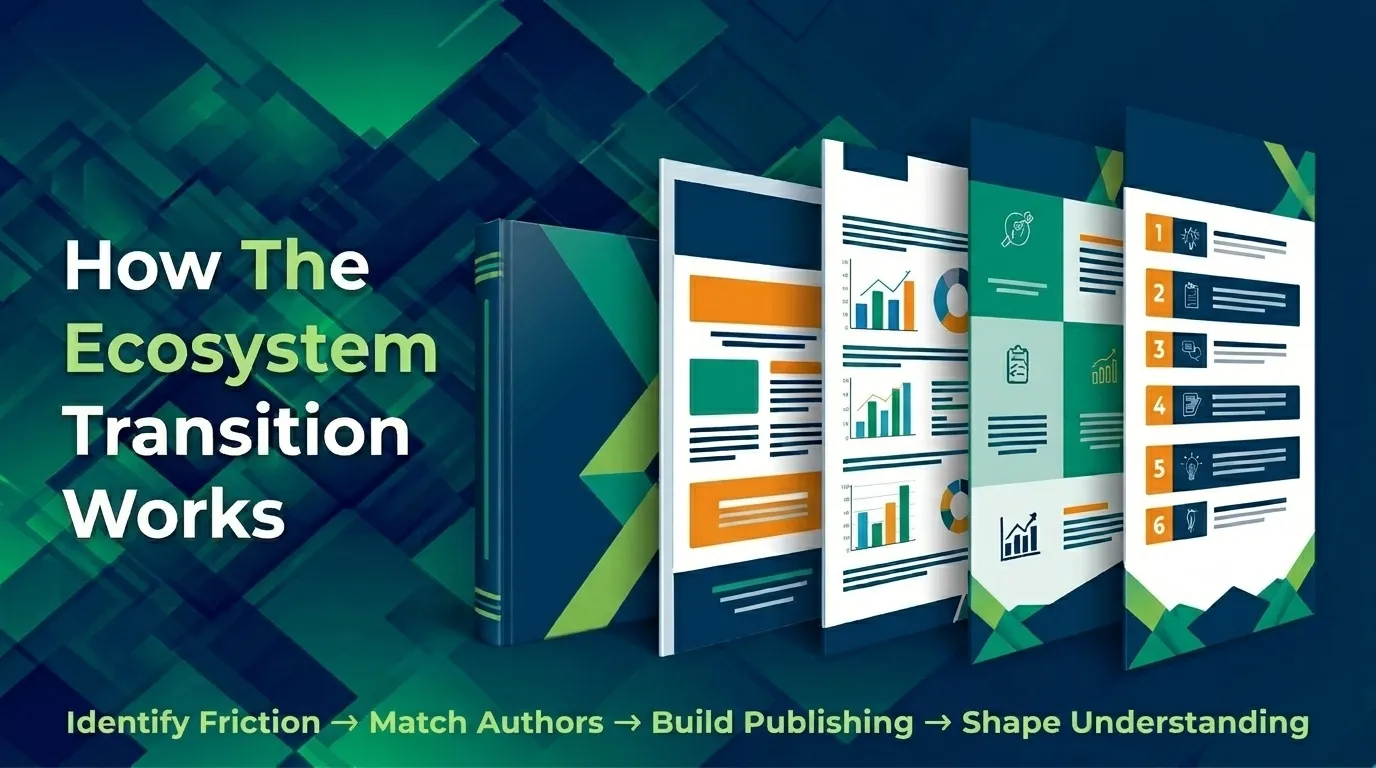
GreenDeveX’s 4-step model works like this:
- First, we map your specific market friction using the 8-point Friction Taxonomy.
- Second, we match the right author archetypes from our 18-archetype framework to resolve each friction.
- Third, we build your publishing infrastructure — research reports, field guides, ecosystem maps, intelligence briefings.
- Fourth, we deploy the system to shape market understanding, turning your brand into a reference point that markets consult, not ignore.
The 4-Step Ecosystem Transition Model
Most brands know they need to move from category leader to market shaper — but how does it actually work?
The cost of not knowing is brutal: you keep investing in campaigns that reset, building no compound authority, watching competitors shape the conversations you should be leading.
GreenDeveX’s 4-step model replaces fragmented campaigns with a compounding publishing system.
The Four Steps at a Glance
| Step | Action | Outcome |
|---|---|---|
| 01 | Identify Friction — Map what slows your market | A precise friction map telling you which market questions remain unanswered |
| 02 | Match Authors — Classify the right archetypes | A matched author ecosystem — each archetype deployed against its specific friction |
| 03 | Build Publishing — Create the infrastructure | A publishing layer that converts author intelligence into accessible understanding |
| 04 | Shape Understanding — Deploy for market authority | A market that understands your value before you need to explain it |
Step One: Identify the Market Friction
What happens: Every market has forces that slow its ability to understand, trust, and adopt.
Before building anything, GreenDeveX maps the specific frictions that are costing your brand velocity — not generic challenges, but the precise interpretation gaps your market faces.
What you do:
Outcome: A precise friction map that tells you which market questions remain unanswered and why growth is slower than it should be.
Step Two: Match the Right Author Archetypes
What happens: Not every author addresses every friction.
GreenDeveX’s 18-archetype classification framework maps each author type to the specific market questions they are built to answer. The match between friction and archetype is the engine of the ecosystem.
What you do:
- Classify authors against the 18-archetype framework
- Match archetype capabilities to identified frictions
- Assess ecosystem fit: industry, audience, publishing format
- Build a curated author shortlist for each friction layer
Step Outcome: A matched author ecosystem — each archetype deployed against the specific friction it was designed to resolve.
Step Three: Build the Publishing Assets
What happens: Understanding travels through formats.
GreenDeveX designs the publishing infrastructure — the intellectual property, assets, and distribution systems — that carry author intelligence to the specific decision-makers your market needs to move.
What you build:
- Research reports and field guides
- Ecosystem maps and intelligence briefings
- Executive interview series and thought leadership content
- Author network publishing and distribution architecture
Step Outcome: A publishing layer that converts author intelligence into accessible, decision-ready market understanding — systematically, not sporadically.
→ Explore Publishing Infrastructure
Step Four: Shape Market Understanding
When the right author ecosystem is deployed through the right publishing infrastructure, influence compounds.
Each asset reinforces the next. Stakeholders begin to associate your brand with understanding, not just products, and market decisions accelerate.
What you do:
Step Outcome: A market that understands your value before you need to explain it — and an authority position that becomes harder to displace over time.
How the Process Differs for Brands and Authors
| For Brands | For Authors |
|---|---|
| You have a clear market position but the market doesn’t fully understand your value yet | You have deep expertise in one or more of the five ecosystem domains |
| Growth slows when marketing activity slows — you lack a compounding system | Your influence feels limited to your existing audience — not yet ecosystem-embedded |
| Investors, partners, or customers take longer to trust your story than the evidence warrants | You want to be classified — to understand which archetype you are and how to build on that |
| You are ready to invest in publishing infrastructure as a long-term authority asset | You want your knowledge to drive market outcomes, not just personal brand metrics |
Ready for Your Ecosystem Transition?
The 4-step model works — but only if you take the first step. Book a 15-minute strategy session to identify your friction and your entry point.
Or continue exploring:
Now that you understand how it works, explore the Author Archetypes Framework — the 18 archetypes that match expertise to friction and power every Ecosystem Transition.
→ Explore Brand–Author Ecosystems
→ Explore Author Archetypes