
Why Sustainability & ESG Efforts Fail To Be Seen (In Manufacturing & Closed-Loop Supply Chains)
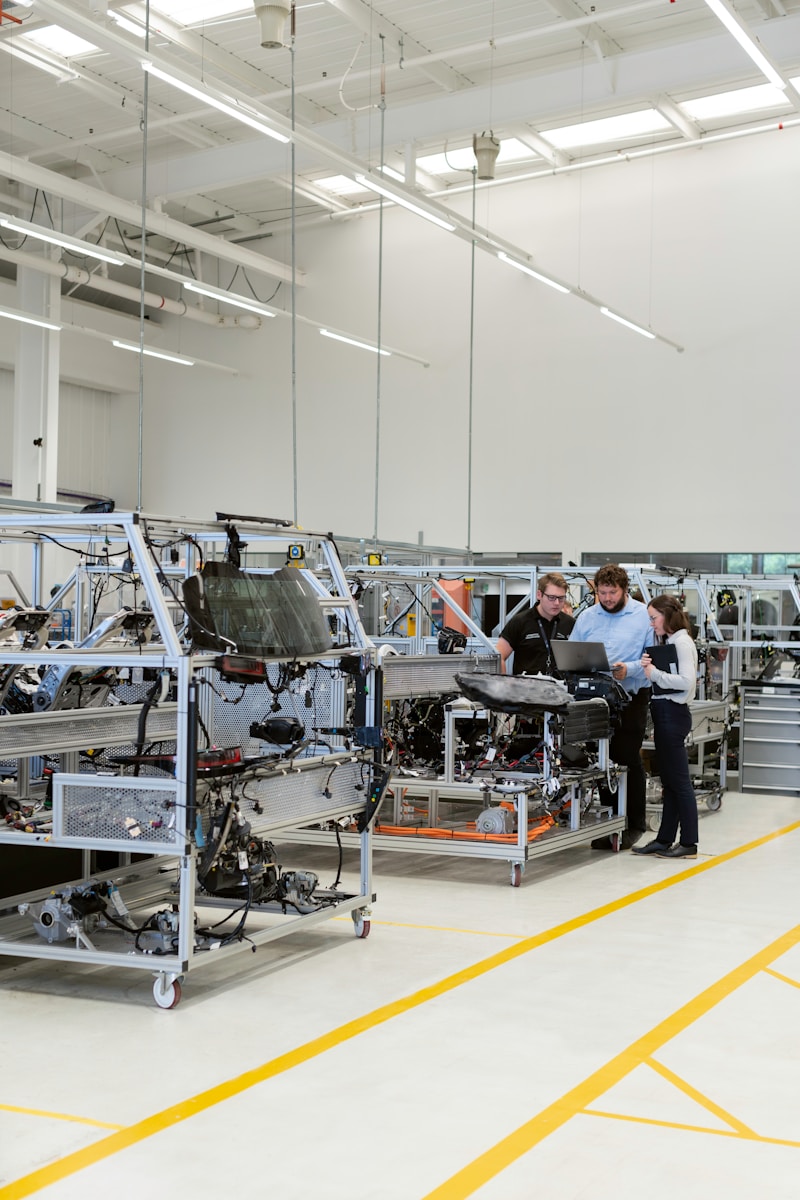
The “Visibility Gap” in manufacturing is a Complexity Problem.
A truly closed-loop supply chain is a marvel of reverse logistics, material science, and re-engineering. However, to the outside observer—be it a consumer or a B2B procurement officer—the final product often looks identical to a linearly produced one.
The immense effort of designing for disassembly, recovering materials, and powering factories with renewable energy happens behind factory gates and deep within complex supply chains.
When the process is invisible, the “Circular Premium” remains unrealized.
What Stakeholders Are Currently Doing (With Zero Results)
To prove their circularity, manufacturers currently rely on:
- Dense Life Cycle Assessment (LCA) Reports: 300-page technical documents full of coefficients and scientifically engineered jargon that are unintelligible to the average investor or B2B buyer.
- Superficial Eco-Labels: Slapping a generic “recyclable” logo on a box, which tells the market nothing about the systemic operational changes the company has made.
- Internal Dashboards: Great for the factory floor manager, useless for the Chief Procurement Officer at a Fortune 500 company looking for a low-carbon supplier.
The Result: A “Credibility Void.” The manufacturer has re-engineered its business, but the market still treats it as a standard, linear “vendor” rather than a strategic “circular partner.”
What GreenDeveX Brand Publishing Strategy Does Differently
GreenDeveX transforms technical circularity into “Operational Integrity Assets.” We move beyond “product claims” and focus on “Publishing the System.”
Our strategy involves:
- Mapping the Closed Loop: Publishing visual and narrative journeys of materials from recovery back to production, making the complex understandable.
- The “Preferred Supplier” Narrative: Creating high-authority B2B content that proves to global brands why choosing your factory de-risks their Scope 3 emissions.
- Regulatory Readiness as a Service: Turning compliance with upcoming Digital Product Passports (DPPs) from a burden into a published competitive advantage.
Who Should Care to Read This Case Study & Act
- Chief Sustainability Officers (CSOs) in Manufacturing: Looking to translate operational shifts into brand value.
- Supply Chain Directors: Seeking to validate their reverse logistics networks to stakeholders.
- Industrial Investors: Searching for companies that are “future-proofed” against resource scarcity and regulation.
The Proof: Why Brand Publishing Matters
Operationalizing the Circular Advantage in the Industrial Economy

The Invisible Closed-Loop
By 2026, the industrial economy has entered a decisive phase: the end of the linear “take-make-waste” model.
Leading manufacturers have re-engineered their operations for circularity—designing out waste, extending product life, and regenerating natural systems. Yet, many of these industrial pioneers are facing a “Visibility Paradox”: the more complex and integrated their circular systems become, the harder they are to explain to the market.
This case study demonstrates how GreenDeveX Brand Publishing utilized Circular Systems Quarterly to bridge this gap for a major industrial manufacturer, transforming their hidden operational integrity into a Strategic Market Advantage.
The transition to a circular economy is not happening in glossy advertising campaigns; it is happening on the factory floor, in the reverse logistics hubs, and in the R&D labs developing novel materials. It is hard, unglamorous, and deeply technical work.
For a leading manufacturing firm of industrial components, this transition was nearly complete. They had achieved zero-waste-to-landfill status across 80% of their sites and had established a robust take-back program for end-of-life products. Their operations were 2026-ready, but their brand perception was stuck in 2015.
The “Visibility Gap” here was existential. Because their circular processes were invisible to their B2B customers, they were frequently losing bids to cheaper, linear competitors from regions with laxer environmental standards.
Their potential clients—global brands with massive Scope 3 reduction targets—could not easily “verify” the manufacturer’s circular claims without conducting expensive, time-consuming audits. The manufacturer was doing the right thing, but the market couldn’t see it efficiently.
The Stakeholder Trap: Why LCA Data Doesn’t Sell
Like many engineering-led firms, this manufacturer believed that the data would speak for itself. They invested heavily in Life Cycle Assessments (LCAs), producing dense, scientifically rigorous reports proving the lower carbon footprint of their recycled-content products.
They sent these PDFs to procurement officers. The result? Silence.
Procurement teams are overwhelmed. They do not have the time or the specialized expertise to deconstruct complex LCA methodology. By relying on raw technical data, the manufacturer was actually increasing the friction for their customers. They were asking buyers to do homework, rather than presenting them with a clear Information Asset that validated the purchasing decision. The stakeholders were drowning in data while starving for insights.
The GreenDeveX Intervention: Publishing the “Operational Integrity”
When GreenDeveX engaged with the manufacturer, our diagnosis was clear: they needed to stop reporting on products and start publishing their system. We deployed a strategy within Circular Systems Quarterly focused on documenting “Operational Integrity.”
1. The “Reverse Journey” Narrative
The most impressive part of their operation was not the final product, but how they got the materials back. We published a definitive series titled “The Second Life of Steel: Inside the Reverse Supply Chain.” We mapped the entire journey—from the customer’s loading dock, through the reverse logistics network, into the remanufacturing facility, and back onto the production line.
By publishing this journey as a compelling, visually rich narrative, we transformed a “hidden cost center” (logistics) into a “Strategic Value Proposition.” We showed B2B buyers exactly how their waste was being turned into value, making the circular loop tangible.
2. The “Scope 3 Savior” Positioning
We recognized that the manufacturer’s B2B clients were desperate to reduce their Scope 3 (supply chain) emissions. We created a “Supplier Integrity Ledger”—a published, citable body of work that directly addressed how the manufacturer’s closed-loop system de-risked their clients’ ESG portfolios.
We stopped talking about “our green features” and started talking about “your Scope 3 solutions.” This shift in narrative perspective was crucial. It positioned the manufacturer not just as a vendor, but as an essential partner in their clients’ own net-zero transition.
The Mechanics of Success: How Brand Publishing De-risks the Supply Chain
The GreenDeveX methodology for industrial circularity is built on Transparency as a Service.
- For the B2B Procurement Officer: We provided “Due Diligence-Ready” articles that could be easily shared internally with their C-suite to justify choosing a higher-quality, circular supplier over a linear one.
- For the Regulator: With the advent of Digital Product Passports (DPPs), we helped the manufacturer publish their data in a format that anticipated future compliance, positioning them as a “safe bet” against future regulatory shocks.
- For the Investor: We published “Retooling Roadmaps” that demonstrated how capital investments in circular machinery were creating long-term asset value and reducing exposure to volatile raw material prices.
The Result: The “Preferred Supplier” Dividend
The impact of this brand publishing strategy on the manufacturer’s market position was transformative. Within 18 months of launching the Circular Systems Quarterly strategy:
- Tender Success Rate: The manufacturer saw a 45% increase in win rates for high-value contracts with Fortune 500 companies. Feedback from procurement directors indicated that the “clarity and transparency of their published circular processes” made them the lowest-risk option.
- Premium Pricing Power: Because they could authoritatively prove the value of their closed-loop system (e.g., guaranteed material availability regardless of global shocks), they were able to move away from commodity pricing and establish long-term, higher-margin partnerships.
- Green Bond Access: The manufacturer successfully raised capital for a new state-of-the-art remanufacturing plant through a green bond. The bond underwriters specifically cited the “published evidence of systemic circularity” as a key factor in the favorable terms secured.
Why Brand Publishing Matters for Manufacturing in 2026
In the industrial economy of 2026, there is no place to hide. The combination of satellite monitoring, supply chain digitalization, and fierce regulatory pressure means that linear business models are becoming uninsurable and uninvestable.
However, being circular in secret is almost as dangerous as being linear in public. If the market cannot verify your operational integrity easily, they will bypass you.
Brand publishing is the mechanism that turns complex operational reality into market-facing authority. It is the bridge between the engineering department and the sales department.
The Proof: The Logic of the Circular Industrialist
The industrial giants flourishing in this new era—from steelmakers using hydrogen to automotive firms recycling batteries—are those that have controlled the narrative of their transition. They don’t just do the work; they publish the blueprint.
Brand publishing matters because it proves that circularity is not a “nice-to-have” feature—it is the new operating system of industrial competitiveness.
The Call to Action for Industrial Pioneers
The “Visibility Gap” is the bottleneck choking the circular economy. If the incredible innovation happening inside our factories remains invisible to the global marketplace, the transition will stall.
At GreenDeveX, we believe that the engineers, logistics experts, and plant managers re-wiring our industrial base are the unsung heroes of the 2030 agenda. But your work is too important to remain hidden behind the factory gates.
If you are a CSO, a supply chain director, or a manufacturing leader, you are sitting on an “Operational Asset” that the world needs to see.
The transition from “Industrial Vendor” to “Circular Partner” begins when you stop drowning your stakeholders in data and start publishing your system. We invite you to join Circular Systems Quarterly.
Is your closed-loop system a hidden secret or a published competitive advantage?
How to Contribute Towards The Circular Systems Quarterly Magazine

Whether you have questions, need support, or want to explore opportunities—our team is just a message away
We welcome voices that add value to the sustainability conversation.
Address
137 Farah Close, Karen, Nairobi
Phone
(254) 798 386 137
partnership@greendevex.com
What You May Submit:
- Opinion pieces
- Research-backed articles
- Country or county case studies
- Field stories
- Interviews
- Policy insights
Submit an Article
Our editorial team reviews each submission and works with authors to refine the piece.