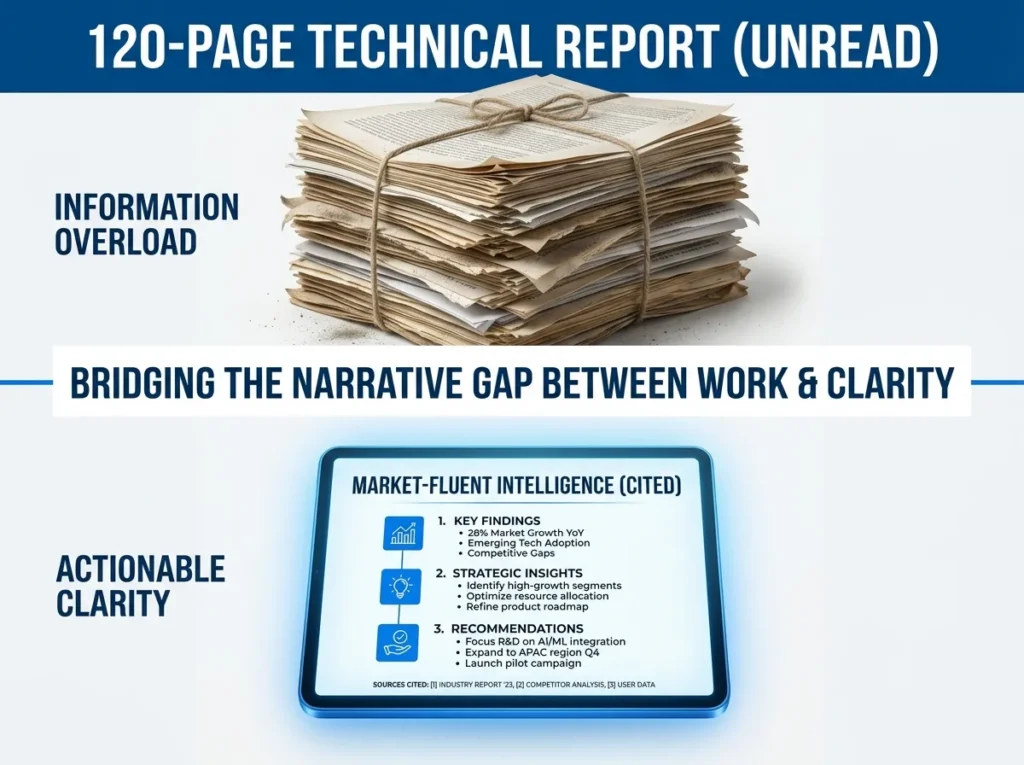
We do not offer “content marketing.” We offer Signal.
We take the raw material already existing within your business (strategy, internal debates, operational data), and we refine it into the high-precision intelligence the market consumes to make informed decisions.
Our high-leverage actions include:
Extraction: We capture your operational genius without costing you a single hour of your time.
Contextual Filter: We translate “technical noise” into “market-fluent” narratives.
Distribution Loop: We embed your thinking into the industry-specific media platforms where your peers are already looking for answers.
Compounding Authority: We turn your insights into permanent, searchable business assets.
Start with the question you are already asking inside your team.
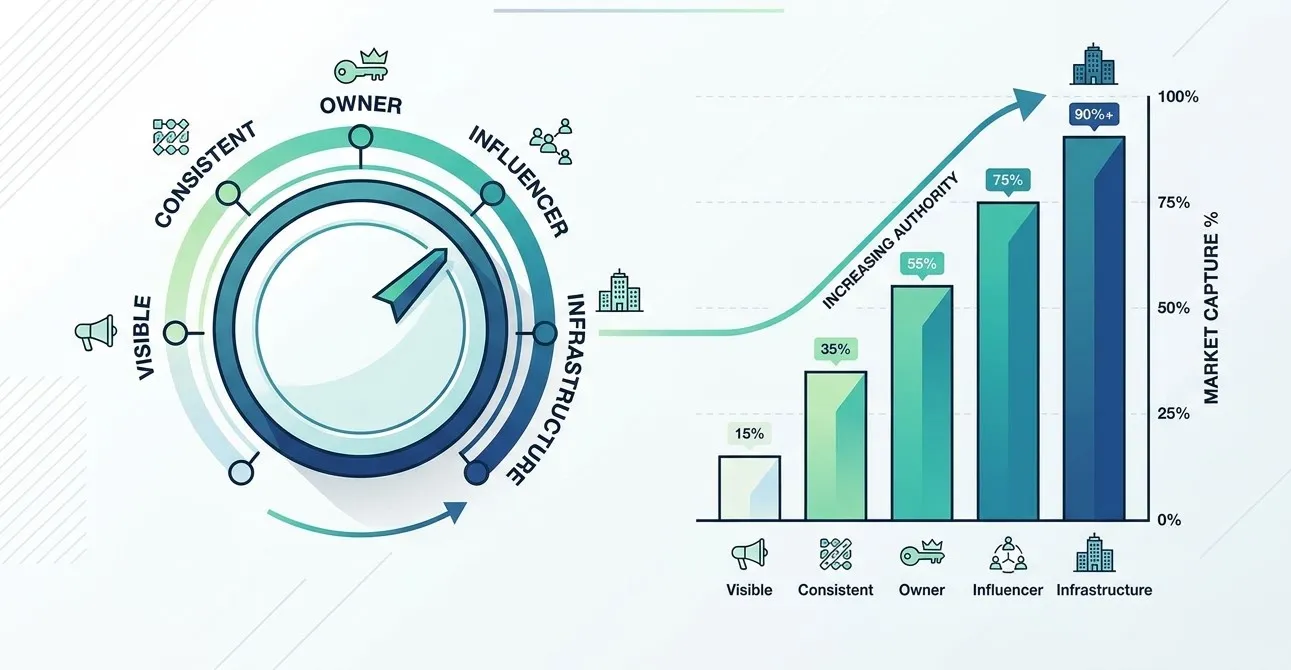
“We are doing the work, why is no one noticing?” You need clarity → Starter Package
$126 / month
“We show up, but not consistently.” You need structure → Consistency Package
$336 / month
MOST POPULAR
“We have strong ideas, but they don’t spread.” You need amplification → Multiplier Package
$696 / month
“We want to be known and referenced.” You need authority → Influencer Package
$1,976 / month
“We want to be present where decisions happen.” You need placement → Infrastructure Package
*$3,996 / month
P.S. If you are unsure which scale fits your current momentum, our 15-minute Strategy Session is designed to find your Gap, not sell you a package.
What Changes When Markets Understand You?
Accelerated Capital Flow and Partnership Velocity.
Funding conversations start with context
Partnerships move with less friction
Your credibility increases before meetings
Your work becomes a reference point
This is not about posting more. It is about being understood faster.
Proof That Brand Publishing Works
Real Outcomes, Not Promises
When the system is this lean, consistency becomes inevitable.
While 67.8% of brands lose opportunities due to IP oversights, our partners position their expertise to preempt the market and secure the room before they even walk in.
$20M Expansion Capital Secured
A clean energy firm turned operational data into a narrative that unlocked growth funding.
Triggering Investment-Ready Transparency for Infrastructure & Governance.
How It Works for Smart Cities, Infrastructure Projects, Civil Service, Governance, begin with turning policy and infrastructure data into stories of shared civic progress.
Converting Cultural Relevance into Permanent Brand Assets.
How it works for Media, Sports, Arts, Talent Management start with using Cultural Capital to turn legacy-building into a desirable trend.
P.S. If you are unsure which scale fits your current momentum, our 15-minute Strategy Session is designed to find your Gap, not sell you a package.
Frequently Asked Questions
Ecosystem Strategy
Business Models
Growth Systems
Market Development
Brand Development
Platform Development
SME Growth
Ecosystem Strategy
How should a CEO use systems thinking for business growth?
By designing systems where technology supports behavior and context guides decision-making.
The Three-Step Diagnostic
Map Actual vs. Designed Information Flow Before any technology investment, document how information actually moves through your organization. Interview ten people across levels. Ask them where they get the information they trust—not where they are supposed to get it. The gap between actual and designed flow is the behavioral architecture problem your technology must solve.
Align Technology Selection with Trust Patterns Identify the two or three informal communication hubs in your organization—the people or channels others route around for real information. Any technology that ignores these hubs will face adoption resistance. Design implementation to leverage existing trust patterns rather than replace them.
Design Behavioral Onboarding Before Technical Onboarding Before training staff on features, design a behavioral onboarding program that explains how the system serves their actual work patterns. Lead with context, not features. “Here is how this system handles the three situations that currently cost you the most time” is always more effective than a feature walkthrough.
How can I reduce business friction to increase value?
By replacing isolated processes with connected systems that reduce duplication and improve coordination.
The Three-Step Diagnostic
Conduct a Friction Audit Identify the five interactions consuming the most time, producing the most complaints, or requiring the most management attention. These are your highest-friction points. List them without blame—they are architectural failures, not personnel problems.
Map the Structural Gap For each friction point, identify the structural gap: missing feedback loop, absent coordination protocol, misaligned incentive, or terminated data flow. Name the gap precisely before designing any solution.
Design One Structural Fix Per Quarter Don’t attempt wholesale redesign. Select the highest-cost structural gap and design one fix. Implement it, measure friction reduction over 90 days, then move to the next. Sequential structural repair compounds faster than simultaneous overhaul.
What is the Intelligence Conservation Engine (ICE) framework?
It is a system that captures, structures, and distributes knowledge to build authority and reduce information loss.
The Three-Step Diagnostic
Inventory Your Intelligence Assets What does your organization know that the rest of your sector does not? List it. This is not about proprietary secrets—it’s about structured knowledge: processes, frameworks, case studies, benchmarks, failure patterns. This inventory is the raw material of your ICE architecture.
Design the Conversion Protocol For each intelligence asset, design a conversion protocol: how will this knowledge be structured, at what frequency, in what format, for which audience? Don’t publish randomly. Build an editorial architecture that positions each piece as a node in a larger intelligence network.
Measure Authority Accumulation Track how your published intelligence is referenced, cited, and shared. Each external reference is evidence that your intelligence is functioning as connective tissue in your market. Set quarterly targets for inbound references and reverse-engineer your publishing schedule to meet them.
How does ecosystem thinking apply to national economic development?
It aligns policy, investment, and brand into one system that attracts, supports, and retains economic activity.
The Three-Step Diagnostic
Audit Policy-Brand Coherence List your top five policy advantages as an investment destination. Review your last five international communications. How many of those advantages appear prominently and accurately? Gaps reveal your coherence deficit.
Map the Investor Journey as an Ecosystem Trace the full journey from first contact with your brand to a signed investment agreement. Identify every touchpoint—website, pitch events, due diligence requests, registration processes, post-entry support. Each is a node in your ecosystem. Design them to reinforce the same signal.
Align Agencies Around a Single Operating Narrative Identify the three to five agencies whose mandates overlap in the eyes of external investors. Convene them around a shared narrative framework—not one agency’s story imposed on others, but a co-designed framework each can authentically express.
What are the core components of a business ecosystem?
Ideas, people, markets, and systems that connect them into one working model.
The Three-Step Diagnostic
Identify Your Intelligence Layer Where is market or operational intelligence currently being generated? Is it converted into actionable signal, or is it sitting in a database, spreadsheet, or someone’s head? The quality of your Intelligence Layer determines the quality of every downstream decision.
Design the Coordination Layer Who needs to receive the signals your Intelligence Layer produces? In what format? On what timeline? Coordination is not a meeting or a report—it is a protocol for routing actionable intelligence to the right actors.
Audit Value Distribution Are participants receiving value proportional to their contribution? Partners who contribute without return will exit. Design an explicit value distribution mechanism and review it quarterly.
Why are my business operations breaking as the company grows?
Because your systems are isolated. Growth exposes gaps between departments that were hidden at a smaller scale.
The Three-Step Diagnostic
Audit for Line vs. Loop Thinking Draw your current operational model. If it looks like a one-way flowchart, you have a line. If arrows return to earlier stages, you have the beginnings of a loop. Identify processes with no feedback mechanism—each is a structural vulnerability.
Build the Feedback Mechanism First Most organizations add measurement after building the process. Ecosystem architecture reverses this. Design the feedback signal before execution. Ask: How will this step know if it is working, and how will that signal reach the step that feeds into it?
Test Loop Integrity Under Simulated Load Before scaling, stress-test feedback loops. Simulate a 3x increase in volume. What breaks first? That is your weak point. Strengthen the loop there before you grow.
How do I scale my business without increasing operational friction?
You stop scaling tasks and start designing systems. Ecosystem architecture connects supply, demand, and execution into one loop, reducing duplication, delays, and decision fatigue.
The Three-Step Diagnostic
Map Your Fragmentation Points List every handoff where value is created in one unit but transferred to another without a structured protocol. Each unstructured handoff is a Fragmentation Point. Most leaders discover 10–20 where they expected 2–3.
Identify the Missing Connective Tissue For each Fragmentation Point, ask: What information should flow here, to whom, and in what format? You’re not adding processes—you’re designing signal pathways that let your system self-correct before problems compound.
Design One Ecosystem Loop Don’t redesign everything at once. Select your highest-cost Fragmentation Point and build one closed loop: input, processing, output, and feedback. Run it for 60 days. Measure friction before and after. That single loop becomes your proof of concept.
Business Models
How do I align marketing with my overall business model?
By designing a system where marketing drives demand into structured distribution channels, product delivers consistent value, and all three functions share data and feedback loops.
The Three-Step Diagnostic
Map the Customer Journey Across All Three Functions Document the customer experience from first marketing contact through product adoption to commercial expansion. At each stage, identify which function is responsible and whether there is a designed handoff protocol or an informal expectation. Every informal expectation is a structural gap.
Align Metrics Around Customer Outcomes Replace departmental metrics with customer outcome metrics.
Marketing → qualified pipeline created
Product → adoption rate
Distribution → net revenue retention Aligned metrics create aligned behavior.
Design the Weekly Alignment Protocol Create a weekly thirty-minute structured conversation between the leads of marketing, product, and distribution. Agenda:
Top three customer friction points this week
Which function is responsible for fixing each
Committed action before next week’s session
How do you build a business model based on trust and data?
By embedding verification, data validation, and risk controls directly into institutional workflows, so that fraud management becomes part of daily operations rather than an external tool.
The Three-Step Diagnostic
Design Your Trust Infrastructure Before Your Sales Process Document your data governance framework: what data you access, how you store it, who has access, how breaches are handled, and what legal commitments you make to data subjects. Review this before a single sales conversation.
Co-Design Integration with Compliance Officers Request early access to your target institution’s compliance officer, not just their technology officer. Offer to co-design the integration protocol. This converts the compliance officer from a gatekeeper into an internal champion.
Build Tiered Trust Products Design your product suite in tiers that correspond to different levels of institutional risk appetite and data access. A lower-tier product with limited data access allows institutions to experience your reliability before committing to deeper integration. Trust is built through demonstrated performance, not promised in a sales presentation.
What does a Chief Productization Officer do?
A Chief Productization Officer structures services into repeatable, scalable products by standardizing delivery, packaging value, and aligning operations with predictable revenue models.
The Three-Step Diagnostic
Conduct a Knowledge Inventory List every framework, diagnostic tool, decision protocol, or sector insight your team currently applies in client engagements. For each, ask: could a competent professional apply this without your direct involvement if it were documented? Every “yes” is a productization candidate.
Prioritize by Market Demand Signal For each candidate, identify whether the market is currently paying someone else for this knowledge (through consulting, research, or training). Strong existing demand means proven willingness to pay. Start with the candidate that has the strongest demand signal and clearest pathway to structured delivery.
Build the Minimum Viable Product Productize one knowledge asset this quarter. It doesn’t need to be comprehensive—it needs to be specific, accurate, and immediately applicable by the buyer without your involvement. Price it at a level that reflects its value to the buyer, not its cost to produce. Test distribution through one channel before investing in infrastructure.
What is a system-led commercial model in B2B sales?
A system-led commercial model aligns distribution, partnerships, pricing, and demand into a coordinated structure that generates consistent and scalable revenue.
The Three-Step Diagnostic
Map the Target Institution’s Existing Workflow Before any sales conversation, invest time in understanding how your target institution currently manages the problem your product solves. Request a workflow mapping session framed as a diagnostic consultation rather than a sales meeting.
Design a Workflow Integration Proposal Convert the workflow map into a specific integration proposal. Identify the three to five workflow steps where your system connects, the cost or friction each connection reduces, and the measurable outcome within a defined timeframe. Present this document rather than a product brochure.
Lead with the Smallest Viable Integration Propose beginning with the one integration that delivers the most obvious, measurable value with the least workflow disruption. Once that integration is in place and performing, expand. Institutional trust is built incrementally through demonstrated performance within the institution’s own environment—not through promises made in a sales presentation.
How do you validate a business model in a circular economy?
By structuring supply, production, and demand into a connected system where each part informs the other, reducing guesswork and capital risk during validation.
The Three-Step Diagnostic
Map Your Buyer’s Decision Environment Document the five to seven decisions your ideal buyer must make before saying yes. Who influences each decision? What information do they need? What fear or uncertainty blocks them? This map is more valuable than any campaign brief.
Identify Your Structural Friction Points In your current acquisition process, identify every step that requires the buyer to do work rather than your team. Every form they must complete, every meeting they must schedule, every approval they must seek internally without your support is structural friction. Each one costs you prospects.
Align Product with Buyer Workflow Redesign your entry-level offer so adopting it requires the buyer to change as little of their existing workflow as possible. The product that integrates into what people already do always outperforms the product that asks them to change how they work.
How can I lower my customer acquisition costs structurally?
By redesigning your go-to-market model so that marketing, sales, product, and distribution operate as one connected system instead of isolated functions.
The Three-Step Diagnostic
Map Your Buyer’s Decision Environment Document the five to seven decisions your ideal buyer must make before saying yes. Who influences each decision? What information do they need? What fear or uncertainty blocks them? This map is more valuable than any campaign brief.
Identify Your Structural Friction Points In your current acquisition process, identify every step that requires the buyer to do work rather than your team. Every form they must complete, every meeting they must schedule, every approval they must seek internally without your support is structural friction. Each one costs you prospects.
Align Product with Buyer Workflow Redesign your entry-level offer so adopting it requires the buyer to change as little of their existing workflow as possible. The product that integrates into what people already do always outperforms the product that asks them to change how they work.
How do I build a business model that is actually scalable?
By designing how value flows across customers, partners, and revenue streams as one system, rather than optimizing isolated functions like sales or marketing.The Three-Step Diagnostic
Audit Your Current Revenue Architecture Categorize your last 24 months of revenue into three buckets: recurring, transactional, and authority-driven (inbound, referral, or IP licensing). If more than 80% sits in the transactional bucket, your model is survival, not scale.
Design Your Foundation Layer First Identify the core value your best clients pay for repeatedly. Package it as a retained service with a predictable monthly fee. Start with the simplest, highest-frequency problem your best clients face.
Build One Authority Asset This Quarter Identify one piece of structural knowledge your organization possesses that your market currently pays consultants or researchers to provide. Convert it into a publishable, purchasable, or licensable asset. One asset per quarter, compounding over two years, produces a fundamentally different business model.
Growth Systems
How do high-performance companies manage to scale so fast?
By shifting focus from individual execution to system design, where processes, people, and partners operate in coordinated alignment.
The Three-Step Diagnostic
Identify Your Personal Decision Dependencies List the decisions made by you or escalated to you weekly. For each, ask: is this decision made by me because I am the best person to make it, or because no system exists for making it without me? The second category is your scaling backlog.
Convert Judgment into Framework For each decision in your scaling backlog, document the criteria you use. Convert those criteria into a decision framework another competent person could apply. Test the framework with one team member. Refine until they reach the same decision you would in 80% of cases.
Design the Escalation Architecture Define explicitly what constitutes a genuine exception requiring your direct involvement. Everything else should be handled by the framework. A well-designed escalation architecture typically reduces executive decision load by 60%–80% while improving decision quality and speed across the organization.
What is the best way to scale a national business operation?
By designing a structured operating model that standardizes execution, aligns teams, and integrates technology into daily operations.
The Three-Step Diagnostic
Build the Central Architecture Before the First Location Before opening any new location, design and operationalize central systems: quality standards, reporting protocols, HR frameworks, and government relationship management. These must exist and function before any location launches.
Define Adaptation Zones Explicitly For each central standard, identify the specific elements that must be adapted for local context. Document both the non-negotiable standard and the adaptation parameters. This prevents inconsistency while preserving genuine flexibility.
Design the Government Relationship Architecture Centrally Government relationships at the national level cannot be managed locally without central coordination. Designate a central government relations function that coordinates all national-level relationships and provides interface standards for local operations engaging with regional representatives.
How do I align business departments for better growth?
By connecting acquisition, product experience, and monetization into one system where each stage supports the next instead of operating independently.
The Three-Step Diagnostic
Build a Single Customer Lifetime Value Model Track value from first acquisition cost through average relationship duration for your best customers. Share this model across acquisition, product, and monetization functions. It reveals where optimization in one area creates costs in another.
Identify Natural Expansion Moments In your product or service, identify the three to five moments where customer success naturally creates conditions for expanded engagement. These are your expansion triggers. Design product and customer success explicitly around these moments.
Align Incentives Across Functions Redesign team incentives:
Acquisition → partially compensated on customer lifetime value, not just volume.
Product → partially compensated on expansion revenue, not just activation.
Monetization → partially compensated on retention, not just initial contract value.
Aligned incentives drive aligned behavior faster than any strategy document.
How can I improve my company’s route-to-market strategy?
By aligning distributors, partners, and product flow into one coordinated system where demand, supply, and delivery are connected.
The Three-Step Diagnostic
Audit Partner Value Exchange For each partner in your current distribution network, identify what value they receive beyond margin. If the answer is only margin, the relationship is transactional and vulnerable. Design one additional value delivery mechanism for your top ten partners this quarter.
Build the Intelligence Return Loop Design a structured mechanism for partners to return market intelligence to your central system. What are they seeing in the market that you are not? What are customers asking for that you are not providing? This intelligence is worth more than any market research budget.
Create a Partner Performance Ecosystem Share anonymized comparative performance data across your partner network. When partners can see how their performance compares to the network average, the best partners become more motivated and the average partners identify improvement opportunities. Transparency in performance, properly managed, drives collective improvement.
How do you coordinate small entities for large-scale growth?
By designing a system that aligns incentives, standardizes operations, and connects distribution so each participant benefits from shared growth.
The Three-Step Diagnostic
Map the Coordination Gap Identify the specific points where fragmented individual actors in your target system could create more value by coordinating than by acting independently. Quantify the value gap: what does a coordinated actor earn compared to a fragmented one? This gap is the business case for building the coordination architecture.
Design the Simplest Possible Coordination Mechanism Start with the one coordination function that creates the most immediate value for the most actors. In many emerging market contexts, this is shared intelligence about prices, buyers, or standards. Build the simplest possible system that delivers that intelligence consistently before attempting to coordinate more complex functions.
Build Corporate Bridge Relationships First Fragmented actors need access to large buyers to justify participation in a coordination architecture. Secure the corporate relationships before recruiting the fragmented actors. Demonstrating that coordination delivers access to markets that individual actors cannot reach independently is the most powerful recruitment argument available.
How do I turn my business’s scattered efforts into growth?
By replacing isolated, function-based execution with a connected system where marketing, operations, and revenue flows are aligned into a single growth engine.
The Three-Step Diagnostic
Calculate Your True Acquisition Cost Include not just marketing spend but the fully loaded cost of every person whose time touches the acquisition process: sales, legal, onboarding, implementation support. True acquisition cost is almost always 40%–200% higher than the marketing budget alone.
Map the Five Highest-Cost Drop-Off Points Identify the five stages in your acquisition-to-retention journey where the highest percentage of potential revenue is lost. Rank them by cost. Address them in order. The highest-cost drop-off point, fixed first, almost always produces the most dramatic cost reduction per unit of design effort.
Design a Referral Architecture Your best customers are your cheapest acquisition channel. If you do not have a designed, measured referral architecture that systematically converts satisfied customers into active referrers, you are funding expensive acquisition for a resource that should be free. Design the referral system. Measure it. Optimize it monthly.
How do I turn my business’s scattered efforts into growth?
By designing a system that connects marketing, operations, and revenue flows, ensuring that all activities contribute to a single, coordinated growth objective.
The Three-Step Diagnostic
Audit for Compounding vs. Non-Compounding Activity List the top twenty activities your team performs weekly. For each one, ask: does completing this activity make the next occurrence faster, cheaper, or higher quality? If yes, it is compounding activity. If no, it is maintenance activity compensating for missing architecture.
Protect Compounding Activities Structurally For each compounding activity, design a system that ensures it happens consistently regardless of workload or management attention. Compounding activities that depend on individual initiative will be the first casualties of a busy week.
Replace Maintenance Activities with Systems For each high-frequency maintenance activity, ask: what architectural change would eliminate the need for this activity? Design the simplest possible system that makes the maintenance activity unnecessary. One system per month, sustained over a year, produces dramatic structural improvement.
Market Development
How do African businesses connect with global markets?
The Three-Step Diagnostic
Identify Your Global Demand Signal Research which global buyer categories are actively seeking intelligence about your sector: investment funds, DFIs, multinational supply chain teams, ESG research organizations. Identify your specific buyer category before designing product format.
Structure for Global Standards Global buyers expect intelligence in familiar formats: executive summaries, sector overviews, risk frameworks, investment rationale documents. Structure African expertise in globally legible formats while retaining contextual depth.
Distribute Through Global Channels Productized African expertise must reach international buyers. Use channels like LinkedIn thought leadership targeting global audiences, partnerships with research aggregators, or direct engagement with investment conference circuits.
How does ecosystem thinking drive national economic development through tourism?
The Three-Step Diagnostic
Map the Full Visitor Experience Ecosystem Document every touchpoint a visitor encounters — from research to departure. Assess consistency and quality. The weakest touchpoints define the visitor experience, regardless of how strong the others are.
Align Policy to Experience Standards Identify the three to five policy environments most directly affecting visitor experience: visa processing, safety, transport, health. Benchmark against competitor destinations. Establish improvement targets and timelines.
Design the Investor Experience as Part of the Visitor Ecosystem For destinations competing for investment alongside tourism, treat the investor journey as part of the ecosystem. Investors often arrive as visitors first. The visitor experience is your first investment pitch.
How do you sell effectively to large institutions?
The Three-Step Diagnostic
Request a Workflow Discovery Session Before Any Proposal Frame a pre-proposal meeting as a workflow discovery session. Understand their current process before designing your proposed integration. This positions you as a problem partner, not a product vendor.
Map Your Product to Their Process, Not Your Process In your proposal, describe integration at each stage of the institution’s existing process. Use their sequence, terminology, and priorities. Your product should appear as a component within their system, not as a replacement for it.
Design a Risk Mitigation Narrative Identify the three to five risks procurement officers will face internally if they approve integration. Address each risk explicitly with a mitigation: contractual guarantee, pilot structure, rollback protocol, or performance milestone.
Can the informal economy be structured without losing its flexibility?
Yes. By introducing coordination, visibility, and aligned incentives, informal trade can scale while keeping its core strengths.
The Three-Step Diagnostic
Define Your Authority Domain Identify the specific domain within your sector where your insight is deepest. Don’t try to be authoritative across the entire sector. Choose the narrowest domain where your depth is unmatched and build outward.
Establish a Publishing Cadence You Can Sustain Consistency builds authority more effectively than bursts of volume. Choose a cadence you can maintain for two years — weekly, biweekly, or monthly. Commit to it. Missing cadence destroys trust.
Design for Citation, Not Just Consumption Authority content is designed to be cited, referenced, and shared by professionals. Every piece should contain one framework, dataset, or insight that a professional would want to reference in their own work.
How can a market grow revenue quickly without increasing costs?
By organizing existing market activity into a coordinated system that improves flow, visibility, and pricing stability.
The Three-Step Diagnostic
Conduct a Market Development Audit For each market you are considering entering, audit five dimensions: regulatory alignment, relationship infrastructure, delivery capability, brand positioning, and demand validation. Score each from one to five. Only enter markets where all five score three or above. Strengthen weak dimensions before entry.
Build Government Relationships Before Government Contracts In markets where government is a significant buyer, invest in policy-level relationships before pursuing contract-level relationships. Renewals come from trust built over years, not just contract wins.
Design the Quality Infrastructure Before the Growth Infrastructure Before hiring salespeople, build delivery and quality assurance systems that can fulfill promises. Growth that outpaces delivery quality is the fastest path to market exit. Growth paced by delivery quality compounds indefinitely.
How do I quickly validate a B2B product in a new market?
By structuring a working demand ecosystem that connects buyers, suppliers, and delivery before pushing for scale.
The Three-Step Diagnostic
Map the B2B Decision Architecture Identify the three to five people involved in every significant purchase decision: economic buyer, technical evaluator, end user, procurement gatekeeper, and executive sponsor. Design an engagement strategy that reaches all five simultaneously rather than sequentially.
Build Informal Commitment Before Formal Proposal Before investing in proposals, RFPs, or contracts, seek informal commitment signals. A procurement officer saying, “If you can deliver X at Y quality by Z date, we’d be interested in volume V” is a validated demand signal worth more than a thousand survey responses.
Design the Minimum Viable Supply for Validated Demand Once informal commitments represent your daily value target, design the minimum supply infrastructure required to fulfill them. Build only that infrastructure first. Expand only after actual commercial performance data confirms demand.
How do corporates build profitable routes to market in Africa?
By structuring systems that connect informal vendors into their distribution model, aligning incentives, and creating visibility across the value chain.
The Three-Step Diagnostic
Map the Informal Value Chain Spend thirty days mapping how value actually moves through the informal sector you are targeting. Identify real aggregators, price discovery points, and quality standards that emerge from practice. This reveals the architecture you can build on rather than replace.
Design the Aggregation Interface Identify the three to five functions individual informal actors cannot perform at corporate scale: quality certification, logistics guarantees, payment systems, demand forecasting. Build a coordination system that performs these functions collectively on behalf of the network.
Align Corporate Incentives with Network Health Structure partnerships so that a percentage of corporate efficiency gains flows back into the informal network as training, equipment, or credit access. Networks whose health is funded by corporate partners grow faster and produce higher quality more consistently than networks that are simply extracted from.
Brand Development
How does productization help in building brand authority?
The Three-Step Diagnostic
Inventory Your Latent Intelligence Assets Review the last three years of work. Identify insights, frameworks, benchmarks, and learning hidden in files, presentations, and debriefs. Estimate their market value if structured and distributed.
Establish an IP Governance Protocol Design a protocol to systematically extract non-confidential, generalizable intelligence from each client project within two weeks of completion. This ensures your authority asset factory is continuously producing.
Design Three Product Tiers Convert latent assets into:
Free tier: builds awareness and authority.
Paid tier: structured frameworks and benchmarks.
Premium tier: customized advisory applications.
Together, these tiers create a product ecosystem serving early-stage buyers through to institutional clients.
How does ecosystem thinking apply to brand building?
The Three-Step Diagnostic
Map Your Brand Ecosystem List every external actor who interacts with customers or supplies inputs. Assess alignment with brand promise. Every misalignment is a brand risk communications cannot insure against.
Design Brand Standards for Ecosystem Partners Establish clear brand standards for key partners, especially those visible to customers. Incorporate standards into agreements. Create simple audit mechanisms. Partners who cannot meet standards are liabilities, regardless of cost advantage.
Create a Shared Value Narrative Build the brand story around collective outcomes your ecosystem produces, not just internal outcomes. When suppliers, delivery partners, and distribution networks see themselves authentically in your brand story, they become advocates. Ecosystem advocacy is more credible than paid endorsements.
How can I build brand authority in my industry?
The Three-Step Diagnostic
Conduct a Brand-Operations Alignment Audit For each major brand promise, identify the operational system responsible for delivering it. Assess the gap between promise and reality. Unsupported promises are credibility liabilities.
Prioritize the Highest-Impact Structural Gap Identify the one structural gap between brand promise and delivery that, if closed, would most impact customer experience and commercial outcomes. Invest in closing that gap before the next brand communication.
Build the Failure Library C-Suite buyers trust brands that demonstrate self-awareness about limitations as much as success. Document failures, suboptimal outcomes, and lessons learned. Publish these alongside success stories. Authenticity builds authority faster than polished positioning alone.
What is narrative infrastructure in brand mastery?
The Three-Step Diagnostic
Design Your Sector Vocabulary
Action: Identify 10–15 core terms buyers must understand to evaluate your sector.
Output: Publish concise, authoritative definitions and enforce their use across all communications.
Impact: Shared language collapses explanation time and signals professionalism.
Create the Reference Framework
Action: Develop one named, repeatable diagnostic or analytical framework buyers can use to assess their situation.
Output: A structured tool (diagnostic checklist, maturity model, ROI calculator) that others adopt.
Impact: Framework adoption turns your brand into the default evaluation lens.
Establish the Publication Standard
Action: Define a publication template, depth expectation, and quality benchmark for sector intelligence.
Output: Quarterly briefs, case learning documents, and annual sector reports that meet the standard.
Impact: Your publication becomes the market’s reference; others are judged against it.
How do you build a nation brand system?
The Three-Step Diagnostic
Conduct a Brand-Reality Audit For every major claim in your nation or organizational brand positioning, identify the operational reality a sophisticated investigator would encounter. Classify each claim as verified, partially verified, or aspirational. Aspirational claims are credibility risks.
Sequence Investment: Reality Before Amplification Establish a rule: no new brand claim is amplified until the operational reality that supports it is measurably established. This slows communication timelines but ensures every investment builds reputation, not liability.
Design the Ambassador Architecture Identify 10–20 actors who, if they became genuine advocates, would have more influence than any advertising campaign. Design structured engagement programs that give them direct, verifiable experiences of the brand reality.
What is brand publishing in B2B marketing?
The Three-Step Diagnostic
Define Your Publishing Mandate Identify 2–3 domains where your organization has genuinely differentiated insight. These become your publishing domains. Publish deeply, not broadly. Depth builds authority faster than breadth.
Design a Publishing Architecture, Not a Content Calendar A content calendar schedules publications. A publishing architecture designs a body of knowledge: themes, formats, depth levels, and audience segments. Architecture produces coherence and authority. Calendars produce disconnected pieces.
Measure Authority Accumulation Quarterly Track three metrics:
Inbound inquiry rate from non-referral sources
Citation/reference rate of your published content
Change in competitive positioning in procurement processes where your published work was visible before the proposal
How do I integrate marketing into my business model?
The Three-Step Diagnostic
Audit Marketing’s Structural Position Map where marketing connects to your business. Does product consult marketing during development? Does sales feed intelligence back? Does customer success generate content assets? Each missing connection is a structural gap reducing ROI.
Integrate Marketing Into Three Business Decision Points Choose three decision points — product development, sales strategy, pricing — where marketing intelligence should be present but isn’t. Design simple protocols: what intelligence marketing brings, in what format, at what stage. Integrate these this quarter.
Redesign Marketing’s Success Metrics Replace campaign outputs (awareness, content volume) with business outcome metrics: pipeline contribution, CAC impact, CLV influence. Metrics define behavior. Business outcome metrics create a marketing function that thinks like a business architect, not a campaign manager.
Platform Development
How do you redesign vendor management for faster cycle times?
The Three-Step Diagnostic
Separate Genuine Risk Safeguards from Accumulated Friction Audit every step. Classify as either:
Genuine safeguard (prevents a documented risk).
Accumulated friction (added historically without current justification). Eliminate or automate the second category.
Design Vendor Intelligence Sharing Build structured mechanisms for sharing operational intelligence: demand forecasts, evolving quality standards, process changes, performance benchmarks. Vendors who receive intelligence perform better. Vendors who don’t can only guess.
Create Tiered Vendor Relationships Establish tiering based on strategic importance:
Tier 3: Standard procurement protocols. Tiering ensures relationship depth is invested where it generates the most value.
How do I turn company data into usable information assets?
The Three-Step Diagnostic
Inventory Your High-Value Decisions List 10–15 decisions with the highest impact on performance. For each:
Who makes it?
How often?
What information is currently used?
What information would improve it? This inventory is your intelligence architecture specification.
Design Decision-Specific Intelligence Feeds For each high-value decision, design feeds:
Data sources
Processing logic
Output format
Delivery timing Start with the three highest-impact decisions. Build and test before expanding.
Measure Decision Quality, Not Data Quality Replace data quality metrics (completeness, accuracy, freshness) with decision quality metrics (speed, confidence, outcome accuracy). The purpose of data architecture is better decisions. Measure whether decisions improve, and let that guide investment.
How do you build a platform for fraud management and trust?
The Three-Step Diagnostic
Develop Institution-Type Specific Blueprints Before building features, develop workflow blueprints for each institution type. Understand compliance, governance, and operational rhythms. Build product decisions around enabling compliance, not requiring deviation.
Design the Trust Certification Architecture Identify the 3–5 certifications required for adoption in your domain. Obtain them before market entry. Institutions look for certification signals first; missing them ends evaluations before they begin.
Build the Institutional Relationship Architecture Identify the five stakeholder types whose alignment is required: compliance, IT, risk, procurement, and executive sponsorship. Design engagement protocols for each. Adoption is a multi-stakeholder navigation challenge. Products that design for decision architecture consistently achieve higher win rates.
How do I turn my business platform into a growth engine?
The Three-Step Diagnostic
Map Actual User Workflows Before Platform Design Spend 30 days observing how users accomplish tasks. Record tools, sequences, information needs, and friction points. This observation becomes your design specification.
Design Adoption Metrics, Not Engagement Metrics Measure adoption by outcomes accomplished, not by session time or logins. A user who logs in briefly and achieves their goal is success. A user who spends an hour without achieving their goal is failure.
Build the Behavior Feedback Loop Continuously monitor actual usage versus designed usage. The gap is your improvement signal. Platforms become engines when they learn from user behavior and adapt over time.
How can a knowledge system reduce operational support demand?
The Three-Step Diagnostic
Categorize Your Support Interactions Analyze six months of support logs. Categorize into:
Questions that should be self-answerable.
Decisions needing guided workflows.
Novel problems requiring expert judgment. The first category is your backlog. Build self-service for the most frequent items first.
Design for Search, Not Browse Most systems are designed as libraries. Most users search, not browse. Build architecture around search queries. User queries become your taxonomy.
Build the Continuous Improvement Loop Design a protocol to convert new support interactions into knowledge assets within 48 hours. Every answered question not yet in the system is a gap. Closing gaps continuously prevents decay and compounds efficiency.
What is the Green Development Exchange (GDX) platform?
The Three-Step Diagnostic
Define the Platform’s Intelligence Architecture Before technology decisions, define the architecture: what knowledge types, in what structures, at what depth, for which audiences, with what authority positioning. Architecture determines value.
Design for Sector Authority, Not Content Volume Resist scaling content volume prematurely. One sector, deeply covered with consistent standards, builds more authority than ten sectors with shallow coverage. Establish authority in one domain before expanding.
Build the Global Distribution Architecture African industry knowledge has global market value. Ensure distribution reaches international buyers, investors, and researchers. This requires:
SEO targeting global search terms
Partnerships with international aggregators
Content formats meeting global professional standards
What is an operational ecosystem in software development?
The Three-Step Diagnostic
Map the Information Flow Architecture Before procurement, map every significant information flow: what data moves, from whom to whom, in what format, at what trigger, with what verification, and with what downstream use. This is your architectural specification.
Identify the Highest-Cost Handoffs In the flow map, identify the five handoffs consuming the most time, errors, or manual intervention. Redesign these with structured protocols before investing in technology.
Build for Self-Documentation Design flows to generate their own audit trail automatically. Every transaction, decision, and status change should be logged without manual documentation. Self-documenting systems reduce support demand, accelerate diagnosis, and create operational intelligence for continuous improvement.
SME Growth
How do I validate a new business idea on a budget?
The Three-Step Diagnostic
Define Your Minimum Validation Milestone Before spending capital, define the milestone that proves demand: e.g., letters of intent, purchase orders, or deposits from buyers. Fund only activities required to reach this milestone.
Identify the Existing Ecosystem You Can Participate In Leverage existing infrastructure: shared production facilities, distribution networks, payment systems, or cooperative purchasing. Participation reduces cost and accelerates validation.
Build Your $100K Validation Plan Design the sequence of activities to prove or disprove demand: who to contact, what to offer, how to fulfill first orders, and what confirmed demand looks like. Execute rigorously. The outcome is either commercial validation worth funding or a clear, inexpensive understanding of why the model doesn’t work.
How can an SME founder automate their business operations?
The Three-Step Diagnostic
Calculate Your Founder Risk Score List critical functions. Rate 1–5:
1 = fully systematized, multiple team members can execute.
5 = completely dependent on founder. Average score = Founder Risk Score. Above 3 = significant enterprise value discount. Reduce highest scores first.
Build the Operations Protocol Library For every function scoring 4–5, write a protocol: documented procedure with decision criteria, escalation thresholds, quality standards, and performance metrics. Build one per week for six months.
Implement Fractional Management Before hiring full-time managers, engage fractional HR, CFO, or CMO. Fractional management is cost-effective and brings system-thinking expertise SMEs often lack. It installs architecture that reduces founder dependency.
How do I shift my leadership team from tactics to systems thinking?
The Three-Step Diagnostic
Define the System Output Before Any Tool Selection Specify measurable outputs: e.g., “12 qualified prospects per month with defined characteristics in a specific decision stage.” Vague outputs like “more brand awareness” are not system outputs.
Map the System Before Building It Draw the system: inputs (awareness), processing steps (education, trust-building, decision support), outputs (conversion). Identify channels/tools for each step. Gaps reveal where system failures occur.
Measure System Performance, Not Channel Performance Report system metrics: qualified prospects, conversion rates, cost per conversion, lifetime value. Channel metrics are useful only within the context of system performance.
How do I create a high-performance environment for SME leadership?
The Three-Step Diagnostic
Audit Your Current Thinking Environment Assess diversity of perspectives, frequency of structured challenge, and rigor of decision documentation. Low scores explain poor decision quality.
Design a Peer Advisory Structure Identify 4–6 peers at comparable stages in complementary sectors. Propose monthly structured advisory meetings with defined agendas. Each member presents one strategic challenge; the group applies structured challenge and generates alternatives.
Implement a Decision Documentation Practice Before every major decision, write down:
The assumption you’re making.
The evidence supporting it.
The alternative if the assumption is wrong.
The signal that would prove it wrong. Review quarterly. This practice forces visibility of hidden assumptions and improves decision quality over time.
What are the first steps for SME brand building?
The Three-Step Diagnostic
Define Your Brand Architecture in Four Sentences Write four sentences: problem solved, client served, outcome delivered, evidence of trust. Every word must be testable against actual delivery. Aspirational words without proof are liabilities.
Audit All Touchpoints Against the Architecture Review website, proposals, presentations, social media, email signatures, introductions. Each must communicate the architecture clearly and consistently. Any deviation erodes authority.
Invest in Depth Before Breadth For SMEs in developing markets, authority builds faster by going deeper with fewer clients. Identify your 20 best prospects and design brand experiences specifically for them: tailored content, conversations demonstrating insight, and relationships that provide direct evidence of expertise.
How do micro-enterprises increase their revenue in emerging markets?
The Three-Step Diagnostic
Identify the Ecosystem You Should Be Participating In Map your sector’s value chain. Identify aggregators, corporate buyers, financial institutions, and service providers. Assess which actors are building coordination architectures you can join. Participation in an existing ecosystem is often the fastest path to benefit.
Calculate Your Ecosystem Participation Premium Estimate the specific economic value ecosystem participation would generate: corporate pricing, larger buyers, financial services, reduced logistics or marketing costs. This calculation is your participation justification. Know the number before committing.
Design Your Contribution to the Ecosystem Every ecosystem has participation standards. Identify the quality, reliability, or volume standards required. Design a preparation plan to meet them before seeking formal participation. Rigorous standards ensure ecosystems generate real value.
How can an SME achieve predictable growth?
The Three-Step Diagnostic
Map Your Complementary Partner Universe Identify 10–15 professionals or organizations serving the same client type but offering non-competing services. Assess client overlap, service complementarity, and credibility alignment.
Design Mutual Value Before Proposing Partnership Before approaching partners, design the specific value you’ll provide: referrals, shared intelligence, co-produced events, or credibility transfer. Clear value creates commitment.
Establish a Partner Intelligence Protocol Create structured mechanisms for sharing market intelligence: monthly briefs, quarterly reviews, or shared platforms. Ongoing value sustains ecosystem relationships.
Insights
See How Others Are Turning Visibility Into Leverage