
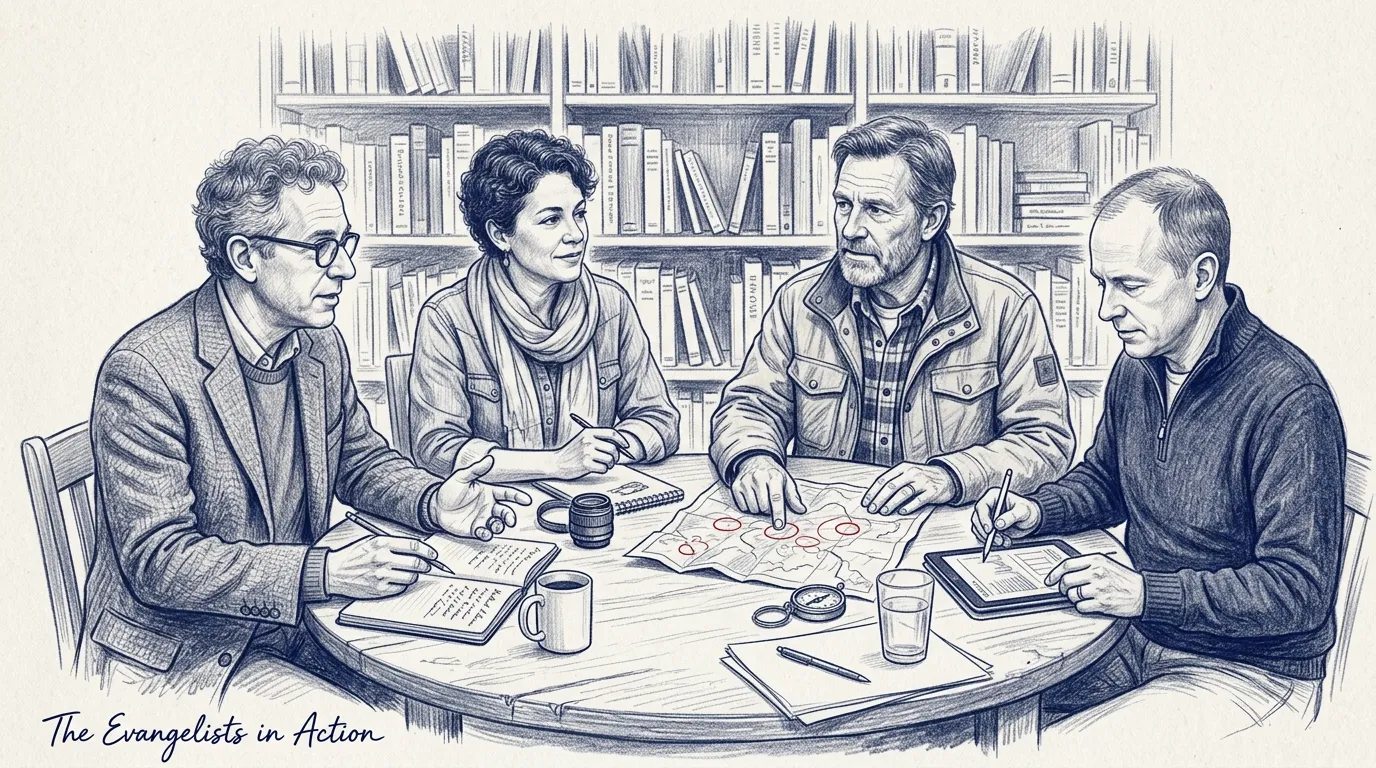
What The Evangelist Does
Core Question: Why should I care?
The Evangelist resolves market skepticism through passionate, evidence-backed conviction.
Where markets are frozen because doubt outweighs trust, the Evangelist provides the intensity, the proof, and the lived belief that transforms “show me” into “I’m in.”
Evangelists are not salespeople. Salespeople close transactions. Evangelists create converts. They do not persuade through pressure; they attract through conviction. Their belief is contagious—not because they are loud, but because they are real.
The Evangelist does not argue skeptics into agreement. The Evangelist demonstrates belief so compellingly that skepticism becomes irrelevant.
7 Ideal Characteristics of The Evangelist
What Makes This Author Archetype Capable of Resolving the Skepticism
| # | Characteristic | What It Looks Like |
|---|---|---|
| 1 | Contagious Conviction | Believes so deeply that belief spreads. Not performative—authentic passion that cannot be faked. |
| 2 | Evidence-Backed Passion | Emotion grounded in fact. Fire without blowing smoke. Can cite chapter and verse. |
| 3 | Skeptic Empathy | Understands why people doubt. Does not dismiss skepticism as ignorance. Meets doubt where it lives. |
| 4 | Conversion Instinct | Knows how to move people from no to yes. Not manipulation—genuine transformation. |
| 5 | Resilience to Rejection | Hearing “no” does not diminish belief. Evangelists persist because they know what they know. |
| 6 | Community Magnetism | Naturally attracts followers. People want to believe what the Evangelist believes. |
| 7 | Generosity of Spirit | Shares credit freely. Wants others to succeed. Believes the mission is bigger than ego. |
Real-Life Example:
Steve Jobs
Steve Jobs, the co-founder of Apple, is a definitive example of The Evangelist archetype in action.
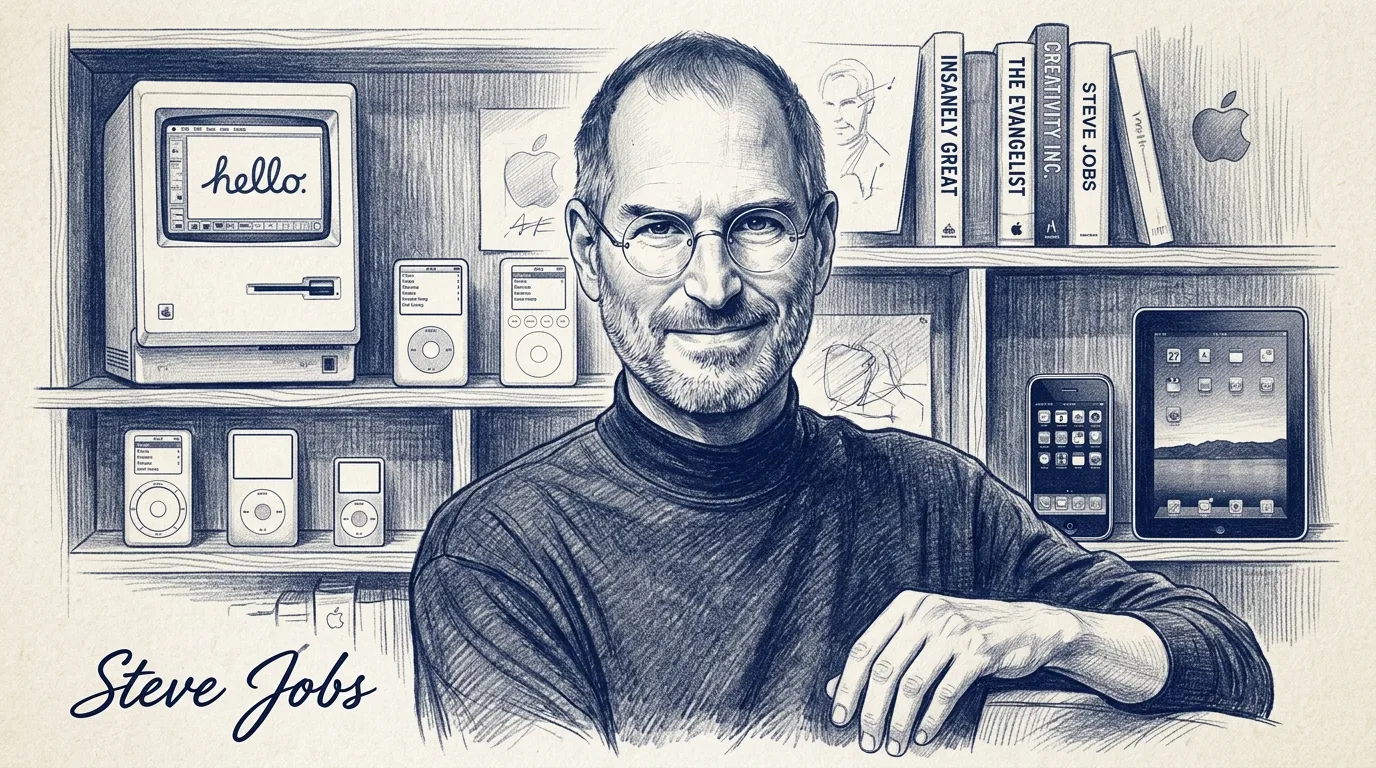
Why does he embody The Evangelist:
| Characteristic | How Steve Jobs Demonstrates It |
|---|---|
| Contagious Conviction | He believed Apple products would change the world—and made audiences believe it too. The “Reality Distortion Field” was not deception; it was conviction so strong it became contagious. |
| Evidence-Backed Passion | His evangelism was not empty hype. The Mac, iPod, iPhone, and iPad delivered on his promises. He could be passionate because the products backed him up. |
| Skeptic Empathy | He understood why people doubted. He had been fired from Apple. He had failed. He used that history to make his return and later successes even more compelling. |
| Conversion Instinct | His keynotes were not product launches. They were conversion experiences. Audiences left believing they needed something they had not known existed an hour earlier. |
| Resilience to Rejection | After being ousted from Apple, he founded NeXT and Pixar. He did not stop believing. He built again. When he returned to Apple, that resilience was part of his authority. |
| Community Magnetism | Apple users are not customers; they are evangelists themselves. He created a community of believers who proselytized for the brand without being asked. |
| Generosity of Spirit | He celebrated Apple’s designers and engineers. He stood behind the team. The mission was always bigger than Steve. |
How Jobs resolves market skepticism:
When he returned to Apple in 1997, the company was near bankruptcy. Skepticism was everywhere. He did not argue. He unveiled the iMac—beautiful, simple, different. Then the iPod. Then the iPhone. Each product was evidence. Each launch was a conversion experience.
Skepticism did not vanish immediately, but it could not survive repeated demonstrations of belief vindicated.
The GreenDeveX Insight:
Brands that partner with Evangelists like Steve Jobs do not need to convince audiences that they are worth believing in. The Evangelist’s conviction transfers.
The brand inherits the benefit of the doubt that the Evangelist has earned.
Other Notable Evangelists for Inspiration
| Evangelist | Domain | Why They Qualify |
|---|---|---|
| Martin Luther King Jr. (1929-1968) | Civil Rights | His “I Have a Dream” speech was not a policy proposal; it was a conversion experience. He moved millions from passive agreement to active belief. |
| Elon Musk | Technology & Space | He has convinced investors, engineers, and consumers to believe in electric vehicles, reusable rockets, and underground tunnels. His conviction is so strong that people bet billions on his vision. |
| Oprah Winfrey | Media & Empowerment | She turned a talk show into a movement. Her audience does not just watch; they believe. Her endorsement can launch careers because her conviction transfers. |
| Walt Disney (1901-1966) | Entertainment | He convinced bankers, artists, and the public to believe in animation, theme parks, and a mouse named Mickey. His belief built an empire. |
| Tony Robbins | Personal Development | Love him or hate him, his ability to move audiences from doubt to action is extraordinary. He converts skepticism into belief at scale. |
| Malala Yousafzai | Education Advocacy | A teenager who convinced the world to believe in girls’ education. Her conviction is quiet but unshakeable. She converts through courage, not volume. |
The Skepticism Friction
What the friction looks like:
Markets cannot move when skepticism paralyzes action. “Prove it.” “I have heard that before.” “Why should I believe you?” Every claim is met with doubt. Every piece of evidence is dismissed.
The cost of this friction:
How The Evangelist resolves it:
The Evangelist does not argue skeptics into agreement. The Evangelist demonstrates belief so compellingly that skepticism becomes irrelevant. Through contagious conviction, evidence-backed passion, and genuine transformation, the Evangelist converts doubt into belief.
The mechanism: Belief transfer.
When an Evangelist with a track record of being right believes something, others believe it too. The Evangelist’s conviction becomes the audience’s conviction.
Questions The Evangelist Helps Markets Answer
| # | Question |
|---|---|
| 1 | Why should I believe this when so many others have disappointed me? |
| 2 | What makes this different from everything else I have heard? |
| 3 | Is the person telling me this genuinely convinced, or are they just selling? |
| 4 | What evidence can I trust? What proof actually matters? |
| 5 | What will my life look like if I believe this? What will I gain? |
Publishing Formats for The Evangelist
| Format | Why It Works for The Evangelist |
|---|---|
| Keynote Speeches | Live presence amplifies conviction. Audiences feel the belief in real time. |
| Manifestos | Declarations of belief that others can rally around. Creates a banner for believers to follow. |
| Video Testimonials | Seeing belief in someone’s eyes is irreplaceable. Video captures the fire. |
| Case Studies with Transformation Arc | Shows skeptics the journey from doubt to belief. Maps the conversion path. |
| Live Events & Rallies | Collective belief is more powerful than individual belief. Events create shared conviction. |
| Social Media Presence | Constant, consistent demonstration of belief. The Evangelist never stops evangelizing. |
Ideal Industries / Sectors
| Sector | Why The Evangelist Thrives Here |
|---|---|
| Technology Startups | Venture capital is belief in the future. Evangelists convert investors, talent, and early adopters. |
| Social Movements | Movements require believers, not just sympathizers. Evangelists create the converted. |
| Personal Development | Transformation requires belief. Evangelists convince people they can change. |
| Healthcare & Wellness | Patients need to believe in treatment. Evangelists convert skepticism into hope. |
| Renewable Energy | Long-term transition requires belief before payoff. Evangelists keep the faith. |
| Education Reform | Change requires belief that new methods work. Evangelists convince skeptics to try. |
Ideal Brand Partnerships
| Brand Type | Why They Need The Evangelist |
|---|---|
| Startups seeking funding | Investors invest in belief, not just business plans. Evangelists convert capital. |
| Mission-driven organizations | Mission requires believers. Evangelists turn employees, donors, and partners into advocates. |
| Turnaround situations | After failure, belief is scarce. Evangelists rebuild confidence. |
| New category creators | No one believes in a category that does not exist yet. Evangelists create belief from nothing. |
| Social enterprises | Impact requires belief that change is possible. Evangelists convert skeptics into supporters. |
Example in Action
Scenario:
A renewable energy startup has a breakthrough battery technology. Investors have heard “breakthrough battery” claims for twenty years. Skepticism is high. No one believes anymore.
The Evangelist intervention:
The founder is a natural Evangelist. She does not lead with technical specs.
She leads with conviction: “I have been working on this for fifteen years. I have failed four times. This time, it works. Here is why I know. Here is the data. Here are the independent tests. But more than the data—watch what happens when I plug this in.”
She demonstrates live. The room believes.
Outcome:
Skepticism does not vanish, but it shifts. Investors who came to dismiss leave wanting to believe. The startup raises its Series A.
The Evangelist’s conviction was the difference between “prove it” and “I’m in.”
5 Frequently Asked Questions About The Evangelist
FAQ 01: Is The Evangelist just a salesperson with better stories?
No. Salespeople close transactions. Evangelists create converts. Salespeople optimize for commission. Evangelists optimize for belief. The outcomes may overlap, but the intent and the mechanism are different. Evangelists do not need to close; belief leads to action naturally.
FAQ 02: Can The Evangelist be wrong? Does that destroy their authority?
Evangelists can be wrong—and the best ones admit it. What matters is the pattern: do they believe genuinely? Are they right more often than not? Do they learn from being wrong? Perfect accuracy is impossible. Genuine conviction with a good track record is enough.
FAQ 03: How does The Evangelist differ from The Contrarian?
The Contrarian challenges prevailing assumptions—often from outside.
The Evangelist rallies belief—from inside. One disrupts; one builds. One says “everyone is wrong”; one says “follow me.” They are different tools for different moments.
FAQ 04: Does every brand need an Evangelist?
Not every brand. Commodity brands competing only on price may not benefit. But any brand that requires belief—before proof, before adoption, before results—needs an Evangelist. Startups, movements, turnarounds, and new categories all require belief before evidence.
FAQ 05: Can The Evangelist also be a Sage?
Yes. An Evangelist who is also a Sage has both wisdom and the gift of advocacy. This combination is rare and extraordinarily powerful—deep expertise communicated with contagious conviction. Audiences trust the Sage’s judgment and are moved by the Evangelist’s passion.
Does your brand need The Evangelist?
If market skepticism is blocking belief and slowing momentum, The Evangelist archetype may be your match.
GreenDeveX classifies and connects Evangelists to brands that need conviction and advocacy.
Your ecosystem transition starts here.
→ Join the Early Access Waitlist
→ Find Your Evangelist Match
Now that you understand The Evangelist, explore The Contrarian — the archetype that challenges assumptions and disrupts stagnation.
→ Explore All Author Archetypes