
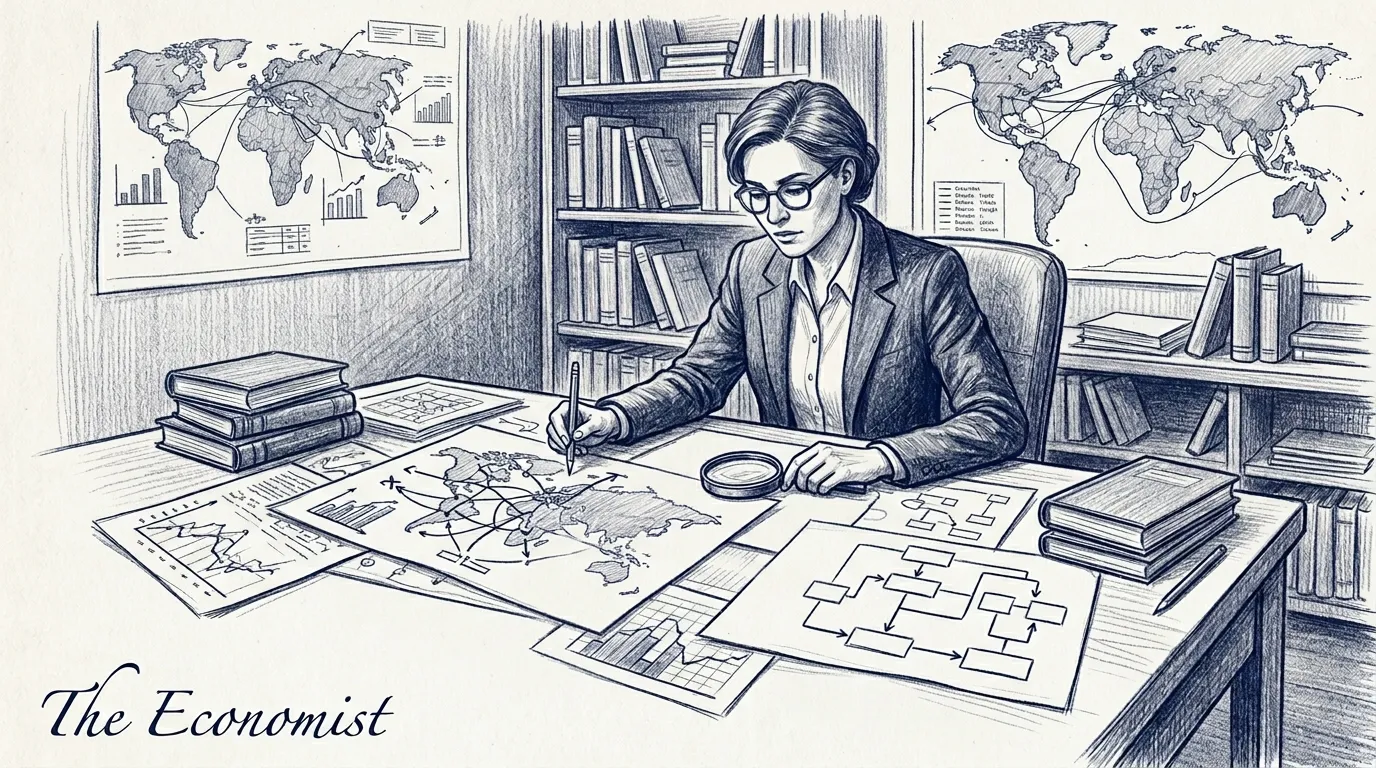
What The Economist Does
Core Question: What incentives are driving this?
The Economist archetype is built to resolve economic complexity by mapping the incentives that drive market behavior, revealing why people do what they do, and designing systems that align self-interest with collective good.
Where markets seem irrational—where people act against their apparent interests, where good strategies fail, where cooperation breaks down—the Economist asks: “What incentives did we miss?”
Economists (the archetype, not just the profession) understand that most “irrational” behavior is perfectly rational once you see the incentives. They design systems that align self-interest with collective good. They predict behavior by assuming that people respond to incentives—because they always do.
The Economist does not assume people are rational. The Economist maps the incentives that make their behavior predictable.
GreenDeveX classifies authors who embody the Economist to help brands understand the logic beneath the surface.
The outcome? Behavior becomes predictable. Strategy aligns with incentives. Your brand works with human nature, not against it.
7 Ideal Characteristics of The Economist
What Makes This Author Archetype Capable of Resolving Moral Uncertainty
| # | Characteristic | What It Looks Like |
|---|---|---|
| 1 | Incentive Instinct | Sees the hidden reward structure in every situation. Assumes that behavior follows incentives. |
| 2 | Game Theory Fluency | Thinks strategically about how others will respond. Models interactions, not just actions. |
| 3 | Disciplined Abstraction | Can strip away irrelevant detail to reveal the core incentive structure. Sees the forest, not the trees. |
| 4 | Empirical Orientation | Tests assumptions with data. Does not trust intuition. Beliefs must survive evidence. |
| 5 | Comfort with Trade-offs | Knows that every choice has a cost. Does not pretend that trade-offs can be avoided. |
| 6 | Predictive Ambition | Tries to forecast behavior and tracks accuracy. Learns from being wrong. |
| 7 | System Design Instinct | Does not just analyze. Builds incentive systems that produce desired outcomes. |
Real-Life Example:
Michael Lewis
Michael Lewis, author of Liar’s Poker, The Big Short, Moneyball, and The Undoing Project, is a definitive example of The Economist archetype in action.
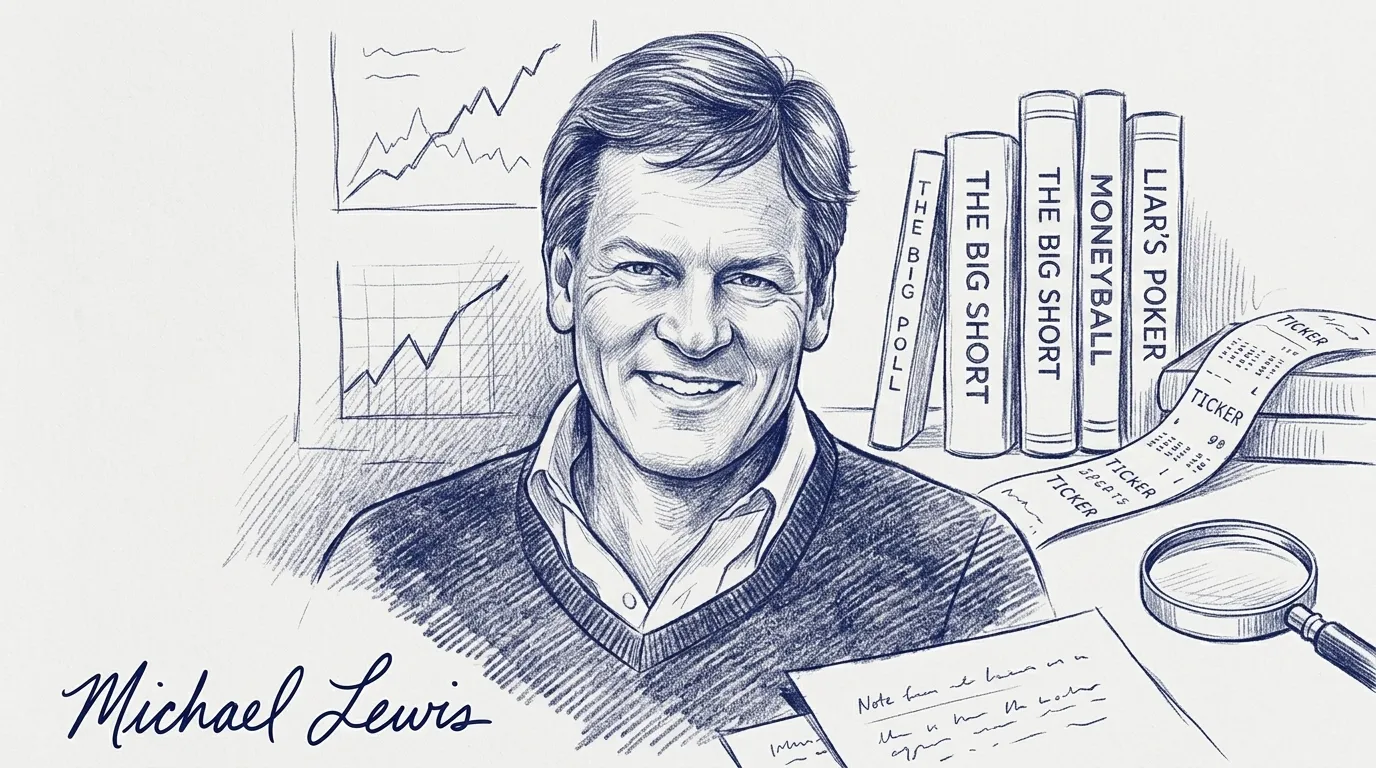
Why does he embody The Economist:
| Characteristic | How Michael Lewis Demonstrates It |
|---|---|
| Incentive Instinct | His books are investigations of incentive structures. Liar’s Poker exposed how Wall Street incentives rewarded selling bad products. The Big Short showed how incentives created the housing bubble. He finds the incentive, explains the behavior. |
| Game Theory Fluency | Moneyball is a game theory case study: the Oakland A’s exploited market inefficiencies because other teams had different incentives (win now vs. win sustainably). He showed how incentives produce strategy. |
| Disciplined Abstraction | He takes complex financial systems—derivatives, credit default swaps, mortgage-backed securities—and abstracts them to their incentive core. The complexity falls away; the incentive remains. |
| Empirical Orientation | His reporting is evidence-driven. He does not theorize; he investigates. He finds the data, the documents, the people who lived it. |
| Comfort with Trade-offs | He writes about trade-offs without flinching. The cost of innovation. The downside of efficiency. He does not pretend solutions are free. |
| Predictive Ambition | The Big Short predicted the financial crisis before it happened—because Lewis followed the incentives. He understood that if incentives reward bad behavior, bad behavior will follow. |
| System Design Instinct | The Undoing Project is about how we think—and how we design systems that account for our cognitive biases. Lewis is interested not just in analyzing broken systems but in building better ones. |
How Lewis resolves economic complexity:
When markets seem irrational or when smart people make obviously stupid decisions, Lewis finds the incentive that explains the behavior.
A trader sells bad bonds because his bonus depends on volume.
A banker approves bad loans because her compensation rewards origination, not quality.
The behavior is not irrational once you see the incentive.
The GreenDeveX Insight:
Brands that partner with Economists like Michael Lewis do not need to be surprised by market behavior.
The Economist maps the incentives that make behavior predictable. Surprise becomes anticipation.
Other Notable Economists for Inspiration
| Economist | Domain | Why They Qualify |
|---|---|---|
| Richard Thaler | Behavioral Economics | Showed that humans are not rational, but their irrationality is predictable. His work on “nudges” is incentive design for humans as they are, not as theory wishes they were. |
| Daniel Kahneman | Judgment & Decision-Making | His work with Amos Tversky (documented in Lewis’s The Undoing Project) revealed the cognitive biases that make human judgment systematically flawed. He mapped the irrationality. |
| Elinor Ostrom (1933-2012) | Common-Pool Resources | Showed that communities can manage shared resources without top-down control—if the incentives are right. Her work debunked the tragedy of the commons as inevitable. |
| Cesar Hidalgo | Economic Complexity | Argues that economic growth is about the capacity to make complex products. His work maps the “know-how” that economies accumulate—or fail to. |
| Dambisa Moyo | Development Economics | Challenges development orthodoxies. Argues that aid creates perverse incentives—and that markets, not handouts, drive growth. Love her or hate her, she follows the incentives. |
| Mariana Mazzucato | Innovation Economics | Argues that the state, not just the market, drives innovation. Her work maps the incentive structures that produce—or stifle—breakthroughs. |
The Economic Complexity Friction
What the friction looks like:
Markets cannot move when incentives are misaligned. People act in ways that seem irrational—until you see the incentives. Strategies fail because they assumed people would act one way, but incentives pulled them another.
The cost of this friction:
How The Economist resolves it:
The Economist does not assume people are rational. The Economist maps the incentives that make their behavior predictable.
Through incentive analysis, game theory, and system design, the Economist aligns self-interest with collective good.
The mechanism: Predictability transfer. The Economist maps the incentives that drive behavior. That map becomes the basis for a strategy that works with human nature, not against it.
Questions The Economist Helps Markets Answer
| # | Question |
|---|---|
| 1 | What are the actual incentives here, not the stated ones, but the real rewards and punishments? |
| 2 | Why are people acting in ways that seem irrational? What incentive are we missing? |
| 3 | How will others respond to our strategy? What are their incentives? |
| 4 | How can we design incentives so that self-interest leads to the collective good? |
| 5 | Where are we fighting human nature instead of working with it? |
Publishing Formats for The Economist
| Format | Why It Works for The Economist |
|---|---|
| Incentive Maps | Charts the reward structure. Shows what people are actually paid to do. |
| Game Theory Analyses | Models strategic interactions. Predicts how others will respond. |
| Behavioral Economic Explanations | Explains “irrational” behavior through cognitive biases and heuristics. |
| Policy Briefs | Evaluates policies by their incentive effects. Asks “what behavior will this reward?” |
| Market Forecasts | Predicts market behavior based on incentive structures. |
| Case Studies of Incentive Failure | Documents what happens when incentives are misaligned, so that others can avoid the same mistakes. |
Ideal Industries / Sectors
| Sector | Why The Economist Thrives Here |
|---|---|
| Finance & Investment | Markets are incentives. Economists predict behavior. |
| Strategy & Consulting | Strategy without incentive analysis fails. Economists design for alignment. |
| Policy & Governance | Policies are incentive systems. Economists evaluate what they will actually produce. |
| Technology Platforms | Platforms are incentive structures. Economists design for desired behavior. |
| Sales & Compensation | Compensation plans are incentive systems. Economists align sales behavior with company goals. |
| Nonprofit & Social Impact | Impact requires behavior change. Economists design incentives that make change sustainable. |
Ideal Brand Partnerships
| Brand Type | Why They Need The Economist |
|---|---|
| Investment firms | Need to predict market behavior. Economists map the incentives. |
| Strategy consultancies | Need to design strategies that work with human nature. Economists provide the framework. |
| Policy organizations | Need to evaluate policy by its incentive effects. Economists prevent unintended consequences. |
| Technology platforms | Need to design user behavior. Economists build incentive systems that work. |
| Sales organizations | Need compensation plans that align rep behavior with company goals. Economists design for alignment. |
5 Frequently Asked Questions About The Economist
FAQ 01: Is The Economist just for financial markets?
No. Incentives operate everywhere (in families, in teams, in communities, in ecosystems). The Economist archetype applies to any system where behavior is shaped by rewards and punishments. That is every system.
FAQ 02: How does The Economist differ from The Operator?
The Operator builds systems for reliability. The Economist designs incentives for behavior. One is about process; one is about motivation. They are natural partners. Great operations align incentives; great incentives enable operations.
FAQ 03: Does The Economist believe people are selfish?
No. The Economist believes people respond to incentives—but incentives can reward generosity, cooperation, and public good as easily as selfishness.
The question is not “are people good or evil?” The question is “what are we rewarding?”
FAQ 04: Can The Economist also be a Cultural Decoder?
Yes. Culture is an incentive system—status, belonging, shame, honor. The Cultural Decoder maps unwritten rules.
The Economist maps reward structures.
Together, they explain almost all human behavior.
FAQ 05: What is the most common incentive mistake brands make?
Rewarding the wrong behavior.
The behavior you reward is the behavior you get. Be careful what you incentivize.
Example in Action
Scenario:
A B2B software company has a sales team that closes deals—but customers churn at 40% annually.
The company is growing but leaking customers. Sales reps are hitting quotas.
No one understands why churn is so high.
The Economist intervention:
The Economist maps the incentive structure. Sales reps are paid 100% on new business.
They have no incentive to ensure customers are successful after the sale.
Customer success managers are paid on retention—but they are brought in after the sale, too late to set expectations.
The incentives are misaligned.
The Economist recommends:
Change the compensation plan. Sales reps are paid partially on retention. Customer success is involved during the sales process.
Incentives now align: everyone is rewarded when customers succeed.
Outcome:
Churn drops from 40% to 15% within 12 months. The company stops leaking customers. Growth accelerates.
The Economist did not change the people; they changed the incentives.
Does your brand need The Economist?
If economic complexity is making behavior unpredictable, The Economist archetype may be your match.
GreenDeveX classifies and connects Economists to brands that need logic, predictability, and incentive alignment.
Your ecosystem transition starts here.
→ Join the Early Access Waitlist
→ Find Your Economist Match
Now that you understand The Economist, explore The Philosopher, the author archetype that provides principles and moral grounding for decisions.
→ Explore All Author Archetypes