
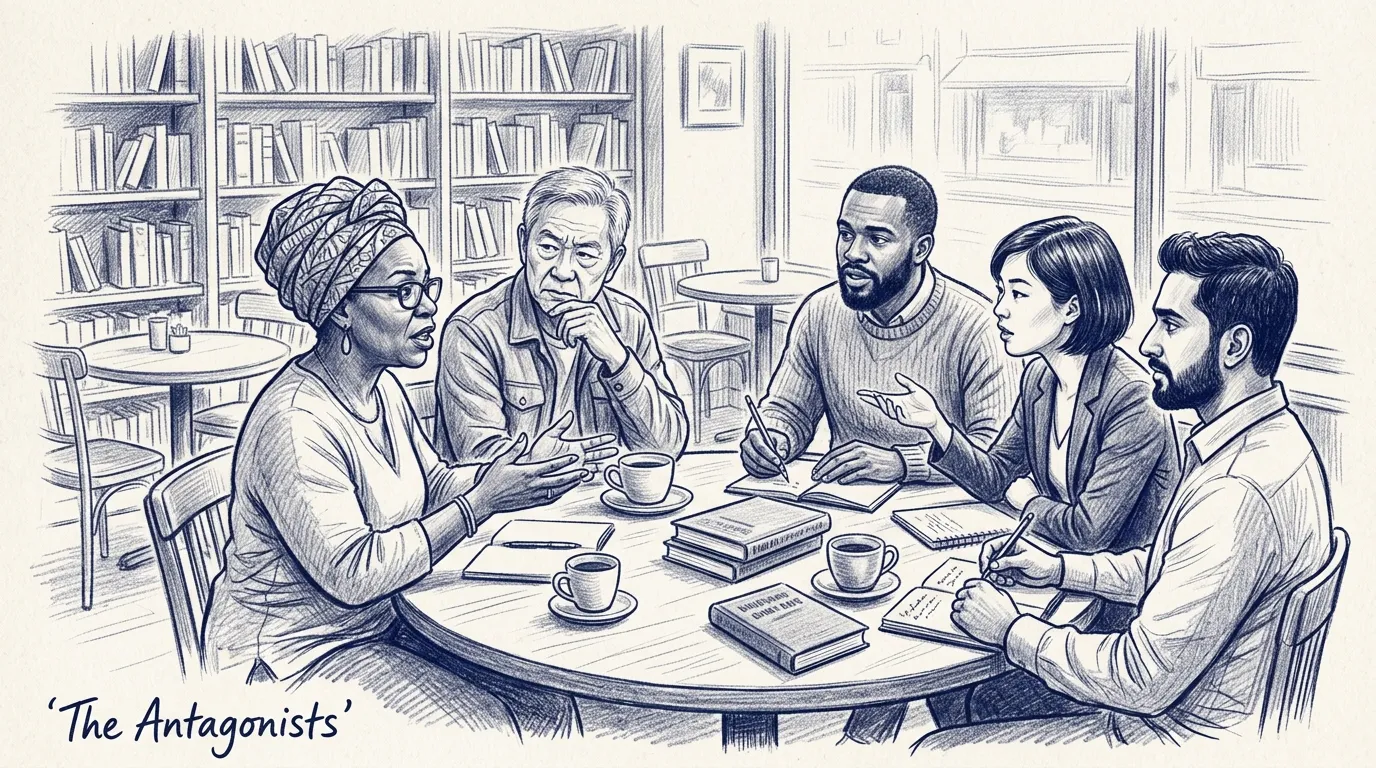
What The Antagonist Does
Core Question: What truth are we avoiding?
The Antagonist resolves market complacency by naming the truths that everyone is avoiding.
Where markets stagnate because discomfort is prioritized over change—where problems are named but not solved, where hard conversations are deferred, and where decline remains invisible until irreversible—the Antagonist forces the confrontation that progress requires.
Antagonists are not enemies. They are not destroyers. They are the ones who care enough to say the hard thing. They understand that comfort is the enemy of progress. They are willing to be disliked in the short term for the sake of health in the long term.
The Antagonist does not seek conflict for its own sake. The Antagonist seeks progress—and knows that progress requires confrontation.
Ideal Characteristics of The Antagonist
| # | Characteristic | What It Looks Like |
|---|---|---|
| 1 | Truth-Telling Courage | Willing to say what others will not. Comfortable being the only voice in the room naming the problem. |
| 2 | Love for the System | Cares enough to criticize. The Antagonist is not a cynic—they are a disappointed optimist who believes things could be better. |
| 3 | Pattern Recognition | Sees the slow decline that others miss. Spots the problem before it becomes a crisis. |
| 4 | Discomfort Tolerance | Does not need to be liked. Values being right over being popular. Takes the long view. |
| 5 | Constructive Destructiveness | Tears down only to rebuild. The Antagonist is not a nihilist. They have a vision for what could replace what they critique. |
| 6 | Accountability Instinct | Will not let others off the hook. Insists that problems be addressed, not deferred. |
| 7 | Hope Beneath the Critique | The best Antagonists are not angry; they are hopeful. They believe change is possible, which is why they demand it. |
Real-Life Example: George Orwell
George Orwell (1903-1950), the essayist, novelist, and critic of totalitarianism, is a definitive example of The Antagonist archetype in action.
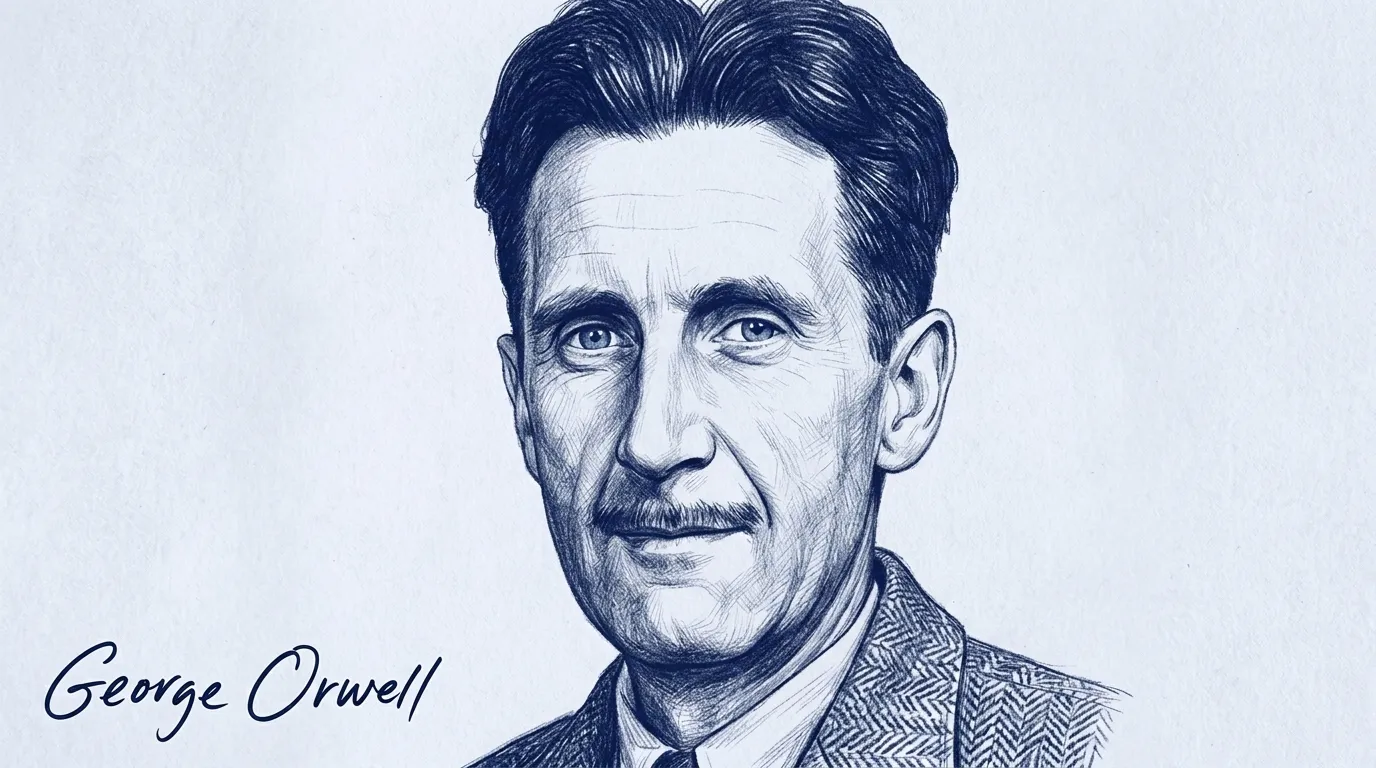
Why does he embody The Antagonist:
| Characteristic | How George Orwell Demonstrates It |
|---|---|
| Truth-Telling Courage | He wrote Animal Farm and Nineteen Eighty-Four when the Soviet Union was celebrated by Western intellectuals. He named the truth about Stalinism when it was deeply unfashionable to do so. |
| Love for the System | He was not anti-socialist. He was anti-totalitarian. He loved democracy and socialism enough to criticize their corruption. His critique came from love, not hatred. |
| Pattern Recognition | He saw where totalitarianism was heading—surveillance, thought control, language distortion—decades before it became obvious. Nineteen Eighty-Four was a warning, not a prediction. |
| Discomfort Tolerance | He was attacked by the Left and the Right. He did not care. He was willing to be disliked because he was willing to be right. |
| Constructive Destructiveness | He tore down illusions about Soviet communism—but he built up democratic socialism as an alternative. He was not just a critic; he was an architect. |
| Accountability Instinct | His essays (“Politics and the English Language”) hold writers and politicians accountable for corrupting language. He insisted that clarity is a moral duty. |
| Hope Beneath the Critique | Nineteen Eighty-Four is a warning, not a prophecy. He wrote it because he hoped it could be prevented. His critique was an act of hope. |
How Orwell resolves complacency:
When intellectuals were making excuses for Stalinism, when political language was becoming meaningless, when democracy was sleepwalking toward totalitarianism, Orwell did not look away.
He named the truth. He made it impossible to ignore. He was not popular, but he was right.
The GreenDeveX Insight:
Brands that partner with Antagonists like George Orwell do not need to pretend everything is fine. The Antagonist names the problem.
The brand gains the credibility that comes from acknowledging reality and the opportunity to be part of the solution.
Other Notable Antagonists for Inspiration
| Antagonist | Domain | Why They Qualify |
|---|---|---|
| Rachel Carson (1907-1964) | Environmentalism | Silent Spring revealed the truth about pesticides that the chemical industry wanted hidden. She was attacked, vilified, and eventually vindicated. Her Antagonism saved lives. |
| Edward Snowden | Surveillance | Named the truth about mass surveillance that governments wanted hidden. He sacrificed his freedom to tell the truth. The debate he forced continues. |
| Naomi Klein | Climate & Capitalism | Names the uncomfortable truth: capitalism as currently practiced is incompatible with planetary survival. Her critiques are uncomfortable because they are accurate. |
| Malcolm X (1925-1965) | Civil Rights | Named the truth about racism in America when others wanted polite gradualism. His Antagonism made MLK’s diplomacy possible. |
| Christopher Hitchens (1949-2011) | Secularism & Politics | Named truths that made everyone uncomfortable—the Left and the Right, believers and atheists. His Antagonism was indiscriminate and principled. |
| Upton Sinclair (1878-1968) | Labor & Food Safety | The Jungle revealed the truth about the meatpacking industry that it wanted hidden. His Antagonism led to the Pure Food and Drug Act. |
The Complacency Friction
What the friction looks like:
Markets cannot progress when everyone avoids the truth. Problems are named but not solved. Hard conversations are deferred. Comfort is prioritized over change. Decline is invisible until it is irreversible.
The cost of this friction:
How The Antagonist resolves it:
The Antagonist does not seek conflict for its own sake. The Antagonist seeks progress—and knows that progress requires confrontation.
Through truth-telling courage, pattern recognition, and constructive destructiveness, the Antagonist forces the confrontation that progress requires.
The mechanism: Reality transfer.
The Antagonist names the truth that everyone is avoiding. Once named, it cannot be unnamed. The problem becomes visible. Action becomes possible.
Questions The Antagonist Helps Markets Answer
| # | Question |
|---|---|
| 1 | What truth are we avoiding? What is no one willing to say? |
| 2 | Where are we choosing comfort over progress? |
| 3 | What slow decline are we ignoring because it is not yet a crisis? |
| 4 | Who is filtering out bad news? What are we not hearing? |
| 5 | What would someone who truly loved this system tell us to change? |
Publishing Formats for The Antagonist
| Format | Why It Works for The Antagonist |
|---|---|
| Provocative Essays | The classic Antagonist format. Names the truth. Forces the conversation. |
| Whistleblower Reports | Documents what is hidden. Provides evidence for the uncomfortable truth. |
| Critical Reviews | Holds work accountable. Reveals what is not working. |
| Obituary Analyses | Explains the decline after the fact. Shows what was ignored, by whom, and at what cost. |
| Unpopular Opinion Pieces | Takes the position that others avoid. Forces readers to engage. |
| Accountability Briefings | Names who is responsible, what they did, and what should happen next. |
Ideal Industries / Sectors
| Sector | Why The Antagonist Thrives Here |
|---|---|
| Corporate Governance | Boards need Antagonists to ask the hard questions. Without them, decline is invisible. |
| Policy & Regulation | Regulators need Antagonists to name what the industry wants hidden. |
| Journalism | Investigative journalism is Antagonism as a profession. |
| Nonprofit & Social Impact | Mission-driven organizations need Antagonists to ask whether they are actually delivering impact—or just reporting activity. |
| Healthcare | Patient safety requires Antagonists who will name problems that others want to ignore. |
| Environmental Protection | The planet needs Antagonists who will name inconvenient truths about extraction, pollution, and climate. |
Ideal Brand Partnerships
| Brand Type | Why They Need The Antagonist |
|---|---|
| Corporate boards | Need directors who will ask the hard questions. Antagonists prevent groupthink. |
| Regulatory agencies | Need Antagonists inside and outside to name what industry is hiding. |
| Investigative journalism outlets | Antagonism is their business model. They need Antagonists who can find the truth. |
| Nonprofits facing mission drift | Need Antagonists to ask, “Are we actually achieving our mission?“ |
| Healthcare systems | Need Antagonists to name safety problems before they become crises. |
5 Frequently Asked Questions About The Antagonist
FAQ 01: Is The Antagonist just a critic?
No. Critics tear down. Antagonists tear down to rebuild.
The Antagonist has a vision for what could replace what they critique. Pure criticism is easy.
Constructive Antagonism is hard—and rare.
FAQ 02: How does The Antagonist differ from The Contrarian?
The Contrarian challenges assumptions—often from the outside.
The Antagonist names uncomfortable truths—often from the inside.
The Contrarian says, “You are thinking incorrectly.”
The Antagonist says, “You are avoiding reality.”
They are natural partners in breaking stagnation.
FAQ 03: Can The Antagonist be wrong?
Yes. Antagonists can be wrong—spectacularly wrong.
What distinguishes the valuable Antagonist is not perfect accuracy but the willingness to be judged by reality.
They do not cling to wrong positions out of ego.
They update.
They learn.
They move on.
FAQ 04: Is The Antagonist always unpopular?
Not always. Sometimes the Antagonist speaks for a silent majority.
But often, yes—the Antagonist is unpopular.
That is the cost of naming truth. The Antagonist accepts it.
FAQ 05: How does an organization invite Antagonism without becoming toxic?
Structure matters.
Designate someone to play the Antagonist role. Rotate the responsibility. Thank the Antagonist for their service.
The goal is not to create a toxic culture, but to ensure that hard truths are heard before they become crises.
Example in Action
Scenario:
A successful company is in slow decline. Revenue is flat. Morale is eroding.
But leadership meetings are upbeat. No one wants to be the bearer of bad news.
Problems are named in hallways, not in boardrooms.
The Antagonist’s intervention:
A senior leader or an outside advisor ‘takes’ the Antagonist role.
In the next leadership meeting, she says,
“We are avoiding the truth. Our product is losing relevance. Our best people are leaving. We are three years from irrelevance. I am not saying this to be negative. I am saying this because I believe we can turn around—but only if we name the problem.”
Outcome:
The truth is now in the room. The conversation shifts from “how are we doing?” to “how do we fix this?”
The Antagonist was not popular, but she was necessary.
Does your brand need The Antagonist?
If complacency is masking decline, The Antagonist archetype may be your match.
GreenDeveX classifies and connects Antagonists to brands that need truth, accountability, and progress.
Your ecosystem strategy starts here.
→ Join the Early Access Waitlist
→ Find Your Antagonist Match
Now that you understand The Antagonist, explore The Antagonist — the archetype that drives progress by naming the truths markets are avoiding.
→ Explore All Author Archetypes