

What The Translator Does
Core Question: Can you explain this simply?
The Translator archetype is built to resolve complexity by converting technical, specialized knowledge into accessible, decision-ready understanding.
The Translator resolves complexity by converting technical, specialized, or inaccessible knowledge into understanding that non-experts can act upon. Where markets stall because the language of expertise creates barriers, the Translator builds bridges.
Translators do not dumb down. They do not sacrifice accuracy for accessibility. They find the essential, strip away the unnecessary, and render the complex in terms that resonate without distortion.
The Translator does not change the meaning. The Translator ensures the meaning arrives.
7 Ideal Characteristics of The Translator
What Makes This Author Archetype Capable of Resolving the Complexity
| # | Characteristic | What It Looks Like |
|---|---|---|
| 1 | Jargon Radar | Spots an inaccessible language instantly. Knows when “expert speech” is excluding rather than informing. |
| 2 | Essentialist Instinct | Distills complex ideas to their core without losing what matters. Knows what to leave out. |
| 3 | Audience Empathy | Remembers what it was like not to know. Does not condescend. Explains without ego. |
| 4 | Metaphor Gift | Finds the perfect analogy that makes the unfamiliar familiar. Turns abstract into concrete. |
| 5 | Patience for Questions | Welcomes clarification requests. Never says “as I already explained.” |
| 6 | Technical Depth | Actually understands the complex material. Cannot translate what you do not comprehend. |
| 7 | Multilingual Capacity | Speaks “expert” and “novice” fluently. Moves between registers without strain. |
Real-Life Example:
Neil deGrasse Tyson
Neil deGrasse Tyson, the astrophysicist, author, and science communicator, is a definitive example of The Translator archetype in action.
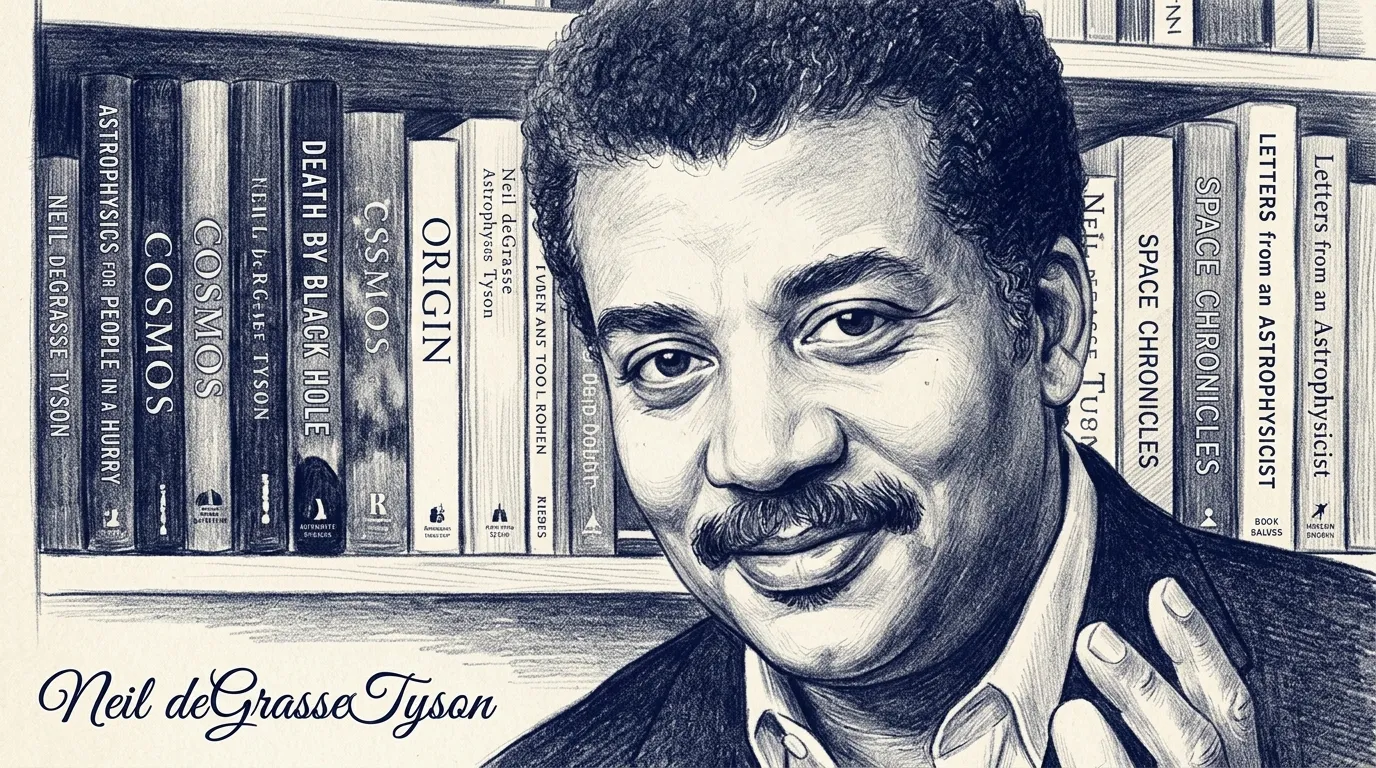
Why does he embody The Translator:
| Characteristic | How Neil deGrasse Tyson Demonstrates It |
|---|---|
| Jargon Radar | He famously translates complex astrophysics into language anyone can grasp. He knows when a term excludes and replaces it with accessible alternatives. |
| Essentialist Instinct | He boils down black holes, dark matter, and quantum mechanics to their core ideas without losing scientific accuracy. He understands what the public actually needs to know. |
| Audience Empathy | He never talks down to his audience. He assumes curiosity, not expertise. He meets people where they are, not where he wishes they were. |
| Metaphor Gift | His explanations are legendary for their analogies: comparing the universe’s expansion to baking raisin bread, explaining gravity with bowling balls on trampolines. |
| Patience for Questions | In interviews and public talks, he welcomes “naive” questions. He understands that every expert was once a beginner. |
| Technical Depth | He is a legitimate astrophysicist—PhD from Columbia, research publications, former director of the Hayden Planetarium. He translates from genuine mastery, not surface familiarity. |
| Multilingual Capacity | He moves seamlessly between peer-reviewed journals and prime-time television. He speaks “scientist” and “citizen” with equal fluency. |
How Tyson resolves complexity:
When a new scientific discovery makes headlines, most people cannot understand why it matters. Tyson steps in. He explains what the discovery means, why it is significant, and how it fits into the larger picture. The complex becomes accessible.
The intimidating becomes fascinating.
The GreenDeveX Insight:
Brands that partner with Translators like Neil deGrasse Tyson do not need to convince their audiences that their technology is sophisticated. The Translator has already made the sophistication understandable.
Adoption accelerates not because the product changed, but because the explanation did.
Other Notable Translator Author Archetypes for Inspiration
| Translator | Domain | Why They Qualify |
|---|---|---|
| Bill Bryson | Science & Language | Author of A Short History of Nearly Everything—made cosmology, geology, and evolutionary biology accessible and entertaining. Also explained the English language to millions. |
| Malcolm Gladwell | Social Science & Psychology | Made complex social science research accessible through storytelling. Concepts like “the tipping point” and “10,000 hours” entered everyday language because he translated academic work for popular audiences. |
| Lisa Randall | Physics | A theoretical physicist who writes for non-specialists. Her book Warped Passages explains extra dimensions without equations. She is the real deal who also translates. |
| Carl Sagan (1934-1996) | Astronomy & Science | Cosmos brought astronomy to 500 million viewers. He translated the universe into poetry without losing the science. The archetypal science translator for a generation. |
| Atul Gawande | Medicine & Systems | Translates complex medical practice into accessible, actionable insights. His Checklist Manifesto took operating room protocols and made them relevant to everyone from pilots to investors. |
| Stephen Pinker | Psychology & Language | Made cognitive science accessible. His books on language, mind, and human nature translate dense academic research into readable, impactful prose. |
The Complexity Friction
What the friction looks like:
Markets cannot act when they do not understand. Jargon obscures. Complexity intimidates. Experts speak past non-experts. The intended audience—whether customers, investors, partners, or policymakers—cannot grasp what is being offered.
The cost of this friction:
How The Translator resolves it:
The Translator does not change the meaning. The Translator ensures the meaning arrives. Through careful distillation, metaphor, and audience empathy, the Translator transforms “what experts say” into “what everyone understands.”
The mechanism: Accessibility transfer.
A Translator with a gift for clarity transfers that clarity to the brands, ideas, and technologies they explain.
Questions The Translator Helps Markets Answer
| # | Question |
|---|---|
| 1 | What does this technology actually do? In plain English? |
| 2 | Why should I care? How does this affect me? |
| 3 | How is this different from what already exists? |
| 4 | What are the risks and trade-offs? In terms I can understand? |
| 5 | What decision should I make based on this information? |
Publishing Formats for The Translator
| Format | Why It Works for The Translator |
|---|---|
| Plain Language Explainers | Takes complex topics and renders them accessible. The core Translator format. |
| FAQ Documents | Anticipates what audiences do not understand. Answers before questions are asked. |
| Glossary & Definitions | Creates shared vocabulary. Ensures everyone means the same thing. |
| Analogy Collections | Provides ready-made metaphors that make the unfamiliar familiar. |
| Beginner’s Guides | Meets novices where they are. Builds understanding step by step. |
| Executive Summaries | Distills dense material into decision-ready insights for time-pressed leaders. |
Ideal Industries / Sectors
| Sector | Why The Translator Thrives Here |
|---|---|
| Technology & Software | Complexity is the norm. Translators make AI, blockchain, and cloud accessible. |
| Finance & Investment | Financial products are intentionally complex. Translators build trust through clarity. |
| Healthcare & Medicine | Patients, policymakers, and investors need to understand medical advances. Translators bridge the gap. |
| Legal & Regulatory | Laws are written for lawyers. Translators make them usable for everyone else. |
| Science & Research | Academic publishing is inaccessible by design. Translators bring research to the world. |
| Education & Training | Learning requires clear explanation. Translators are natural educators. |
Ideal Brand Partnerships
| Brand Type | Why They Need The Translator |
|---|---|
| Deep tech startups | Their technology is sophisticated. No one understands it. Translators make the pitch land. |
| Financial services firms | Trust requires understanding. Translators explain products in terms that customers can grasp. |
| Healthcare providers | Patients cannot act on what they do not understand. Translators improve health literacy. |
| Policy organizations | Policy that is not understood is policy that is not followed. Translators make governance accessible. |
| Educational institutions | Learning requires clear explanation. Translators are curriculum builders and communicators. |
Example in Action
Scenario:
A deep tech AI startup has built a revolutionary optimization engine. Their technology page is full of terms like “neural networks,” “gradient descent,” and “hyperparameter tuning.”
Investors glaze over. Customers click away.
The Translator intervention:
A Translator who understands AI (but is not trapped by its jargon) rewrites the company’s messaging. “Our AI learns from your data, finds patterns you did not know existed, and makes recommendations you can implement immediately.”
The Translator creates an explainer video, a one-page “AI for Humans” guide, and scripts for the sales team.
Outcome:
Investor meetings now start with comprehension, not confusion. Customer calls are about value, not vocabulary. The startup closes its Series A.
The CEO credits the Translator: “You did not change our technology. You changed how people understand it.”
5 Frequently Asked Questions About The Translator
FAQ 01: Is The Translator just a “simplifier”? Does accuracy get lost?
No. The best Translators are more accurate than complex communicators because they have truly understood the material. Anyone can recite jargon. Only those who genuinely comprehend can translate without distortion. As Einstein said, “If you cannot explain it simply, you do not understand it well enough.”
FAQ 02: How does The Translator differ from The Field Guide?
The Field Guide focuses on how to do something—process, steps, implementation.
The Translator focuses on what something means—understanding, clarity, comprehension. One is operational; the other is conceptual. They are natural partners.
FAQ 03: Does The Translator need to be a subject matter expert?
Yes. You cannot translate what you do not deeply understand. The best Translators are often experts who also have the gift of communication. They are not generalists explaining superficially; they are masters making mastery accessible.
FAQ 04: Can The Translator also be a Sage?
Yes. Many Sages are also Translators. The Sage builds authority through depth. The Translator builds understanding through clarity. When combined, you have an expert who can also explain—the most valuable kind of communicator.
FAQ 05: What if my audience is already expert? Do I still need a Translator?
If your audience is exclusively expert, translation may be less critical. But most markets have multiple stakeholder levels—experts, decision-makers, implementers, end users. The Translator ensures the entire chain understands, not just the top.
Does your brand need The Translator?
If complexity is blocking adoption and slowing decisions, The Translator archetype may be your match.
GreenDeveX classifies and connects Translators to brands that need clarity at speed.
Your ecosystem transition starts here.
→ Join the Early Access Waitlist
→ Find Your Translator Match
Now that you understand The Translator, explore The Storyteller — the archetype that creates emotional connection and resonance.
→ Explore All Author Archetypes