
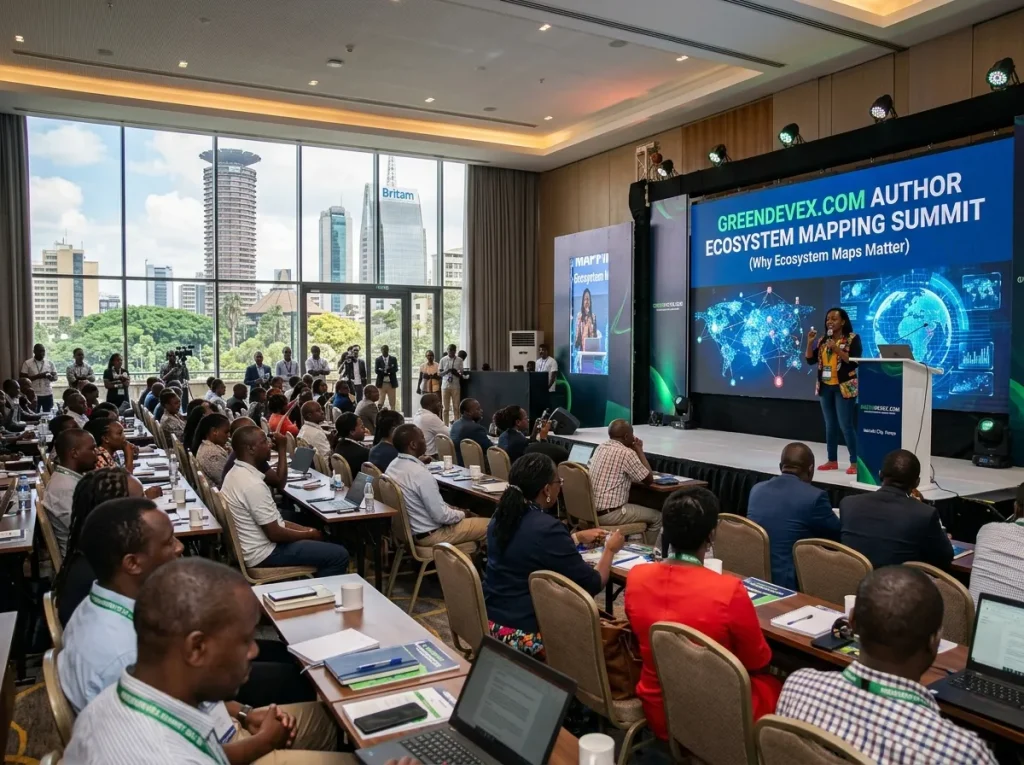
AUTHOR ECOSYSTEMS
Classified Authors. Three Operating Models. Deployed at Scale.
Most authors remain invisible to the brands that need them most.
You publish. You speak. You build a following. But your influence stops at the edge of your personal audience.
The cost? Your expertise never reaches the brands, institutions, and ecosystems that need it most. You stay a solo voice instead of becoming ecosystem infrastructure.
GreenDeveX’s Author Ecosystems changes that.
We classify you against the 18 Author Archetypes. Then we deploy you through one of three operating models that determine how you collaborate with brands.
The outcome? You become classified, findable, and deployable. Your authority scales. Your expertise compounds. And you know exactly how you will work with brands.
What Lives Under This Pillar
| Subpage | What It Covers |
|---|---|
| Author Archetypes | Complete classification of 18 author types by market question, friction, and outcome. Find your archetype. |
| Author Intelligence | The system that classifies authors and matches them to brands. Get classified. Get matched. Get deployed. |
| Become an Author | Step-by-step application process. Submit your expertise. Receive your classification. Choose your operating model. |
| Market Friction Model | The 8 market frictions that authors are built to resolve. Which friction does your expertise address? |
| Author–Brand Matching Model | Intelligence-led matching based on friction, domain, format, and operating model. Precision over guesswork. |
| Publishing Infrastructure | The formats that carry author intelligence to market. Reports, guides, maps, briefings, and interviews. |
The Three Operating Models for Authors
| Model | What It Does | Best For | Outcome |
|---|---|---|---|
| Co-Creating Model | Collaborate with brands to create original IP together | Authors seeking signature projects, deep partnerships | Shared intellectual property that carries your name |
| Fractional Publishing Model | Become part of a brand’s ongoing publishing engine | Authors seeking consistent work, recurring revenue | Steady deployment without constant business development |
| Rent-and-Rank Narrative Model | Get placed within existing trusted platforms | Authors seeking visibility, audience expansion, faster recognition | Immediate exposure within engaged ecosystems |
The Classification-to-Deployment Pipeline
| Step | Action | Output |
|---|---|---|
| 01 | Submit Your Application | Share your domain expertise, publishing history, and point of view. Application received. |
| 02 | Archetype Assessment | GreenDeveX identifies your primary archetype and secondary fits. Archetype identification. |
| 03 | Operating Model Consultation | We discuss your goals to recommend the best fit model. Model recommendation. |
| 04 | Ecosystem Domain Mapping | We map your expertise to the five Thematic Engines. Domain fit assessment. |
| 05 | Classification & Positioning Brief | You receive your formal classification, model recommendation, and publishing brief. Classification delivered. |
| 06 | Deployment | You enter the brand-matching pipeline and become visible to brands. Deployment begins. |
The 18 Author Archetypes at a Glance
| Core Question | Friction Resolved | Applicable Author Archetype | Outcome |
|---|---|---|---|
| Why should we trust this? | Trust Deficit | Sage | Builds trust |
| How do we do this? | Execution Gap | Field Guide | Drives implementation |
| What happens next? | Future Uncertainty | Futurist | Creates direction |
| Can you explain this simply? | Complexity | Translator | Creates clarity |
| Why should I care? | Low Engagement | Storyteller | Creates connection |
| Why should I believe? | Skepticism | Evangelist | Builds belief |
| What if everyone is wrong? | Stagnation | Contrarian | Challenges assumptions |
| What can we learn from the past? | Historical Blindness | Historian | Provides context |
| What matters most? | Information Overload | Curator | Filters signal from noise |
| Who else is part of this? | Isolation | Community Builder | Creates belonging |
| What is really happening? | Opacity | Investigator | Builds transparency |
| How do we make this work at scale? | Operational Complexity | Operator | Creates systems |
| What are people responding to? | Cultural Blindness | Cultural Decoder | Explains social shifts |
| What incentives drive this? | Economic Complexity | Economist | Explains incentives |
| What principles guide us? | Moral Uncertainty | Philosopher | Provides principles |
| How does everything connect? | Fragmentation | Cartographer | Maps ecosystems |
| How do we move forward together? | Misalignment | Diplomat | Creates alignment |
| What truth are we avoiding? | Complacency | Antagonist | Drives change |
How This Pillar Connects to Others
| Connected Pillar | How They Work Together |
|---|---|
| Ecosystem Overview | The Ecosystem Overview defines the model. Author Ecosystems provides the classified authors who power it. |
| Brand Ecosystems | Author Ecosystems supplies the authors. Brand Ecosystems deploys them. One provides talent; the provides the infrastructure. |
| Thematic Engines | Each Thematic Engine has a cluster of author archetypes with the highest match rates. Authors are mapped to engines. |
| Playbooks | Playbooks provide strategic intelligence. Authors apply that intelligence in their publishing. |
The GreenDevex Ecosystem Mapping Framework
Layer 1: Authors
Authors are often the origin point of trust.
They create:
Their ideas frequently shape how audiences interpret problems and opportunities.
Layer 2: Audiences
Audiences form around shared interests, challenges, and goals.
Examples include:
Each audience consumes knowledge from specific author ecosystems.
Layer 3: Brands
Brands provide products, services, technologies, and solutions.
The strongest brands position themselves inside trusted knowledge ecosystems rather than outside them.
Layer 4: Communities
Communities accelerate trust through discussion and peer validation.
Examples include:
Layer 5: Institutions
Institutions help formalize ideas.
These include:
Their participation often strengthens ecosystem credibility.
Layer 6: Economic Systems
Every author ecosystem exists within a larger economic system.
Examples include:
| Industry | Economic System |
|---|---|
| Agriculture | Food System |
| Banking | Family Wealth System |
| Education | Knowledge System |
| Healthcare | Wellbeing System |
| Real Estate | Housing System |
| Energy | Sustainability System |
This is where ecosystem-thinking expands beyond traditional market analysis.
Example Author Ecosystems Mapping Framework
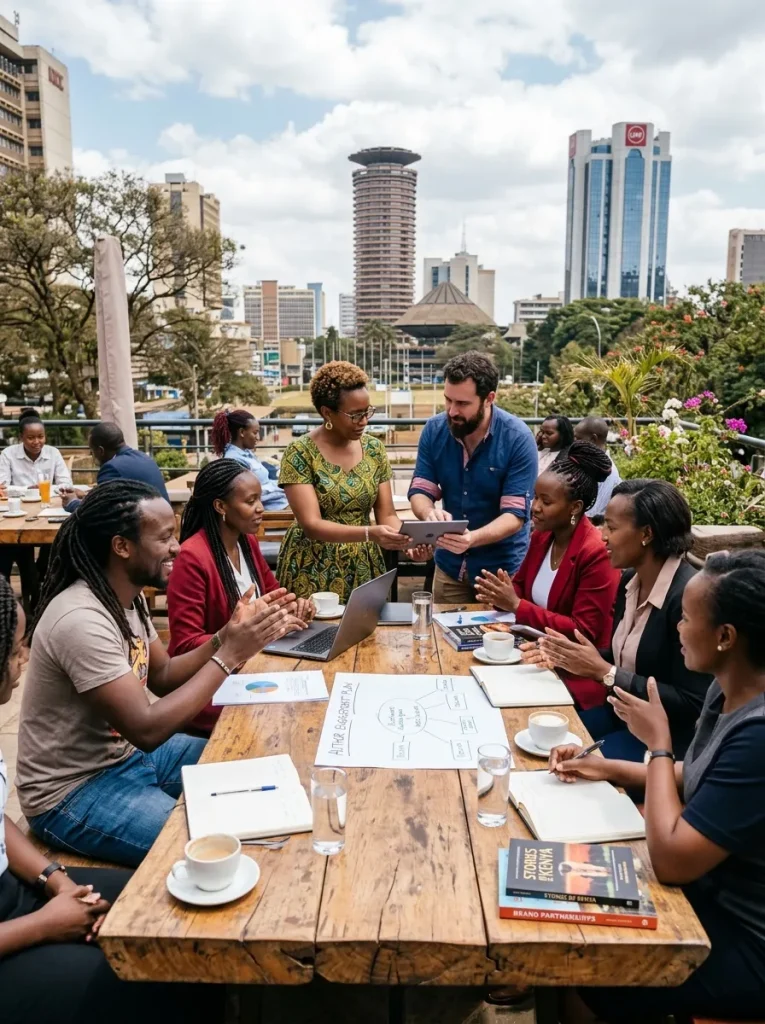
Personal Finance Ecosystem
Authors
Financial educators, economists, wealth authors, investment writers.
Audience
Households, professionals, entrepreneurs, investors.
Brands
Banks, insurance companies, investment firms, fintech companies.
Institutions
Regulators, universities, financial literacy organizations.
Economic System
Household Wealth Creation.
GreenDevex helps identify where partnerships create mutual value across the entire ecosystem.
How Brands Use Ecosystem Maps
Opportunity Identification
Identify influential authors aligned with business objectives.
Partnership Planning
Understand which author ecosystems already possess audience trust.
Content Strategy
Develop educational assets around existing knowledge networks.
Thought Leadership
Position brands alongside trusted experts and educators.
Market Expansion
Enter adjacent ecosystems through relevant author partnerships.
How Authors Use Ecosystem Maps
Audience Expansion
Identify related communities and industries.
Commercial Alignment
Connect with brands serving the same ecosystem.
Publishing Strategy
Build content around high-value economic systems.
Influence Growth
Extend authority beyond a single platform or audience segment.
The GreenDevex Difference
Traditional marketing maps customers.
GreenDevex maps relationships between:
Authors → Audiences → Communities → Brands → Institutions → Economic Systems
This creates a broader understanding of how trust, authority, and influence develop.
What Ecosystem Mapping Reveals
A strong ecosystem map helps answer critical questions:
The answers often reveal partnership opportunities that traditional marketing analysis misses.
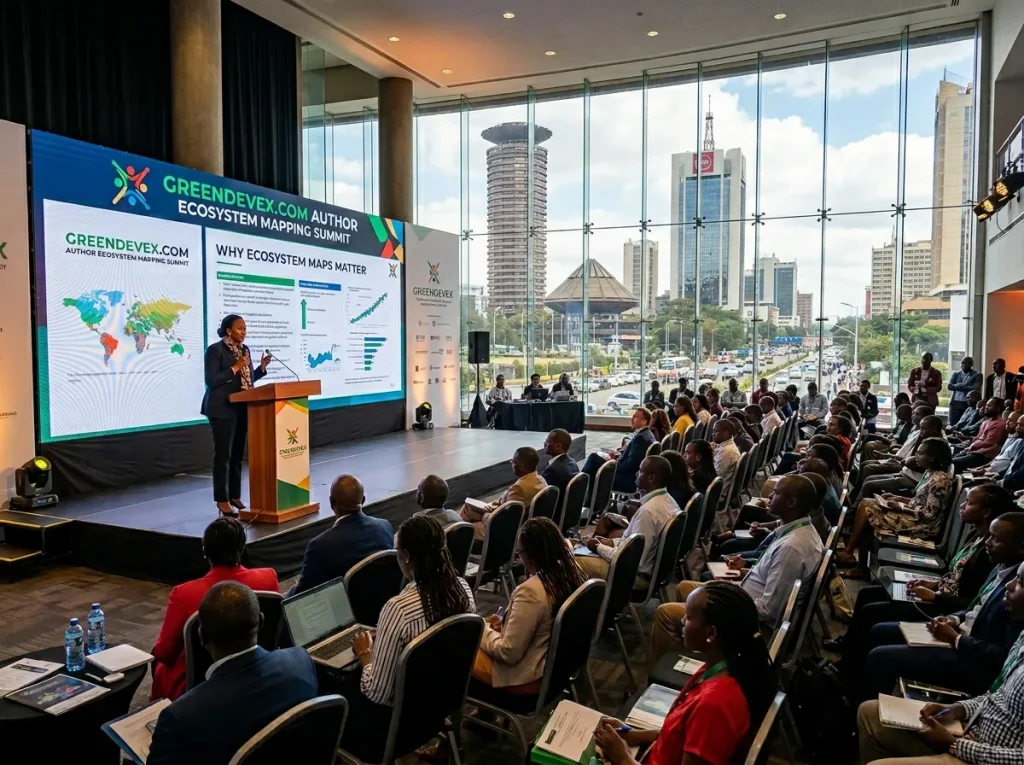
Frequently Asked Questions About
Author Ecosystem Maps
What is an Author Ecosystem Map?
A framework that visualizes the relationships between authors, audiences, brands, institutions, communities, and economic systems.
Who benefits from ecosystem mapping?
Brands, authors, publishers, associations, educational institutions, and ecosystem builders.
Why focus on authors?
Authors frequently act as trust creators within specialized communities and categories.
How does GreenDevex use ecosystem maps?
GreenDevex uses ecosystem maps to identify partnership opportunities, influence networks, and knowledge ecosystems where brands and authors can create shared value.
Turn Ecosystem Insights Into Strategic Partnerships
Understanding an ecosystem is valuable.
Participating in it is where growth happens.
See how GreenDevex helps brands identify aligned authors, build trusted partnerships, and create long-term influence through narrative infrastructure.
Find the authors, ideas, and ecosystems aligned with your growth strategy.
Founders’ Corner
Victor I’Syamba

“I founded GreenDevex to provide industry leaders and ‘overqualified’ individuals with a platform worthy of their work.
Too many strong ideas fail because they are not framed well, not understood, or not amplified.My work across Africa — from nation branding to ESG-related projects — taught me that good ideas need structure, a compelling story, and a solid distribution framework.
GreenDeveX is my commitment to help those ideas reach the tables where decisions are made.”
Advisory / Thought Partners

GreenDeveX works with experts who shape thinking across 6 Economic Sector.
This section will feature leaders such as:
This advisory group gives GreenDeveX depth, credibility, and strategic direction.
Meet Our Team
Our team comprises passionate professionals with expertise in sustainability and the ESG space, committed to making a positive impact.

Maureene Mutai
Innovation

Sarah Mwenesi
ESG

Julia Kitavi
Sustainability

David Lemiso
Community