
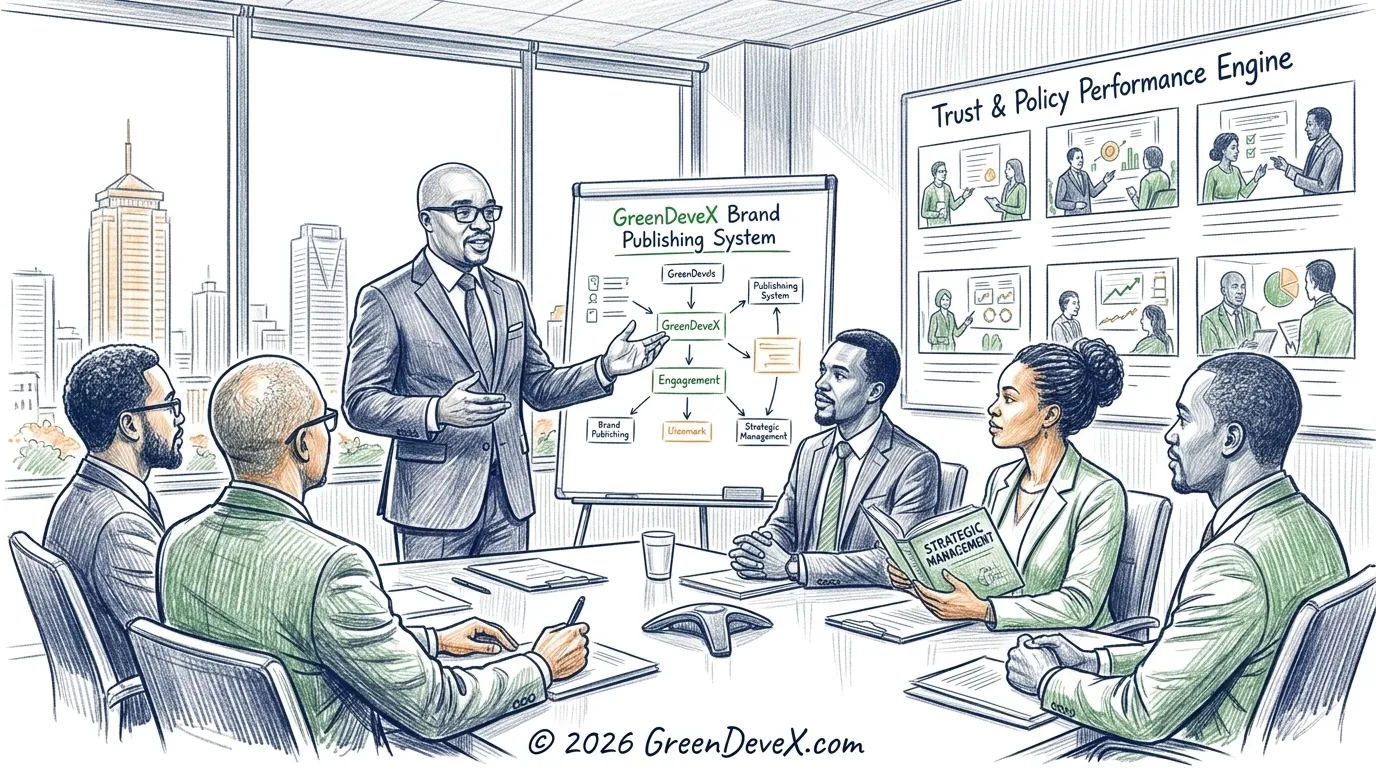
Trust & Policy
Performance Lever For Legal Clarity, Institutional Credibility, Regulatory Speed
Core Question: Why do policies not translate into visible impact?
What This Lever Governs:
- Legal clarity and rule of law
- Institutional credibility and trust
- Regulatory speed and predictability
- Civic trust and participation
- Government transparency and accountability
Primary Archetypes: The Diplomat, The Sage, The Investigator
When This Lever Is Stuck
| Symptom | Friction |
|---|---|
| Policies are ignored. Laws exist only on paper. | Policy Opacity |
| Permits take months or years. Investment stalls. | Regulatory Delay |
| Citizens assume corruption. Investors demand guarantees. | Trust Deficit |
| Good policies drafted but never implemented. | Implementation Gap |
| Government reacts, never anticipates. | No Strategic Foresight |
“A policy that is not understood is a policy that is not used. An institution that is not trusted is an institution that does not function.”— Victor Isyamba
What Is the Trust & Policy Engine?
The Trust & Policy Engine is the coordination layer that ensures policies, regulations, and institutions actually deliver results.
What sits here:
The core question this engine answers: Why do policies not translate into visible impact?
The Three Author Archetypes That Strengthen This Lever
| Archetype | Role in Trust & Policy | What They Publish |
|---|---|---|
| The Diplomat | Aligns government agencies, stakeholders, and competing interests | Alignment frameworks, shared agendas, consensus reports |
| The Sage | Builds institutional credibility through authoritative, grounded communication | Institutional whitepapers, policy briefs, governance frameworks |
| The Investigator | Creates transparency through accessible data, independent validation, and performance tracking | Performance reports, citizen scorecards, transparency audits |
The Reward of Ecosystem-Thinking
When you adopt an Ecosystem-thinking growth model, you stop competing on features. You start shaping the market itself.
| Outcome | What It Means |
|---|---|
| Low CAC | Prospects arrive pre-educated. |
| High CLTV | Customers stay because they belong. |
| Durable Influence | Authority that compounds. |
“Vertical-thinking wins battles. Ecosystem-thinking wins wars.”— Victor Isyamba
Success Case Study #1: Rwanda Development Board
The Diplomat in Action
The Market Friction: Market Fragmentation + Trust Deficit
The Situation: After the 1994 genocide, Rwanda faced a near-total collapse of institutional trust. Investors would not touch the country. Different agencies worked in complete isolation.
The Author Archetype Deployed: The Diplomat
The Solution: The Rwandan government created the Rwanda Development Board (RDB) — a single agency designed to align all fragmented pieces of the investment ecosystem.
| Problem | RDB Solution | Archetype in Action |
|---|---|---|
| 24 separate agencies, no coordination | One-stop investment centre | The Diplomat |
| No transparency, no accountability | Digitized 460 government services | The Investigator |
| Policies inaccessible | Plain language guides | The Translator |
| No institutional credibility | Consistent, predictable service delivery | The Sage |
The Outcome:
| Metric | Before RDB | After RDB |
|---|---|---|
| Business registration time | Weeks or months | <6 hours |
| Investor trust | Very low | Significantly improved |
| Foreign private capital inflows (2024) | Limited | $1.1 billion |
“The RDB is not a regulator. It is an orchestrator. Its job is to ensure that every part of the investment ecosystem is pulling in the same direction.”— Victor Isyamba
Success Case Study #2: Singapore’s Economic Development Board
The Sage + The Diplomat At Play
The Market Friction: Trust Deficit + Market Fragmentation
The Situation: In 1965, Singapore was a resource-poor island nation with no hinterland, a tiny domestic market, and high unemployment. Investors had no reason to trust the new nation.
The Author Archetypes Deployed: The Diplomat + The Sage
The Solution:
Singapore’s Economic Development Board (EDB) was designed as a quasi-governmental agency with unusual autonomy and authority — a single point of coordination.
The Outcome:
| Metric | 1965 | Today |
|---|---|---|
| GDP per capita | ~$500 | >$80,000 (PPP) |
| Ease of Doing Business | Non-existent | Consistently #1 or #2 globally |
| Foreign investment | Minimal | Over $2 trillion in FDI stock |
“The EDB’s culture was built on pragmatic problem-solving, not ideological rigidity. Its credibility was earned one investor at a time.”— Victor Isyamba
Flop Case Study: Yahoo
The Failure of Strategic Foresight
The Market Friction: Market Stagnation — failure to anticipate market shifts
The Situation: In the late 1990s, Yahoo was the king of the internet. Market capitalization over $100 billion. Seemingly unstoppable.
The Missed Opportunity:
| Opportunity | What Yahoo Did | Missing Archetype |
|---|---|---|
| Google (search) | Had the chance to buy Google for $1 million. Passed. | The Futurist |
| Facebook (social media) | Had the chance to buy Facebook for $1 billion. Passed. | The Futurist |
| Search innovation | Outsourced search to Google and Microsoft Bing. | The Operator |
The Result:
| Metric | Peak | After Decline |
|---|---|---|
| Market capitalization | ~$125 billion (2000) | ~$35 billion (2017) |
| Core business | Default homepage, email, search | Effectively irrelevant |
“Yahoo did not fail because it was incompetent. It failed because it was looking in the wrong direction. It watched its competitors while the future passed it by.”— Victor Isyamba
The 3 Operating Models Applied to Trust & Policy
| Operating Model | Application | Example |
|---|---|---|
| Co-Creating | Co-create Plain Language Policy Guides with a Translator author | Rwanda’s digitized service platform |
| Fractional Publishing | Engage an Investigator author for quarterly Performance Reports | Singapore’s EDB annual reports |
| Rent-and-Rank Narrative | Place Citizen Scorecards within existing government portals | Performance dashboards showing permit times |
Is This Your Engine?
What Happens When You Pull This Lever
Trust becomes a competitive advantage. Not a vague aspiration — a measurable asset.
Brand leadership excellence means: Your brand is the one that markets trust without hesitation. Not because you asked. Because you earned it.
| Outcome | What It Means |
|---|---|
| Low CAC | Prospects arrive pre-educated. Your sales team stops explaining basics. |
| High CLTV | Customers stay because they belong to your ecosystem, not just your product. |
| Durable Influence | Authority that compounds. A market position no competitor can buy. |
Your Next Step
→ Book a Strategy Session→ Ask a Specific Question→ Explore Author Archetypes for This Lever