
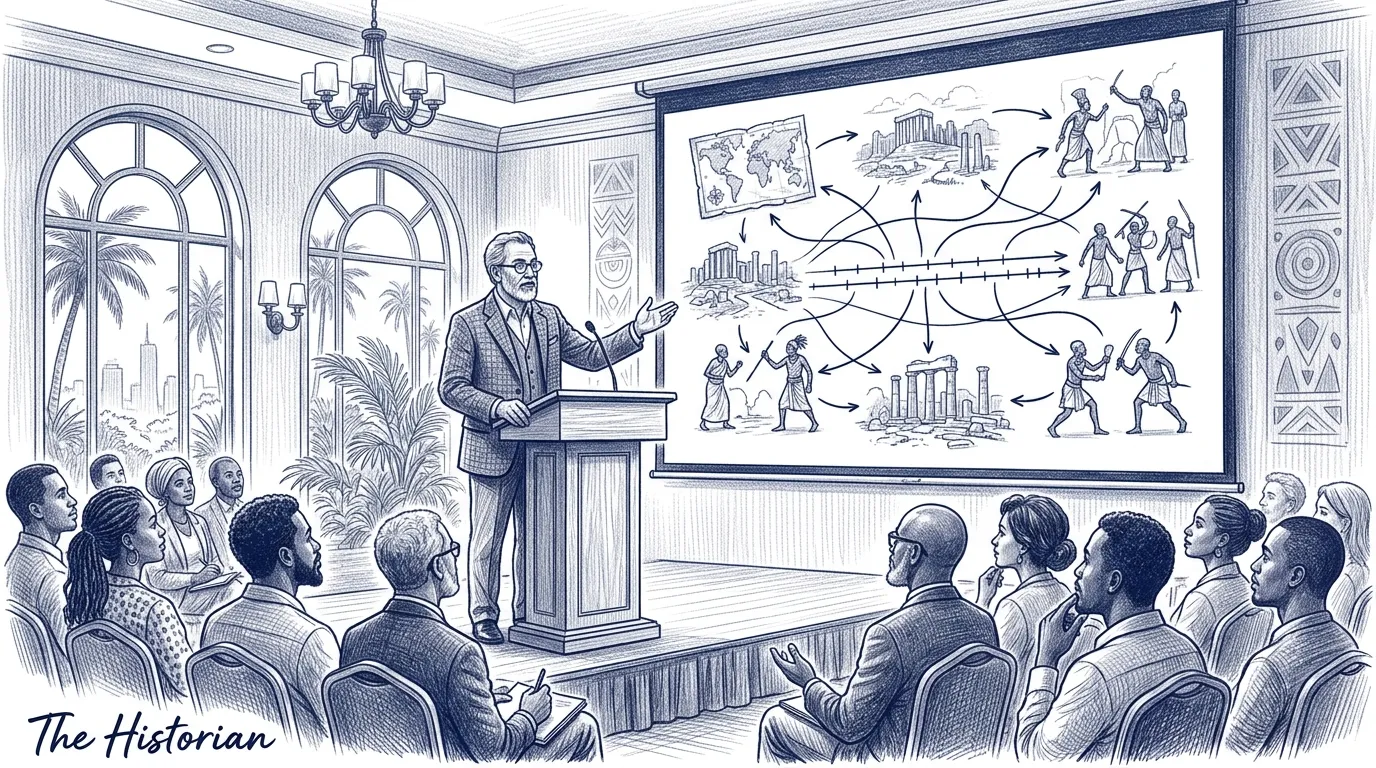
What The Historian Does
Core Question: What can we learn from the past?
The Historian resolves historical blindness by contextualizing present decisions within longer patterns.
Where markets are trapped in the eternal present—believing that “this time is different,” forgetting past mistakes, ignoring hard-won lessons—the Historian provides the memory, the perspective, and the wisdom that only comes from knowing what came before.
Historians do not live in the past. They are not nostalgic.
They do not believe that old ways are always better. They believe that those who cannot remember the past are condemned to repeat it—and that those who do remember have a profound competitive advantage.
The Historian does not dwell on what was. The Historian ensures that what was informs what could be.
7 Ideal Characteristics of The Historian
What Makes This Author Archetype Capable of Resolving Historical Blindness
| # | Characteristic | What It Looks Like |
|---|---|---|
| 1 | Deep Temporal Range | Comfortable thinking in decades and centuries, not just quarters and years. Sees the long arc. |
| 2 | Pattern Recognition Across Eras | Spots recurrences that others miss. “We have seen this before—in 1873, 1929, 2000.” |
| 3 | Source Discipline | Grounds claims in evidence. Does not assert without documentation. Knows that memory is fallible. |
| 4 | Resistance to “This Time Is Different” | Skeptical of exceptionalism. Demands evidence that the current moment truly breaks historical patterns. |
| 5 | Narrative Gift | Makes the past vivid and relevant. Does not just recite dates; tells stories that illuminate. |
| 6 | Intellectual Humility | Knows that history does not repeat exactly. Avoids false analogies. Distinguishes parallel from identical. |
| 7 | Present Orientation | Studies the past to inform the future, not to escape the present. The past is a tool, not a refuge. |
Real-Life Example:
David McCullough
David McCullough (1933-2022), the Pulitzer Prize-winning historian and author, is a definitive example of The Historian archetype in action.
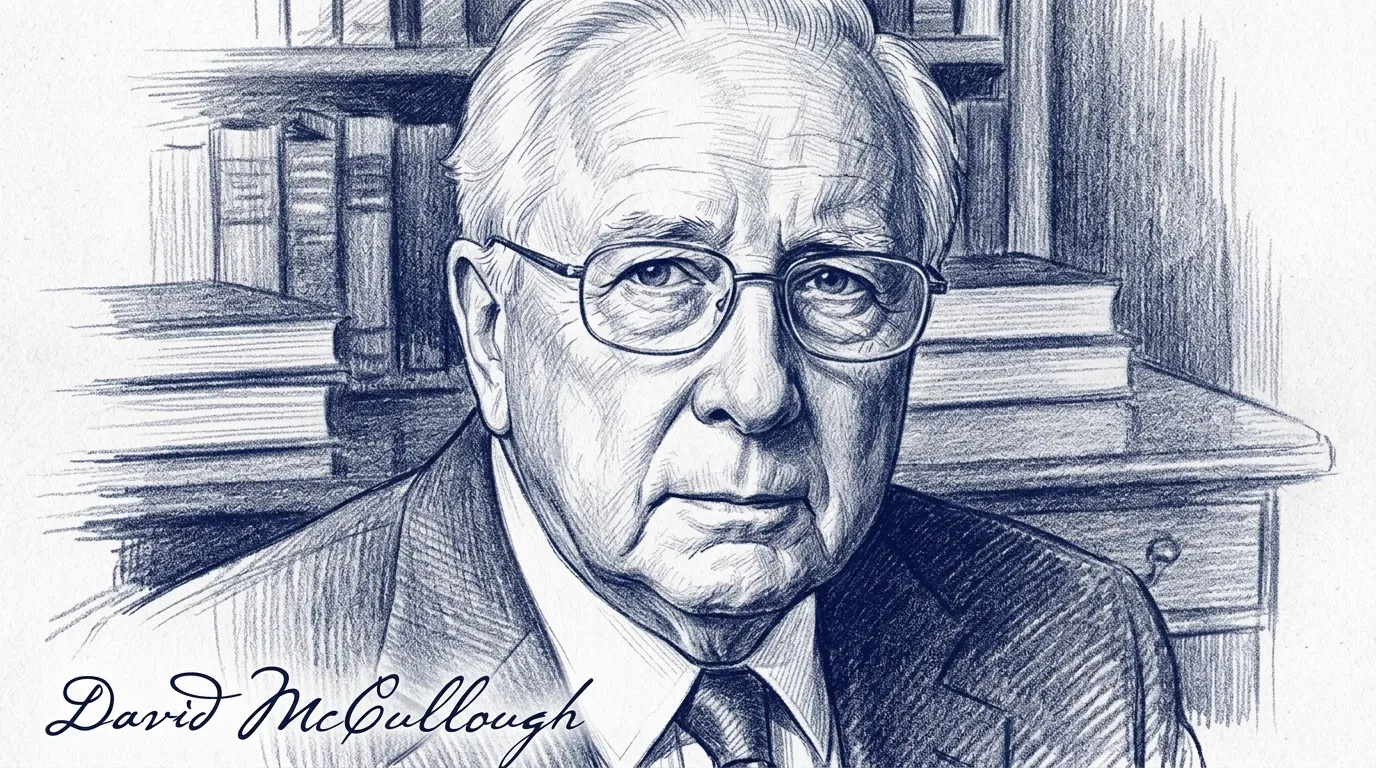
Why does he embody The Historian:
| Characteristic | How David McCullough Demonstrates It |
|---|---|
| Deep Temporal Range | He wrote about the American Revolution, the building of the Brooklyn Bridge, John Adams, Harry Truman, and the Wright brothers. His range spanned two centuries, but he moved across it with equal authority. |
| Pattern Recognition Across Eras | His works reveal recurrent American themes: ambition, ingenuity, failure, resilience. He did not just chronicle events; he illuminated the patterns that define a nation. |
| Source Discipline | He was legendary for his research. He read letters, diaries, and archives that no one had touched in generations. His authority rested on evidence, not opinion. |
| Resistance to “This Time Is Different” | His biographies show that every era believes it is unprecedented. He demonstrated that human nature—and the challenges it creates—recurs. |
| Narrative Gift | He was called the “master of narrative history” for good reason. His books read like novels. He made John Adams feel like a neighbor. |
| Intellectual Humility | He wrote about what he had studied deeply. He did not opine beyond his expertise. He stayed in his lane—and his lane was vast. |
| Present Orientation | He did not write history for historians. He wrote for citizens, leaders, and students—people who needed the past to make better decisions today. |
How McCullough resolves historical blindness:
When leaders and citizens suffer from “chronological snobbery”—the belief that the present is wiser than the past—McCullough provided the corrective. He showed that past generations faced challenges as daunting as ours, often with fewer resources.
Their successes and failures offer lessons we ignore at our peril.
The GreenDeveX Insight:
Brands that partner with Historians like David McCullough do not need to learn every lesson the hard way. The Historian has already done the work of extracting wisdom from the past.
The brand simply needs to apply it.
Other Notable Historians for Inspiration
| Historian | Domain | Why They Qualify |
|---|---|---|
| Yuval Noah Harari | World History | Sapiens gave millions a framework for understanding human history in a single volume. He translates deep historical patterns into accessible insights for leaders. |
| Doris Kearns Goodwin | Presidential History | Her biographies of Lincoln, the Roosevelts, and LBJ are leadership case studies disguised as history. She extracts lessons for anyone in authority. |
| Simon Schama | Art & Cultural History | He makes art history feel like urgent news. The Power of Art is history as a dramatic narrative. He shows that culture is not decoration; it is evidence. |
| Barbara Tuchman (1912-1989) | Military & Political History | The Guns of August is a case study in how institutional failure leads to catastrophe. Her work is required reading for strategists. |
| Jill Lepore | American History | A historian who writes for The New Yorker. She brings a historical perspective to current events weekly. She is the Historian for the present moment. |
| Henry Louis Gates Jr. | African American History | He has brought the study of Black history to popular audiences through documentary films and scholarship. He restores memory that was deliberately erased. |
The Historical Blindness Friction
What the friction looks like:
Markets cannot move when they have no memory. Past mistakes are repeated. Hard-won lessons are forgotten. Strategies that failed yesterday are revived today.
Every generation believes its challenges are unprecedented.
The cost of this friction:
How The Historian resolves it:
The Historian does not dwell on what was. The Historian ensures that what was informs what could be. Through deep research, pattern recognition, and narrative power, the Historian provides the perspective that only time can grant.
The mechanism: Memory transfer.
The Historian has done the work of learning from the past so that others do not need to repeat the mistakes. Their wisdom becomes the organization’s wisdom.
Questions The Historian Helps Markets Answer
| # | Question |
|---|---|
| 1 | Has this happened before? What can we learn from similar situations in the past? |
| 2 | What mistakes have others made that we are about to repeat? |
| 3 | What assumptions are we making that history suggests are dangerous? |
| 4 | What perspective are we missing because we are trapped in the present moment? |
| 5 | What would leaders from previous eras advise us to do differently? |
Publishing Formats for The Historian
| Format | Why It Works for The Historian |
|---|---|
| Long-form Books | History requires space. The Historian’s best work unfolds over hundreds of pages. |
| Documentary Films | Visual narrative brings the past to life. Audiences see what they cannot imagine. |
| Biographical Case Studies | One life illuminated reveals an entire era. The Historian uses the individual to tell the collective story. |
| Historical Timelines | Visualizing the arc helps audiences see patterns that prose cannot convey. |
| Annotated Archives | Primary sources with expert commentary. The Historian guides audiences through original material. |
| Podcast Series | Serialized history builds narrative momentum. Listeners return week after week. |
Ideal Industries / Sectors
| Sector | Why The Historian Thrives Here |
|---|---|
| Finance & Investment | Markets have patterns. Historians identify cycles that analysts miss. |
| Strategy & Consulting | Strategy without history is guesswork. Historians provide the long view. |
| Policy & Governance | Policy failures repeat. Historians document why and how. |
| Technology & Innovation | Technological revolutions follow patterns. Historians map the trajectory. |
| Family Business & Legacy Organizations | Institutional memory is a competitive advantage. Historians preserve it. |
| Defense & Security | Military history is the original case study collection. Historians provide the lessons. |
Ideal Brand Partnerships
| Brand Type | Why They Need The Historian |
|---|---|
| Legacy organizations | They have a history, but have not learned from it. Historians surface the lessons. |
| Startups disrupting old models | Need to know what disrupted industries before. Historians provide the pattern. |
| Investment firms | Need to recognize cycles before they repeat. Historians map the recurrences. |
| Policy institutions | Need to avoid past failures. Historians document what did not work—and why. |
| Museums and cultural institutions | Need to make history relevant. Historians translate the past for present audiences. |
5 Frequently Asked Questions About The Historian
FAQ 01: Does The Historian believe the past determines the future?
No. The Historian believes the past informs the future, not determines it. History does not repeat exactly. But patterns recur, mistakes are repeated, and wisdom can be transferred. The goal is not prediction; it is preparation.
FAQ 02: How does The Historian differ from The Futurist?
The Historian looks backward to find patterns. The Futurist looks forward to anticipate scenarios. One provides context; the other provides direction. They are natural partners. The best Futurists are often students of history.
FAQ 03: Can The Historian be wrong about historical lessons?
Yes. History is interpretation, not mathematics. Reasonable people can disagree about what the past teaches. The best Historians are transparent about their interpretive framework and open to alternative readings.
FAQ 04: Is The Historian just for old industries?
No. Young industries also have history—often shorter, but still instructive. The dot-com bubble taught lessons that crypto and AI should heed. The Historian finds the relevant history regardless of the industry’s age.
FAQ 05: How does a brand use The Historian without becoming backward-looking?
The Historian’s job is to extract lessons, not to advocate for nostalgia. The best Historians help organizations move forward more intelligently—not by replicating the past, but by learning from what worked, what failed, and why.
Example in Action
Scenario:
A cryptocurrency exchange during the 2022 market crash. Leadership is panicking. They believe the situation is unprecedented.
The Historian intervention:
A financial historian who studied previous bubbles (Tulipmania, South Sea Bubble, 1929, 2000, 2008) provides a briefing:
Here is what happens next in every bubble.
Here are the stages of denial, fear, and capitulation.
Here is what survivors did differently.
Here is what failed.
The Historian does not predict exactly; they provide the pattern.
Outcome:
The exchange does not make the mistakes that have felled previous bubbles. They preserve capital. They communicate transparently. They survive. The Historian’s pattern recognition was the difference between survival and collapse.
Does your brand need The Historian?
If historical blindness is causing you to repeat past mistakes, The Historian archetype may be your match.
GreenDeveX classifies and connects Historians to brands that need perspective and wisdom.
Your ecosystem transition starts here.
→ Join the Early Access Waitlist
→ Find Your Historian Match
Now that you understand The Historian, explore The Curator — the archetype that filters signal from noise in an age of information overload.
→ Explore All Author Archetypes