
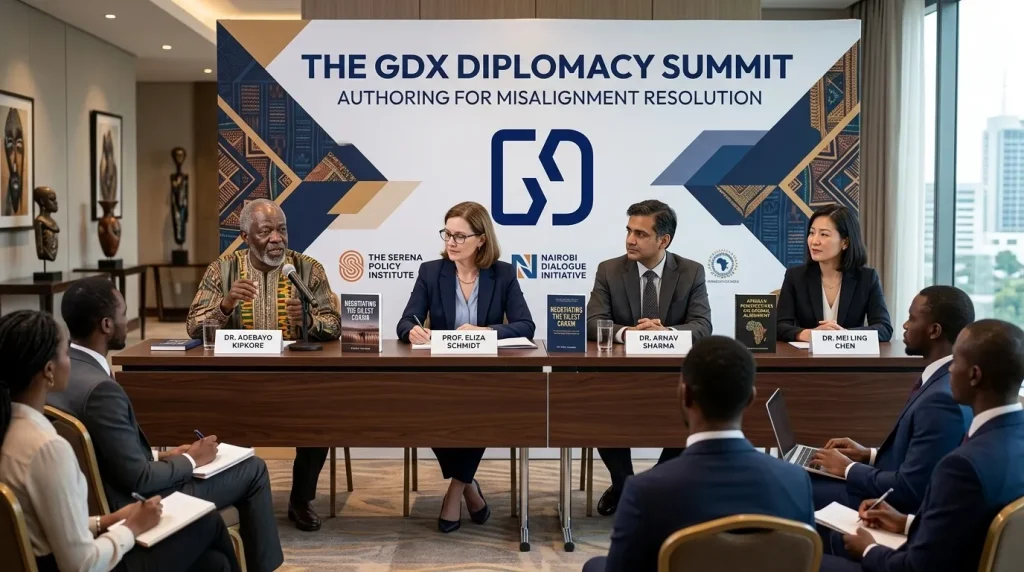
What The Diplomat Does
Core Question: How do we move forward together?
The Diplomat resolves stakeholder misalignment by building shared frameworks for action.
Where markets freeze because stakeholders cannot agree, where nations cannot govern, communities cannot cooperate, families cannot communicate—the Diplomat creates the container where alignment becomes possible.
Diplomats are not compromisers who split the difference. They are architects of shared reality. They understand that misalignment is not always about competing interests, but often it is about competing narratives, different facts, and incompatible frameworks. They put in place the bridge that makes an agreement possible.
The Diplomat does not force agreement. The Diplomat creates the conditions where agreement can emerge.
The Urgent Context: We now live in an age where LLMs can twist information with a click.
The Diplomat is not a luxury. It is infrastructure for survival.
Ideal Characteristics of The Diplomat
| # | Characteristic | What It Looks Like |
|---|---|---|
| 1 | Shared Framework Builder | Does not just mediate disputes. Builds the common language, shared facts, and mutual understanding that make mediation possible. |
| 2 | Deep Listening | Hears what is said—and what is not said. Understands interests, not just positions. |
| 3 | Narrative Fluency | Understands that people live in different stories. Can translate between competing narratives without betraying either. |
| 4 | Patience for Process | Knows alignment takes time. Does not rush. Trusts that shared reality cannot be forced—only cultivated. |
| 5 | Integrity Without Rigidity | Has principles but holds them provisionally. Knows when to stand firm and when to bend. |
| 6 | Trustworthiness | All parties must believe the Diplomat is not secretly working for the other side. Trust in the Diplomat is the currency of alignment. |
| 7 | Reality Anchoring | In an age of LLM-generated misinformation, the Diplomat anchors discussions in verifiable facts without being dogmatic. |
Real-Life Example:
Kofi Annan
Kofi Annan (1938-2018), the seventh Secretary-General of the United Nations and Nobel Peace Prize laureate, is a definitive example of The Diplomat archetype in action.
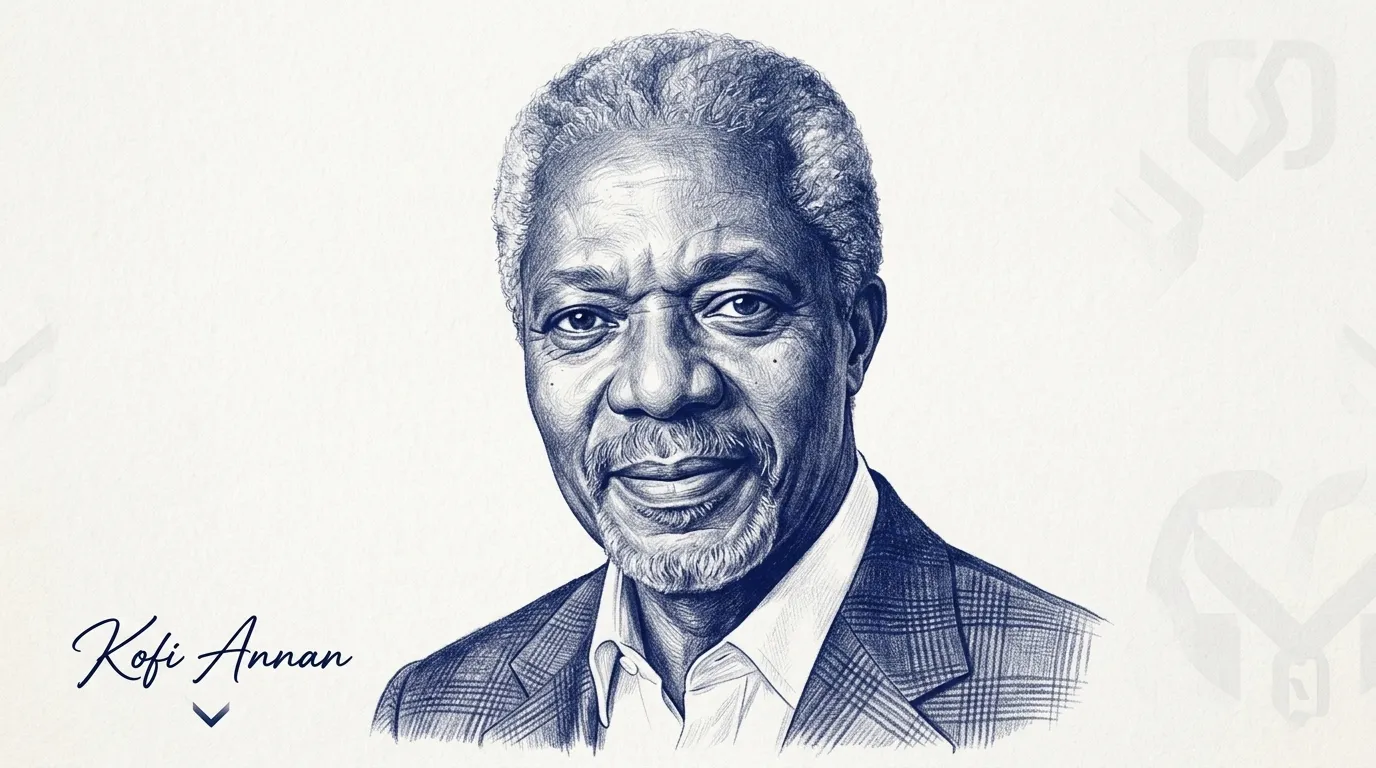
Why he embodies The Diplomat:
| Characteristic | How Kofi Annan Demonstrates It |
|---|---|
| Shared Framework Builder | He developed the “Responsibility to Protect” (R2P) doctrine—a shared framework for when the international community must intervene to prevent atrocities. He built a framework that nations could agree on, even when they disagreed on specifics. |
| Deep Listening | He was known for his quiet, patient listening. He heard what was said and what was not said. He understood that alignment requires understanding interests, not just positions. |
| Narrative Fluency | He moved between the Global North and Global South, between powerful nations and fragile states, between the UN bureaucracy and the streets of Darfur. He spoke multiple languages—literal and figurative. |
| Patience for Process | His mediation in Kenya after the 2007-2008 post-election violence took weeks of patient negotiation. He did not rush. He understood that forced agreement is not agreement. |
| Integrity Without Rigidity | He was criticized by all sides—for being too soft, too tough, too political, too idealistic. He held his course. He knew his principles but was not rigid about tactics. |
| Trustworthiness | Both George W. Bush and Mahmoud Ahmadinejad trusted him as an honest broker. When both sides of a conflict trust the mediator, alignment becomes possible. |
| Reality Anchoring | In an era of competing narratives, he anchored his mediation in verifiable facts—reports from UN field officers, human rights documentation, and firsthand accounts. He would not let fiction substitute for reality. |
How Annan resolves misalignment:
When nations are gridlocked, when citizens have lost trust, when competing narratives make agreement impossible, Annan does not take sides.
He builds a shared framework. He finds the common ground that already exists, however small. He expands it. Alignment is not imposed; it is cultivated.
The GreenDeveX Insight:
Nations, communities, and brands that partner with Diplomats like Kofi Annan do not need to force consensus. The Diplomat builds a shared reality where consensus can emerge naturally.
In an age of LLM-generated misinformation, this is not optional; it is survival.
Other Notable Diplomats for Inspiration
| Diplomat | Domain | Why They Qualify |
|---|---|---|
| Nelson Mandela (1918-2013) | National Reconciliation | After apartheid, he built the Truth and Reconciliation Commission, a shared framework for healing, not revenge. He aligned a deeply divided nation. |
| Mother Teresa (1910-1997) | Moral Diplomacy | She built bridges across religious and political divides by focusing on shared humanity. Her diplomatic power came from moral authority, not political power. |
| Desmond Tutu (1931-2021) | Reconciliation | Chaired South Africa’s Truth and Reconciliation Commission. He believed that alignment requires acknowledgment, not amnesia. |
| Ellen Johnson Sirleaf | Post-Conflict Governance | As President of Liberia after the civil war, she built alignment across factional lines. She proved that a diplomat can also be a head of state. |
| Lakhdar Brahimi | UN Mediation | Mediated conflicts in Lebanon, South Africa, Afghanistan, and Iraq. Known for patience, integrity, and the ability to be trusted by all parties. |
| Mary Robinson | Climate Diplomacy | As UN Special Envoy on Climate Change, she built alignment among nations, corporations, and civil society. She frames climate action as shared survival, not competing interests. |
The Misalignment Friction
What the friction looks like:
Markets cannot move when stakeholders are misaligned.
Nations cannot govern when citizens do not trust.
Families cannot function when members live in different realities.
Gridlock is the default state.
The cost of this friction:
- Gridlock. Nothing moves because no one can agree.
- Distrust compounds. Each failed attempt at alignment makes the next harder.
- Shared reality fragments. Competing narratives create parallel universes.
- In an age of LLM-generated misinformation, anyone can twist information with a click. Trust erodes faster than ever.
- Citizens feel unheard. Nations become ungovernable.
- Families fracture. Communities dissolve. The bonds that hold society together weaken.
How The Diplomat resolves it:
The Diplomat does not force agreement. The Diplomat creates the conditions where agreement can emerge.
Through shared framework building, deep listening, and reality anchoring, the Diplomat restores the possibility of alignment in an age of fragmentation.
The mechanism:
Shared reality transfer. The Diplomat builds the common ground. Stakeholders who could not agree find themselves on the same map. Alignment emerges from the shared frame, not from coercion.
Questions The Diplomat Helps Markets Answer
| # | Question |
|---|---|
| 1 | How do we move forward when we cannot agree on basic facts? |
| 2 | What shared framework could we build that respects our differences? |
| 3 | Who do we all trust? Who could be the honest broker? |
| 4 | What is the smallest area of agreement that could be the foundation for larger alignment? |
| 5 | How do we anchor our discussions in verifiable reality when misinformation is everywhere? |
Publishing Formats for The Diplomat
| Format | Why It Works for The Diplomat |
|---|---|
| Shared Frameworks | Documents the common ground. Provides a reference point for future decisions. |
| Consensus Reports | Shows what was agreed, what remains disputed, and why. Transparency builds trust. |
| Reality Anchors | Verifiable facts that all parties accept. A shared truth table in an age of misinformation. |
| Dialogue Transcripts | Shows the process of alignment. Demonstrates that disagreement can be productive. |
| Common Language Glossaries | Creates shared vocabulary. Ensures that the same words mean the same thing to all parties. |
| Trust-Building Playbooks | Teaches others how to build alignment. Scales the Diplomat’s impact. |
Ideal Industries / Sectors
| Sector | Why The Diplomat Thrives Here |
|---|---|
| Government & Public Policy | Nations are paralyzed. Diplomats build the alignment that governance requires. |
| International Development | Multiple stakeholders (governments, NGOs, communities, funders) need alignment. Diplomats provide it. |
| Community Organizing | Fragmented communities need shared frameworks. Diplomats build them. |
| Corporate Strategy | Siloed departments need alignment. Diplomats bridge the gaps. |
| Family Mediation | Families are the smallest polities. Diplomats help them function. |
| Crisis Response | In emergencies, alignment is life-or-death. Diplomats coordinate fragmented responders. |
Ideal Brand Partnerships
| Brand Type | Why They Need The Diplomat |
|---|---|
| Government agencies | Need to rebuild trust with citizens. Diplomats design the alignment process. |
| International NGOs | Need to align local communities, national governments, and global funders. Diplomats make it possible. |
| Community foundations | Need to bring fractured communities together. Diplomats provide the framework. |
| Corporate turnaround teams | Need to align leadership, employees, and investors. Diplomats broker the alignment. |
| Media organizations | Need to restore shared reality in an age of misinformation. Diplomats anchor the facts. |
5 Frequently Asked Questions About The Diplomat
FAQ 01: How does The Diplomat differ from a mediator?
Mediators facilitate agreements between two parties.
Diplomats architect shared reality across many stakeholders.
Mediation is a subset of diplomacy.
The Diplomat does what mediators do and more:
They build the frameworks that make mediation possible in the first place.
FAQ 02: Can The Diplomat also be a Cartographer?
Yes.
The Cartographer maps the system.
The Diplomat aligns the stakeholders.
The map informs the alignment; the alignment validates the map.
They are natural partners.
FAQ 03: Is The Diplomat neutral?
No.
The Diplomat has principles. They are not neutral about truth, human rights, or basic decency. But they are impartial about parties. They do not favor one side. They favor the possibility of agreement.
FAQ 04: How does The Diplomat handle LLM-generated misinformation?
The Diplomat anchors discussions in verifiable reality—primary sources, documented facts, firsthand accounts, and transparent methodology. They do not debate every claim.
They build a shared fact base that all parties agree to use as a reference. Misinformation cannot survive the light of shared verification.
FAQ 05: Can alignment be built at scale? Between a nation and its citizens?
Yes, but it takes time, patience, and infrastructure.
Alignment between a nation and its citizens requires shared frameworks, transparent communication, and trusted institutions.
The Diplomat does not achieve alignment overnight; they build the infrastructure that makes alignment possible over time.
Example in Action
Scenario:
A deeply divided nation.
Citizens trust neither the government nor the media.
Social media echo chambers amplify outrage.
LLM-generated misinformation spreads faster than fact-checkers can catch it.
Governance is impossible.
The Diplomat intervention:
A trusted Diplomat (or team of Diplomats) convenes a national dialogue. They do not start with the hardest issues.
They start with shared values, things almost everyone agrees on: safety for children, access to healthcare, dignified work.
They build a shared fact base:
What do we actually know?
What can we verify together?
They create a framework for disagreement: we can disagree about solutions, but we agree to anchor our disagreement in shared facts.
Outcome:
Alignment does not happen overnight. But the conditions for alignment are created.
Trust begins to rebuild—slowly, incrementally.
Citizens who had given up on shared reality begin to see that agreement is possible.
The nation starts to move again, not because everyone agrees, but because they have agreed on how to disagree.
Does your brand, community, or nation need The Diplomat?
If misalignment is paralyzing action,
If citizens have lost trust,
If communities are fragmented,
If shared reality is crumbling
The Diplomat archetype may be your match.
GreenDeveX classifies and connects Diplomats to organizations that need alignment in an age of fragmentation.
Your ecosystem strategy starts here.
→ Join the Early Access Waitlist
→ Find Your Diplomat Match
Now that you understand The Diplomat, explore The Antagonist — the archetype that drives progress by naming the truths markets are avoiding.
→ Explore The Antagonist