

What The Futurist Does
Core Question: What happens next?
The Futurist author archetype resolves future uncertainty through credible, evidence-based forward thinking. Ideal for brands needing direction and confidence.
Where markets freeze because they cannot predict what comes next, the Futurist provides the scenarios, the signals, and the synthesized intelligence that enables confident action.
Futurists do not guess. They do not predict lottery numbers. They do not claim certainty where none exists. They pattern-match across history, technology, demographics, and behavior to identify what is probable, what is possible, and what is preposterous.
The Futurist does not claim to know the future. The Futurist helps others prepare for it.
7 Ideal Characteristics of The Futurist
What Makes This Author Archetype Capable of Resolving the Future Uncertainty
| # | Characteristic | What It Looks Like |
|---|---|---|
| 1 | Pattern Recognition | Sees signals others miss. Connects dots across technology, society, economics, and politics. History is a data set, not nostalgia. |
| 2 | Intellectual Honesty | Admits uncertainty. Distinguishes between what is likely, what is possible, and what is speculation. No false precision. |
| 3 | Curiosity Without Attachment | Explores possibilities without becoming emotionally invested in any single outcome. Follows evidence, not ego. |
| 4 | Scenario Thinking | Thinks in branches, not lines. Prepares multiple futures. Helps others do the same. |
| 5 | Signal vs. Noise Discipline | Filters hype from reality. Recognizes that most “trends” are noise. Waits for confirmation before declaring a signal. |
| 6 | Long Horizon Patience | Comfortable with time frames that make others uncomfortable. Thinks in decades, not quarters. |
| 7 | Translates Complexity | Makes complex futures accessible without dumbing them down. Helps non-experts understand what matters. |
Real-Life Example:
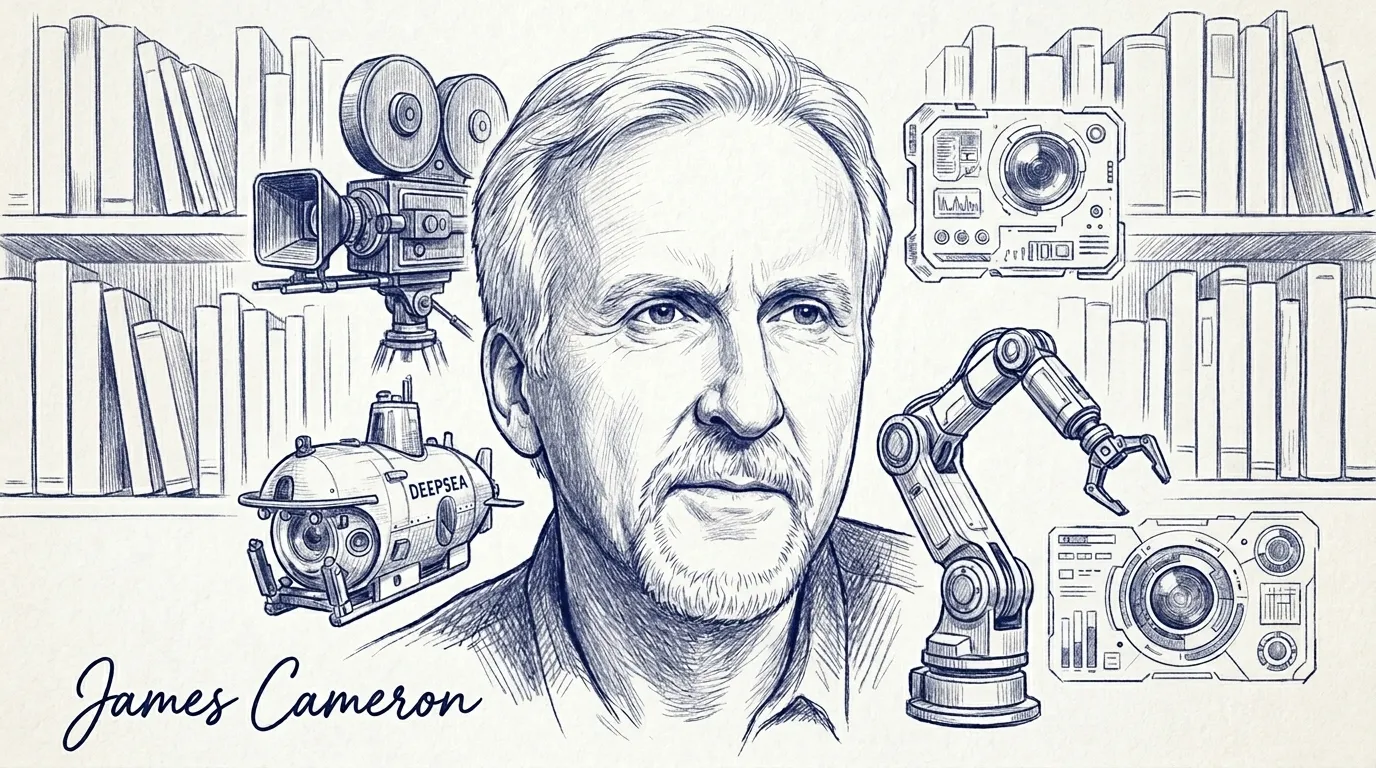
James Cameron
James Cameron, the filmmaker, explorer, and technologist, is a definitive example of The Futurist archetype in action.
Why does he embody The Translator:
| Characteristic | How James Cameron Demonstrates It |
|---|---|
| Pattern Recognition | He has consistently identified where technology and storytelling were heading before others saw it—from Terminator’s AI warnings in 1984 to Avatar’s immersive 3D world-building in 2009. He sees the arc before others see the trend. |
| Signal vs. Noise Discipline | While Hollywood chased trends, Cameron invested years developing technologies that would define the next decade. He waited for the right moment for 3D, for CGI, for performance capture—not because he was slow, but because he knew noise from signal. |
| Long Horizon Patience | He spent 12 years developing Avatar between the initial concept and release. Most studios would have abandoned the vision. Cameron held it because he saw the long arc. The result: the highest-grossing film of all time (at its release) and a franchise that continues to shape cinema. |
| Scenario Thinking | His films are themselves scenario explorations—Terminator imagines an AI future, Avatar imagines a biotech future, The Abyss imagines deep-sea exploration and first contact. He does not predict; he explores plausible futures through narrative. |
| Translates Complexity | He makes complex technological concepts accessible through story. Audiences do not need to understand performance capture to feel its emotional impact. He translates the future into experience. |
How Cameron resolves future complexity:
When studios hesitated to bet on 3D or CGI-heavy blockbusters, Cameron did not argue. He demonstrated. He built the technology, shot the scenes, and showed the result.
His track record of seeing the future correctly (The Terminator, Aliens, Titanic, Avatar) means that when he says, “this is where things are heading,” people believe him.
The GreenDeveX Insight:
Brands that partner with Futurists like James Cameron do not need to convince their stakeholders that a new direction is wise.
The Futurist’s track record of accurate forward thinking transfers confidence. Direction becomes clear.
Other Notable Futurist Author Archetypes for Inspiration
| Futurist | Domain | Why They Qualify |
|---|---|---|
| Ray Kurzweil | Technology & AI | Predicted the rise of the internet, AI dominance, and technological singularity. His track record of accurate predictions (dating to the 1980s) is unparalleled. |
| Elon Musk | Transportation & Space | Bet on electric vehicles, reusable rockets, and tunneling when others called it impossible. His visions shape industries, not just conversations. |
| Jane McGonigal | Gaming & Social Innovation | Foresaw how gaming mechanics would reshape work, education, and social behavior. Created alternate reality games that predicted real-world outcomes. |
| Alvin Toffler (1938-2016) | Social & Economic Futures | Author of Future Shock (1970), predicted the information age, the gig economy, and the accelerating pace of change decades before they arrived. |
| Stewart Brand | Ecology & Technology | Founded the Whole Earth Catalog, foresaw the convergence of environmentalism and technology. Predicted the internet’s democratizing power before most had heard of it. |
| Faith Popcorn | Consumer & Cultural Trends | Built a business on trend forecasting—successfully predicted the rise of cocooning (working from home), female economic power, and wellness culture. |
The Future Uncertainty Friction
What the friction looks like:
Markets cannot move when the future is unclear. What happens next? Will our investments pay off? Is this trend real or temporary? Organizations wait for clarity that never comes.
The cost of this friction:
How The Futurist resolves it:
The Futurist does not claim certainty. The Futurist provides plausible scenarios, identifies signals, and builds confidence through demonstrated pattern recognition.
Organizations no longer need to know exactly what will happen—they need to know what to prepare for.
The mechanism: Confidence transfer.
A Futurist with a track record of accurate forward thinking transfers that confidence to the organizations that heed their guidance.
Questions The Futurist Helps Markets Answer
| # | Question |
|---|---|
| 1 | What is coming that we should prepare for now? |
| 2 | Which trends are real and which are noise? |
| 3 | What are the plausible scenarios for our industry in 5, 10, 20 years? |
| 4 | What signals should we be tracking to know when to act? |
| 5 | Where should we place our long-term bets? |
Publishing Formats for The Futurist
| Format | Why It Works for The Futurist |
|---|---|
| Long-Range Outlook Reports | Provides credible 5-20 year scenarios. Builds confidence through evidence-based projection. |
| Trend Signal Trackers | Identifies emerging signals. Distinguishes signal from noise. Keeps stakeholders current. |
| Scenario Planning Documents | Maps multiple plausible futures. Prepares organizations for branches, not just one path. |
| Technology/Industry Roadmaps | Shows the arc of change. Helps stakeholders see where things are heading. |
| Keynote Speeches | Translates complex futures for live audiences. Builds confidence through presence and pattern recognition. |
Ideal Industries / Sectors
| Sector | Why The Futurist Thrives Here |
|---|---|
| Technology & AI | Change is rapid and constant. Futurists help separate hype from reality. |
| Climate & Energy | Long-term transitions require long-term thinking. Futurists provide credible scenarios. |
| Finance & Investment | Capital allocation requires forward visibility. Futurists build investor confidence. |
| Healthcare & Biotech | Scientific progress is accelerating. Futurists help organizations prepare for what is coming. |
| Education & Workforce | The future of work is uncertain. Futurists help institutions prepare learners for unknown futures. |
| Government & Policy | Policy has long lead times. Futurists help governments prepare for scenarios, not just react. |
Ideal Brand Partnerships
| Brand Type | Why They Need The Futurist |
|---|---|
| Investment funds | Need credible long-term scenarios to deploy capital confidently. Futurists provide the forward view. |
| Corporate strategy teams | Need to place long-term bets. Futurists help identify which bets will pay off. |
| R&D organizations | Need to prioritize research directions. Futurists identify which technologies will matter. |
| Government agencies | Need to prepare for future scenarios. Futurists build scenario planning infrastructure. |
| Nonprofits with long missions | Need to stay relevant across decades. Futurists help them adapt before change forces them to. |
Example in Action
Scenario:
A renewable energy company needs to decide where to invest $100M in R&D over the next decade.
Options: solar, battery storage, green hydrogen, or carbon capture.
The Futurist intervention:
A Futurist with 20 years of experience in energy technology publishes a 10-year outlook report with three scenarios (best-case, baseline, worst-case) for each technology.
The report includes signal trackers: what to watch to know which scenario is unfolding.
Outcome:
The company does not need to guess which technology will win. It invests across multiple scenarios, with clear decision points for when to pivot.
The Futurist’s framework becomes the company’s strategic planning infrastructure.
5 Frequently Asked Questions About The Futurist
FAQ 01: How is The Futurist different from a trend forecaster?
Trend forecasters identify what is currently emerging. Futurists build credible scenarios for what could happen across longer time horizons. One is tactical (what is next?). The other is strategic (what could be?).
Both are valuable; they operate at different time scales.
FAQ 02: Does The Futurist need a perfect prediction track record?
No. The best Futurists are transparent about their misses. What matters is that their hits are non-obvious and their methodology is sound. Predicting what everyone sees coming is not valuable. Predicting what only you see—and being right—is what builds authority.
FAQ 03: Can The Futurist also be a Historian?
Yes. The best Futurists are often students of history. Pattern recognition requires knowing what patterns have occurred before. The Historian provides context; the Futurist projects that context forward. They are natural partners.
FAQ 04: What is the difference between The Futurist and a science fiction writer?
Science fiction writers imagine futures without being accountable for accuracy. Futurists build credible scenarios that organizations can act on. Some individuals do both (e.g., Neal Stephenson), but the intent differs: one entertains; one informs decisions.
FAQ 05: Does The Futurist need to be optimistic?
No. The best Futurists are neither optimists nor pessimists. They are realists who explore the full range of plausible outcomes—including catastrophic ones. Organizations need to prepare for worst-case scenarios, not just hopeful ones.
Does your brand need The Futurist?
If future uncertainty is freezing your decisions, The Futurist archetype may be your match.
GreenDeveX classifies and connects Futurists to brands that need direction and confidence.
Your ecosystem transition starts here.
→ Join the Early Access Waitlist
→ Find Your Futurist Match
Now that you understand The Futurist, explore The Historian — the archetype that provides context and wisdom from the past.
→ Explore All Author Archetypes